


There was a push by health organizations to “Eat the Rainbow” in the early 2000s in the U.S. The campaign focused on eating vegetables and fruits that were rich in color, highlighting the dense mineral, vitamin and phytonutrient contents of colored vegetables. Specific colors such as orange, yellow, red, green, purple and blue were identified with high levels of certain beneficial nutrients.
Although white vegetables were included on the list, they were often ignored. However, white vegetables support immune functions and heart health. The pale color of white asparagus is associated with a more delicate flavor, and they are much more tender than green asparagus.
There are some naturally white vegetables, such as parsnips, cauliflower, onions, shallots, fennel, jicama and turnips that have pronounced flavors and are commonly found in U.S. supermarkets. There are also some white vegetable heirloom varieties or cultivars that are sought after for specific culinary characteristics.
White eggplant “Casper” is an heirloom cultivar that has a mild mushroom-like flavor and a creamy texture. White heirloom tomatoes such as “Great White” have lower acidity, are usually sweeter, and have a milder fruity flavor. “Art Verrell’s Sweet” is an example of a white corn variety that, like other types of white corn, offers a milder taste than yellow varieties, and is more tender. It is also significantly higher in some of the B vitamins.
White-skinned potatoes, such as “White Rose” often have a milder, buttery flavor and creamier texture than other potatoes with brown, red, tan or purple skins.

White asparagus is different from most other white vegetables in that its growing conditions are manipulated by a process called blanching. Pissenlit Blanc, or white Dandelion leaves, and Belgium Endive are two other foods that use this process. White asparagus is green asparagus grown in complete darkness or deep shade. The lack of sunlight prevents the stalks from producing the chlorophyll which gives green asparagus its color.
White and green asparagus are high in fiber and vitamins C and K. Green asparagus contains more antioxidants and vitamins A and E because of its exposure to sunlight.
The absence of sunlight also causes the asparagus stalk or spear to produce fewer phenolic compounds which give green asparagus an earthy and sometimes bitter flavor. White asparagus, lacking these metabolites, has a much milder and sweeter flavor. White asparagus is often cultivated in mounds of soil called hillings to block sunlight. The spears often have a thicker and more fibrous exterior because they have to grow through the mounded soil.
White asparagus is more popular in Europe than in the U.S. Germany is the top producer and consumer of white asparagus. It is referred to as “white gold” during the season, which starts in mid-April and concludes on June 24. The specific season ending is a traditional agricultural date in Germany which gives perennial plants about 100 days to regenerate and store energy before they go dormant. White asparagus is primarily harvested between March and late June in Europe and the U.S.
Spain and Greece are the top suppliers of white asparagus to the rest of Europe. Peru is the largest exporter of asparagus with very little being consumed domestically. The climate allows for asparagus to be grown and exported all year, with a focus on shipping canned and jarred white asparagus to Europe and fresh green asparagus to the US.
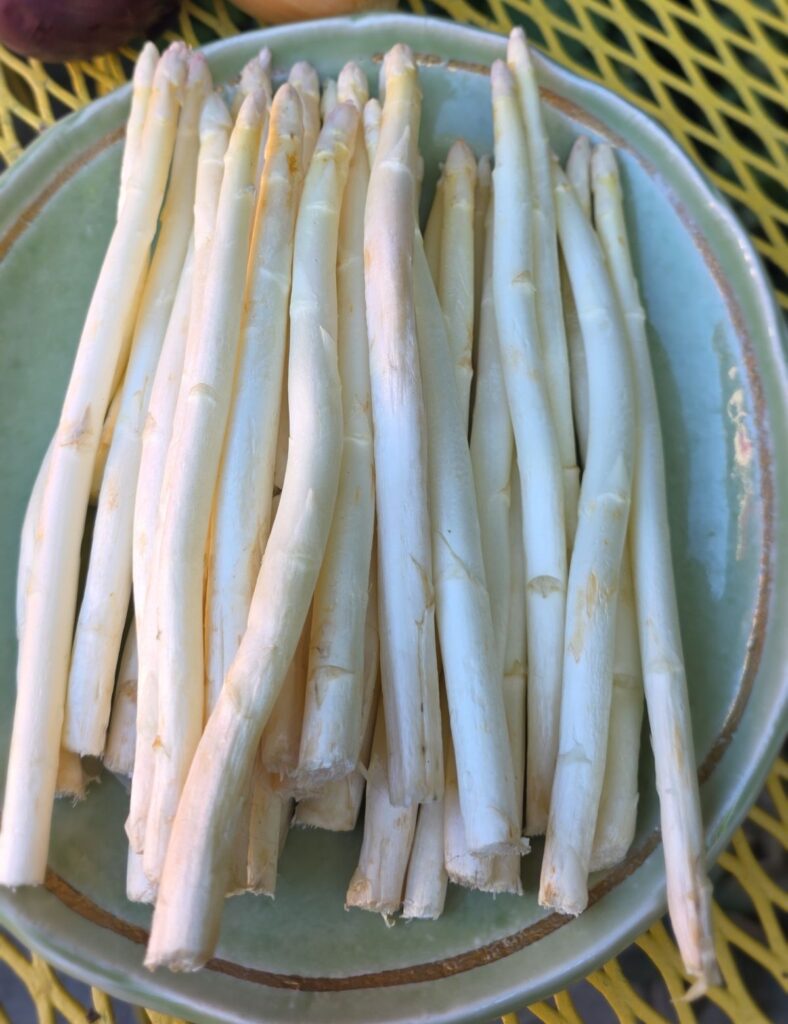
White asparagus, because of its tough skin, will need to be peeled before cooking using a vegetable peeler. An inch or so of the woody bottom ends can be trimmed off just like with green asparagus. They can be steamed, baked, boiled or sauteed until tender and then tossed in olive oil or melted butter with a squeeze of lemon. Creamy hollandaise, garlic or tarragon lemon sauces, herbal vinaigrettes and brown butter can all be drizzled over white asparagus to create a delicious side dish.
White asparagus pairs well with ham, prosciutto, salmon, cod, eggs, chicken, beef, pork and potatoes. It is popular on salads and in soups.
Specialty grocery stores and European markets may sell jarred white asparagus, usually in olive oil. Jarred and canned white asparagus can easily be purchased online as well. Fresh white asparagus can be hard to find in the Bay Area.
Whole Foods usually has fresh white asparagus in the spring. Other specialty grocery stores may also have it for a limited time in April through mid-June. It can be like hunting for treasure, and in the case of “white gold” when you find it, your dinner will taste deliciously richer.
Daniel O’Donnell is the co-owner and operator of an organic landscape design/build company in Fremont. Chrysalis-Gardens.com.