

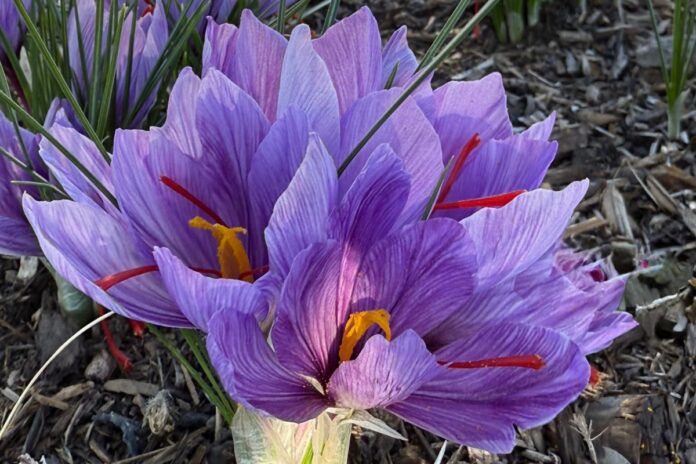
Saffron, Crocus sativus, is a delight to the home gardeners as it is considered the most expensive spice in the world and can be grown in our own backyards here in the Bay Area. Each flower typically has six petals, and the spice comes from the three deep red and orange stigmas of the flower. The fall-blooming crocus produces the spice, not the spring blooming Crocus vernus, Crocus tommasinianus and Crocus chrysanthus.
To grow the flowers for collecting spice, one must first acquire the corms. Many local nurseries stock them around planting time, which is close to late summer. They can also be ordered online. If you have the choice of selecting individual corms, choose bigger ones that are free of any pests or decay.
Once you are ready to plant, select a spot that receives at least eight hours of direct sunlight. If planting in a container, make sure it is at least 12 inches deep and has some drainage holes. For raised beds or ground planting, add hardware fabric wherever possible to keep out voles, gophers and other burrowing pests.
Plant the corms in well-draining soil about three inches deep and about four inches apart. Cover with straw to suppress weeds, and water the weekly. It’s important to make sure that the area does not become waterlogged. In about seven to eight weeks after sowing, corms start to produce flowers, which only bloom for a day, or sometimes even less.
Saffron harvesting is labor intensive, and must be done within a short window. Protect the plants in case of rain, as even a light rain can ruin the petals and soil can contaminate the stigmas. Rain can also impact the color and the strength of the stigmas and cause wilting and decay. Flowers can collapse even before one has had a chance to pick them.
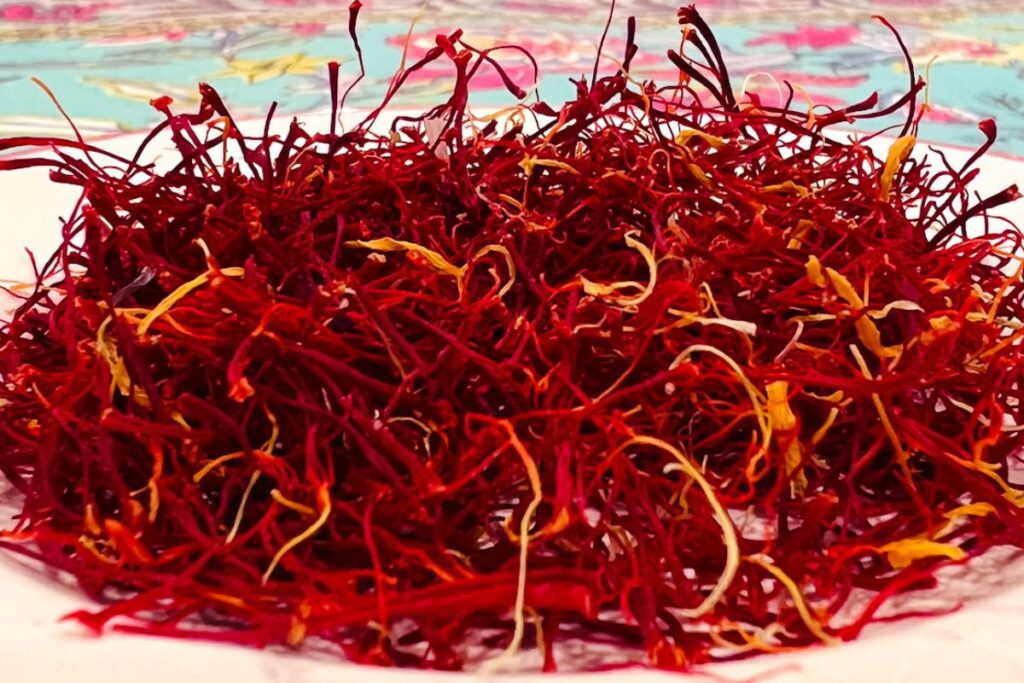
It is best to harvest in the early morning right after the flowers have opened. Use tweezers or gently snip at the bottom of the stigmas with your fingers to gather the threads. Once collected, lay them on a tray lined with parchment paper and allow to dry at room temperature under a slow fan. It takes about a week. While some gardeners dry them on a very low oven setting, I have found the air-drying to be the most practical and worry-free.
Once the threads have crisped up, store them in an airtight and non-reactive container like a stainless-steel box or a glass container away from light. I make small paper satchels to store individual portions of 12-15 threads. Fun fact: It takes about 175 flowers to have one gram of saffron.
After the flowers are harvested, the plant continues to grow leaves through winter and early spring. Leaves allow the plant to feed the corms and multiply. As the weather warms up, leaves naturally die back. New corms are ready once the leaves have completely dried up.
As the corms multiply, it’s best to dig them up every three years and divide them for better yield, and to prevent overcrowding in containers. Simply invert the container, if possible, and collect the corms. Otherwise, gently lift the soil, brush off the excess dirt and let the corms air dry in a shaded place. Save them in a paper bag in a cool and dry area until they are ready to be planted the following season.
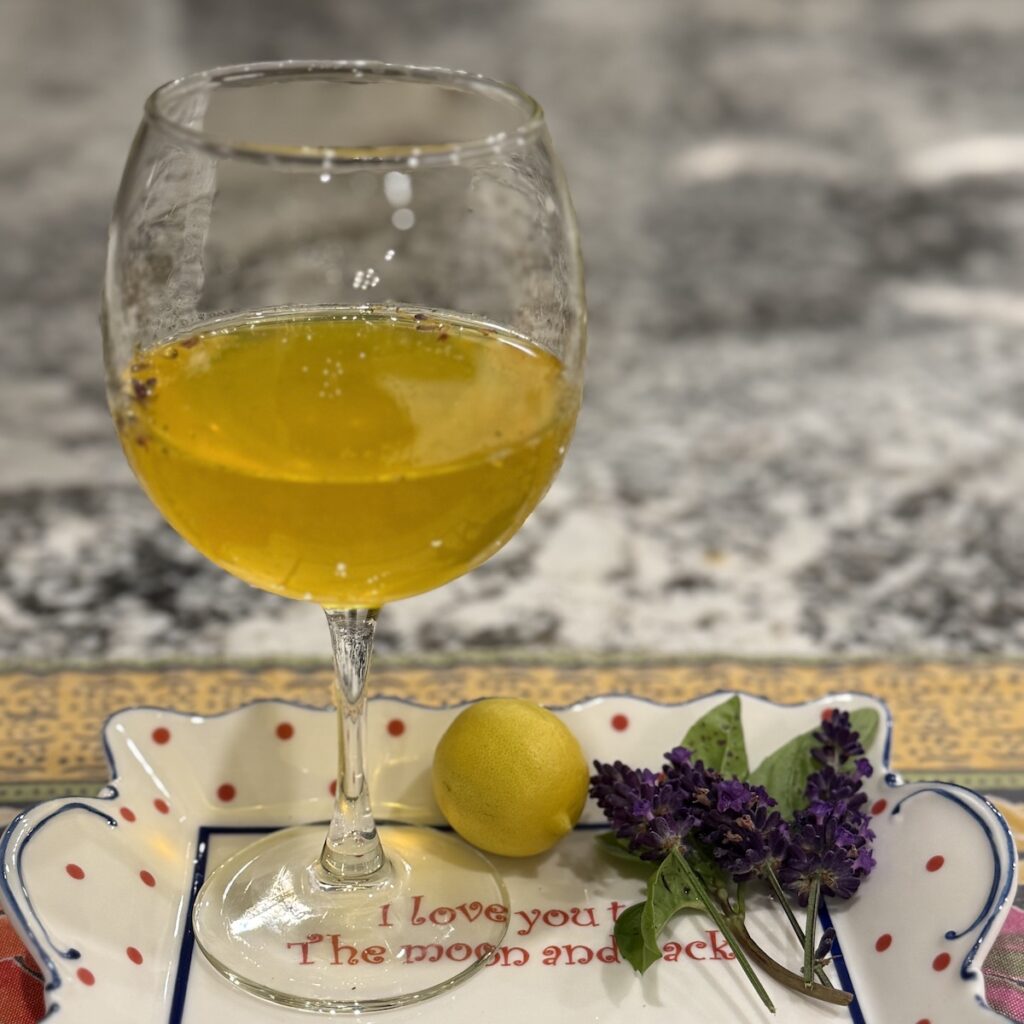
Saffron has a subtle yet complex flavor profile with a honey-like fragrance, some floral notes and a slightly bitter taste. It has been used for medicinal purposes and also as a beauty ingredient. It is commonly used in rice dishes, meats and in desserts. A little saffron goes a long way. Just a few threads can flavor an entire dish. We use saffron threads in rice dishes, tea, lemonade and desserts like kheer and ras malai.
My great-grandmother taught me to bloom saffron for use by directly soaking the threads either in warm milk or water, and leaving them covered for a couple of hours. Saffron threads can also be crushed in a mortar and pestle with a pinch of sugar and made into a powder.
Saffron lemonade
Two cups of cold water
6-8 saffron threads
1 tbsp lemon juice, adjust based on sourness
Sugar, sugar alternatives or sugar free sweetener to taste
Mint leaves (optional for garnish)
Soak saffron threads in ¼ cup warm water for at least 30 minutes for release of color and aroma.
Dissolve sugar in water and add lemon juice. Gently stir in the saffron water and let it sit in the refrigerator for one hour, allowing the flavors to incorporate. Garnish with mint leaves. My favorite is to infuse it with lavender flowers.
In Indian culture, the saffron color (kesari) signifies supreme sacrifice, and I would like to dedicate this article to my mother to honor all the sacrifices she made and everything she had to forego to give me the best. A salute to unconditional love!