

Americans are expected to consume seven billion hot dogs between Memorial Day and Labor Day—150 million of those are on the Fourth of July alone.
The average American eats 70 hot dogs per year. The average Norwegian, however, eats over 100 hot dogs per year. People in many other countries eat hot dogs as well, served with regional and traditional condiments.
All hot dogs are sausages, but not all sausages are hot dogs. Hot dogs are mainly pork, beef, chicken, turkey and spices in a casing. Ingredients and ice chips are added to a high-speed mixer and blended into an emulsified paste. The paste is then inserted into a long, thin, cylindrical casing, smoked and then cooked. Sausages are different. Most sausages are coarsely or finely chopped seasoned meats and/or meat byproducts encased in a skin.
Although sausage making is thousands of years old, hot dogs were not invented until the 15th century in Frankfurt or the 16th century in Coburg, Germany depending on which city’s claim is true. Vienna also professes to be the birthplace of the hot dog around the same time. However, none of the sausages—the frankfurter, dachshund and wiener respectively—were called hot dogs at their times.
German immigrants brought frankfurters and dachshund sausages to the U.S. around the 1800s. The term “hot dog” appeared by the end of that century. There are many legends about where the name came from. The German immigrants also brought dachshund dogs whose long cylindrical bodies are the most likely inspiration for the name hot dog. There are also many claims to the invention of the hot dog bun. However, Germans traditionally ate bread with sausages, which probably led to what would become the hot dog bun.
The popularity of hot dogs throughout the world greatly increased during the 20th century. Below are some of the popular traditional hot dogs found throughout the world today:
Tunnbrödsrulle or Swedish hot dog, is a popular late-night hot dog in Sweden. It consists of a round piece of flat bread with a layer of mashed potatoes, two hot dogs, Skagenröra (a dill shrimp salad), fried onions, sweet pickle relish and mustard. Norway and Finland have similar recipes but add their own twists.
Perros Calientes Colombianos or Columbian hot dog, is a traditional Colombian hot dog also popular in Queens, New York. It is steamed or boiled and served on a soft bun. It is topped with pineapple chunks, raspberries, bacon and crushed potato chips, and occasionally three hard boiled quail eggs. Then it is drizzled with garlic mayonnaise, mustard, avocado sauce and/or salsa rosada (a sweet pink creamy sauce).
Párek v rohlíku or Czech hot dog, is one of the most common street foods sold from food carts, at gas stations and at festivals. It consists of a long hot dog held tightly in a hollowed-out soft bread roll. Ketchup or mustard are the only condiments that are traditionally paired with it.
Korean corn dog, often just called “hot dog” in South Korea, became a popular street food in the 1980s. It is made by skewering a hot dog and then dipping it into a batter made from sweet rice, flour and dry yeast and then fried until crispy. Popular variations include dipping the battered hot dog into small potato chunks, crushed ramen noodles or panko before frying.
Montréal hot dog is a Canadian hot dog on a bun topped with a vinegar-based coleslaw, chopped onions, pickle relish and mustard. It is sold on corner hot dog carts throughout much of Quebec. The bun can be steamed, called a steamé or stimé or toasted, called a toasté or toastie.
Sonora Dogs originated in Hermosillo, Mexico and can be found throughout towns and cities in the Sonora desert in Mexico and the U.S. They consist of a bacon-wrapped hot dog on a bolillo-style bun, topped with pinto beans, grilled onions, fresh tomato, jalapeno salsa and optional mayonnaise, mustard and cilantro-lime crema.
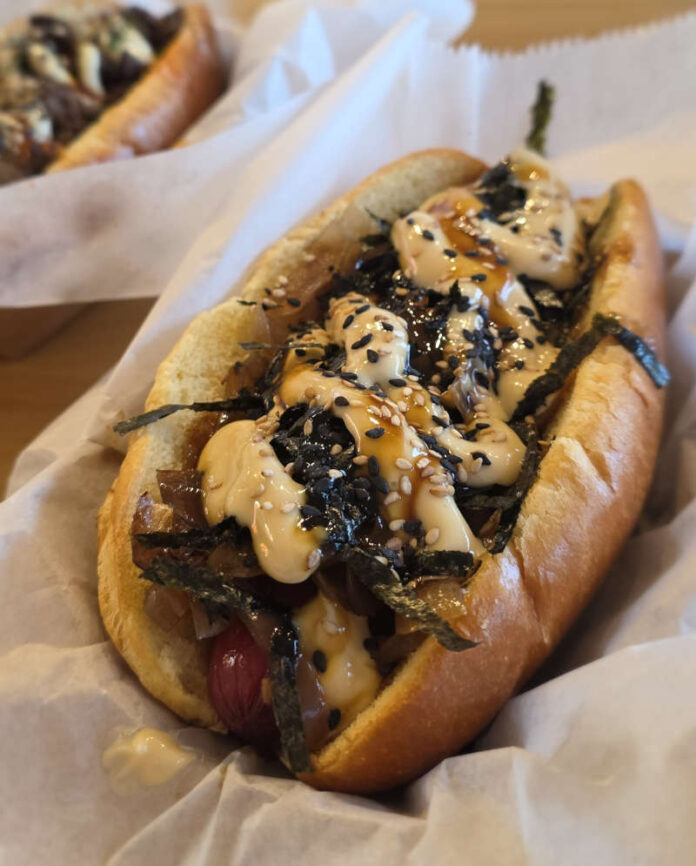
Japanese style hot dogs are hot dogs dressed with traditional Japanese condiments. German POWs from WWI and American service member influences after WWII elevated the status of hot dogs. Soon afterwards, the Japanese were adding combinations of dried seaweed, Japanese mayonnaise, teriyaki glaze, bonito flakes, sesame seeds, crispy and/or green onions and Japanese seasonings.
Rolló con Wurstel or Sicilian hot dog rolls, are made with hot dogs baked in a brioche dough covered in sesame seeds. The popular street food is accompanied by the usual condiments such as ketchup, mustard, mayonnaise, grilled onions, sautéed peppers, and options may include grated Italian cheese and a drizzle of olive oil.
There are many more delicious traditional hot dog variations throughout other countries in the world and even beyond. Neil Armstrong and Buzz Aldrin Jr. had hot dogs for one of their first meals on the moon in 1969. People all over the world are lucky they do not have to go that far to enjoy a tasty hot dog.
Daniel O’Donnell is the co-owner and operator of an organic landscape design/build company in Fremont. Chrysalis-Gardens.com