

Editor’s note: This article contains descriptions of wildlife management, parasites, diseases and animal waste products.
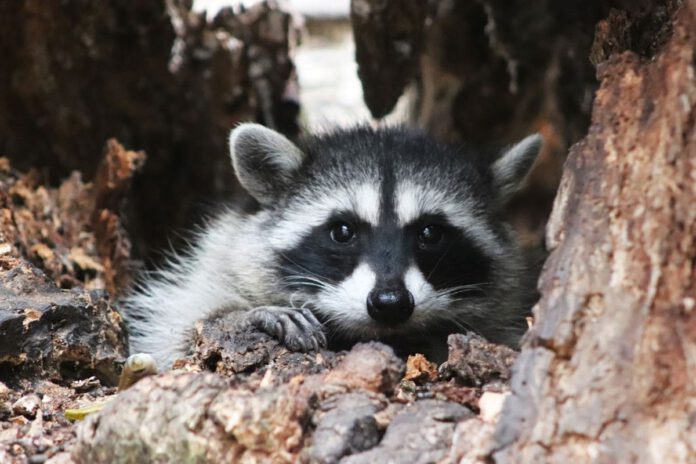
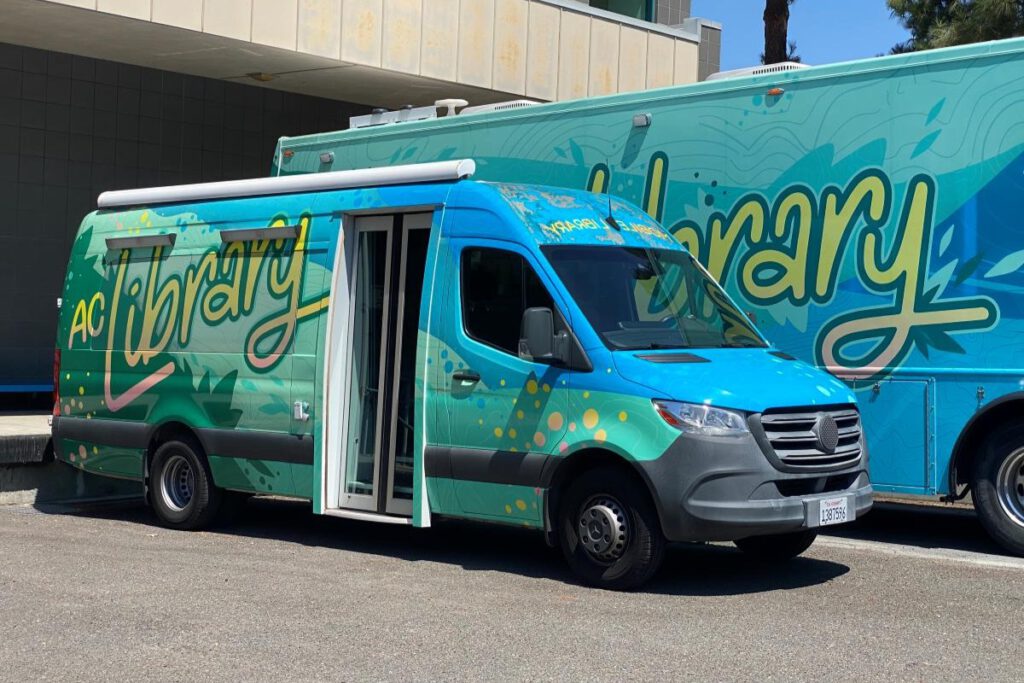
Raccoons are a well-known example of local wildlife, but people don’t often think about what happens when they get into places humans don’t want them to be. A raccoon was found inside the engine compartment of the Alameda County Library bookmobile during the 2025–2026 winter season.
The library worked with Alameda County Vector Control to deal with the raccoon, “in accordance with USDA-approved protocols,” according to county librarian Deb Sica.
According to Sica, “the issue has been resolved… The raccoon trapped outside of the Fremont Main Library was dispatched by Alameda County Vector Control. Since then, there have been no other wildlife trappings at this site.”
Often, raccoons will find a single place to urinate and defecate, going back to the same spot. A raccoon “latrine” was also found inside the bookmobile’s engine.
Raccoon feces can contain parasitic roundworm eggs. These parasites can be accidentally ingested or inhaled, causing sickness in humans. Raccoon urine can cause structural damage to attics, crawl-spaces and engine parts.
Outside of rabies or canine distemper, a raccoon latrine may be cause to contact vector control.
Alameda County Vector Control handles wildlife nuisance concerns. According to their website, the department views trapping as a last resort: “A qualified Vector Control Biologist may need to inspect and reassess the problem over multiple visits to determine whether trapping is necessary.”
Local wildlife agencies want to prevent the need for trapping.
Alameda County Vector Control’s website states: “If the animal appears to be healthy, there is no reason for concern. If the animal appears ill, contact your local animal control agency.”
The Tri-City Animal Shelter and Animal Services states that they do not “trap or relocate healthy, nuisance wildlife like raccoons.” The library worked with vector control and not the Tri-City Animal Shelter and Animal Services for this reason.
Ohlone Humane Society public relations volunteer, Carol Drake, provided several links, including one from humaneworld.org.
This website contains articles like: “How can I stop raccoons getting into my…” “How can I keep raccoons away from my…” “How can I keep raccoons out of my…” All of which advise prevention, none of which advise trapping.
There’s a reason for focusing on deterrents and prevention. California State law (Title 14, Section 465.5), California Fish and Game code (Section 4180 and 4152) and USDA-approved protocols are strict.
Trapping wildlife must be done in accordance with the law. Everyone—experienced county departments, library staff who call upon them and local residents using private traps—must follow the same set of rules.
Traps must be changed daily and the animal may never be relocated. In California, fines for illegal wildlife relocation can range up to $1,000 to $2,000 and severe or repeat violations can carry up to one year in county jail.
California law permits two options when trapping: either the animal must be immediately released exactly where it was trapped, or the animal must be “dispatched” (to kill an animal as quickly and as humanely as possible).
Only the specific, individual, nuisance or damage-causing animal may be dispatched. Any non-targeted animal that is trapped must be unharmed and released immediately on-site.
In the case of the bookmobile, by law, vector control cannot dispatch multiple raccoons while attempting to trap a raccoon found in a bookmobile engine. Each day, if other raccoons or other species were trapped, they would be released without relocation. Prior to traps being set by the county, vector control would have advised Alameda County Library with two options for the targeted raccoon: release or dispatch.
The general public is not in a legal position to dispatch wildlife. The chemical most commonly used to dispatch wildlife is a Schedule III controlled substance (WS Directive 2.430) which the general public is not permitted to possess. In order to use this chemical, personnel must be specifically trained, certified and compliant with federal DEA and state regulations.
A foraging raccoon passing through a property is not a nuisance animal. If residents wish to deter raccoons and prevent latrines (or nests), they should do two things: remove enticements and block passages.
Secure the lid of your trash can with a strap or strong bungee cord. Refrain from leaving animal food or water bowls outside. Gaps under fences, porches, decks or sheds can be blocked using galvanized hardware cloth.
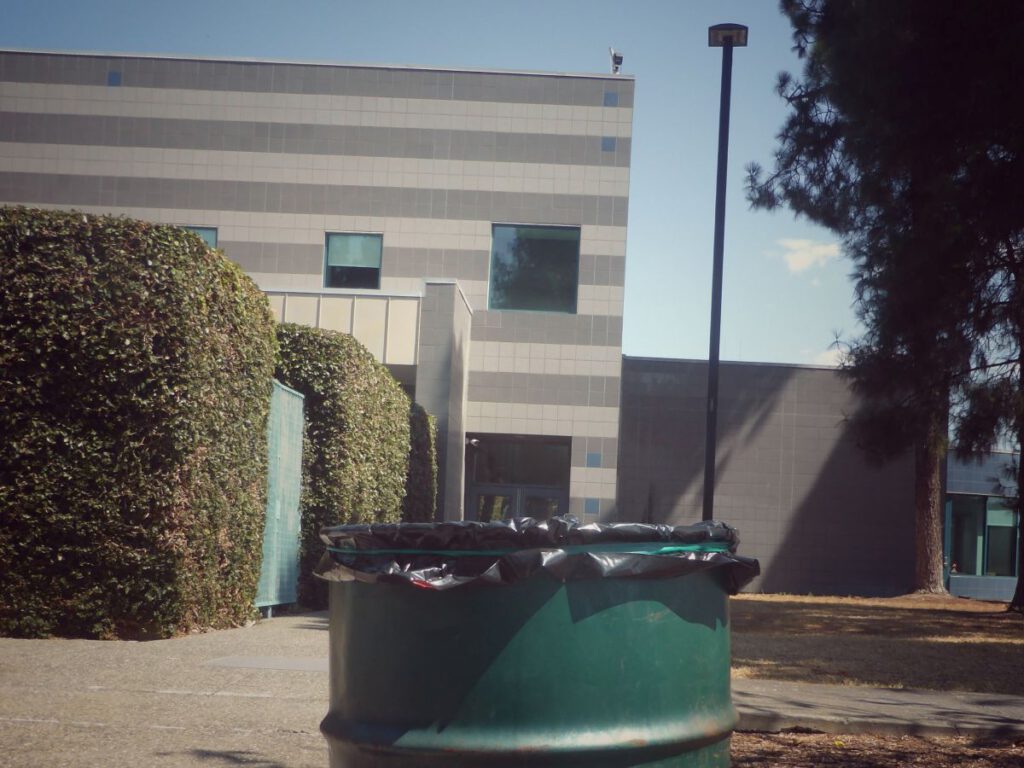
The Fremont Main Library branch has multiple open-topped trash receptacles in the parking lot. One, standard, commercial, single-bin, heavy-duty, animal-resistant trash receptacle retails from $1,400 to $1,900 online. The gated area around the bookmobile parking could be further secured with expanded metal sheeting—and one-way, wildlife, exit doors. Alameda County Library is funded primarily by local property taxes.
Alameda County Vector Control can be reached at 510.567.6800 or acvcsd.org/request-service.
Alameda County Library management can be contacted online at aclibrary.org/management.
Learn more about Ohlone Humane Society at ohlonehumanesociety.org.