

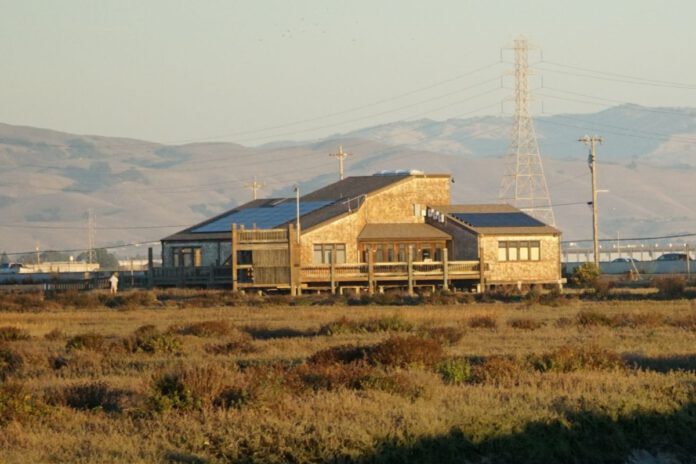
The Hayward Shoreline stretches across 1,815 acres of salt and fresh marshes, wetlands and public trails. It’s the home to a variety of natural wildlife and serves as a nesting area for birds. With the El Niño season taking effect, the Hayward Shoreline has seen an increase of water levels, which can be cause for concern.
Nicole Roa, a public information officer at the Hayward Area Recreation and Park District (H.A.R.D.), said they have seen higher levels of water increasing by the Hayward Shoreline Interpretive Center.
“We have seen the [Bay] trail become inundated with water, especially in recent weeks, when the high tides reach seven feet or higher,” Roa said. “We are also seeing higher water levels in the salt ponds near the center.”
El Niño could bring elevated sea levels closer to the shoreline. Suzanne Maher, a professor at Chabot College teaching physical geography and environmental studies, said the El Niño is a climate pattern with trade winds blowing from east to west happening every three to seven years, lasting 9 to 12 months.
“With an El Niño, we’re in an unique area where precipitation levels are not guaranteed, though it is likely that we’re going to have a wetter than normal winter,” Maher said. “What we can say is that SF Bay levels are already higher.”
Water levels could rise from three to six feet above normal from multiple factors such as warm water expanding from the El Niño, and king tides and storm surge occurring at the same time, according to the San Francisco Bay Conservation and Development Commission. The main concern is flooding.
Maher said the shoreline is vital to the community as it improves water quality and serves as a natural buffer to prevent flooding.
“The tidal marshland is really important in that it’s protecting our communities further back,” Maher said. “Those marshlands can absorb a lot of that water so that we have less flooding further inland.”
Wetlands help protect communities from taking the impact of rainfall and rising water levels by acting like natural sponges, according to the Wetlands Regional Monitoring Program.
Maher said experiencing a super El Niño like this can significantly harm the coastal wetlands through severe flooding, causing an acceleration of erosion and plant drowning.
“Hopefully the flooding that we experience does not permanently damage any of the salt marshes and wetlands,” she said. “We should allocate resources for these wetlands now and see if there is any way that we can mitigate damage within those wetlands.”
Another cause of concern is how the native wildlife will be affected by the El Niño. Birds seen at the Hayward Shoreline are ducks, great egrets, black-necked stilts and gulls, according to the iNaturalist website.
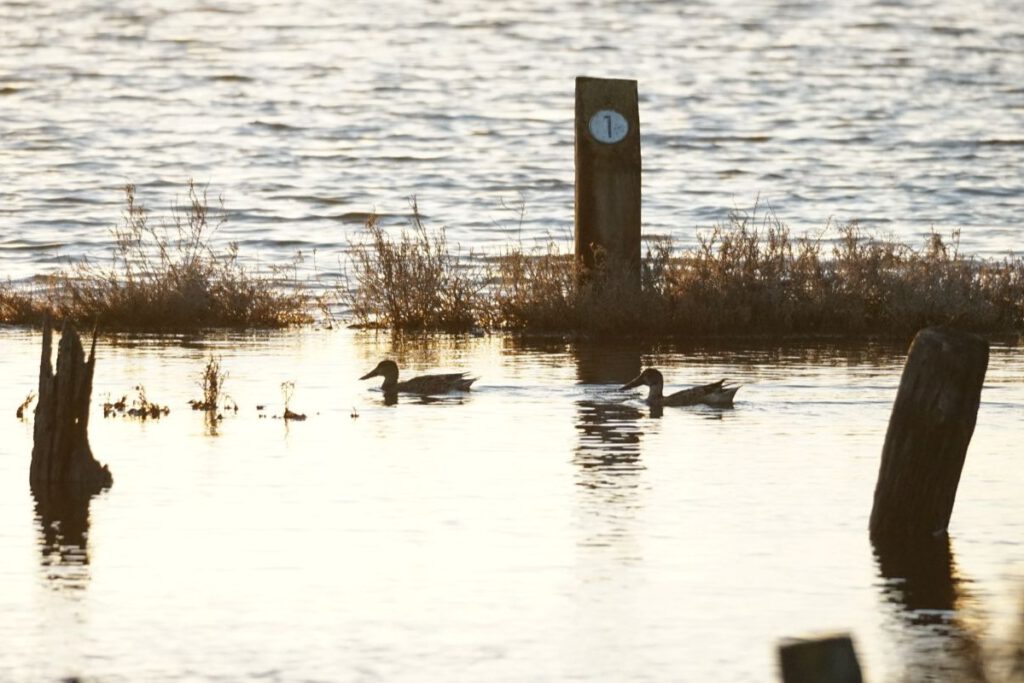
Roa said the effects of rising waters will reduce the dry areas of the marsh and push water further into the Salt Marsh Harvest Mouse reserve.
“This may push non-flighted animals closer to the edges of the marsh and nearer to businesses and neighboring communities,” Roa said. “Higher tidal levels will reduce the nesting area of some species of birds due to less dry space.”
The Hayward Area Shoreline Planning Agency has created a Shoreline Adaptation Master Plan that outlines adaptation measures to prepare for and mitigate sea level rise and major flooding along the shoreline, according to the City of Hayward website.
Roa said H.A.R.D. is planning to use social media to provide information about possible trail flooding, along with safety tips.
“H.A.R.D.’s Interpretive Center team is finalizing the development of internal protocols in regard to public and employee safety at the facility during these expected events,” Roa said. “Should the water get too high, measures will likely include closure of the facility.”