

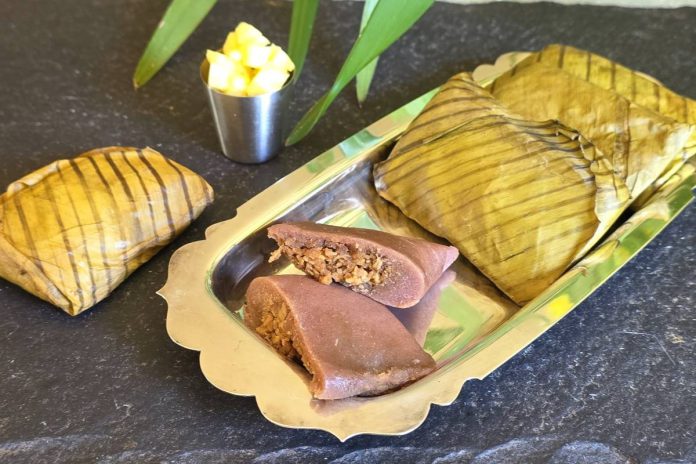
Bananas are the most popular fresh fruit in the U.S. The average American consumes about 90 per year. The U.S. imports 10 to 11 billion pounds of bananas annually which is more than any other country. Bananas are most commonly peeled and eaten or used in muffins, pancakes, smoothies and desserts.
They are rarely incorporated into main dishes here unlike other parts of the world where bananas are grown. It is also uncommon in traditional American cuisine, with the exception of some Hawaiian recipes, to use banana leaves for cooking. However, there is an abundance of traditional dishes cooked in banana leaves in many tropical and sub-tropical countries.
A banana is not a tree but a giant herbaceous perennial plant with large glossy green leaves. Some grow up to 30 feet tall. The leaves are tough and fibrous, which makes them hard to digest even after cooking. However, they are not poisonous and are very flavorful due to a high number of phenolic compounds in their waxy coating.
When the leaf is heated, the wax melts and releases these compounds which give off a mild, sweet, tea-like or grassy aroma. When food is wrapped and cooked in a banana leaf, it absorbs these compounds which are both aromatic and flavorful.
The flavor from banana leaves pairs well with a large variety of foods. Marinated fish, pork, chicken and beef are commonly cooked in banana leaves, occasionally accompanied with herbs and vegetables. Savory vegetarian curries, stews and sticky rice dishes as well as numerous sweet desserts such as rice cakes, coconut custards and soft steam cakes utilize the banana leaf.
Banana plants grow well in many of the Bay Area microclimates that do not have frost, making it possible to grow and source your own leaves. Fresh or frozen banana leaves can be purchased in many local Asian, Indian, Hispanic, markets or online.
Photos by Daniel O’Donnell
Photos by Daniel O’Donnell
After being clipped from the plant, banana leaves should be cleaned with a paper towel. Cut them in half and remove the thick midribs. Fresh and frozen purchased banana leaves usually come pre-cleaned and trimmed.
Fresh leaves will need to be softened by submerging them in hot water, warming in an oven or passing over an open flame on a gas stove. Slightly heating them improves their flexibility. Frozen leaves should be thawed in the refrigerator and will become wet and flexible but delicate.
Banana leaves can be folded around food to create a packet that locks in moisture and aromatic flavoring compounds. Using this method, food should be placed on the dull side of the leaf and folded so the leaf’s shiny side is facing outwards. An additional leaf layer placed seam-side down will help ensure that the packet stays sealed tight. The pouch can be secured using cooking twine or a water-soaked toothpick if necessary.
Different cooking methods work well with banana leaves, such as steaming, grilling, roasting and boiling. Leaves can be placed between a frying pan, BBQ grill or baking sheet and the food being cooked to protect delicate foods from burning, act as a non-stick surface and add an additional subtle smokey flavor.
Banana leaves are commonly used in many countries:
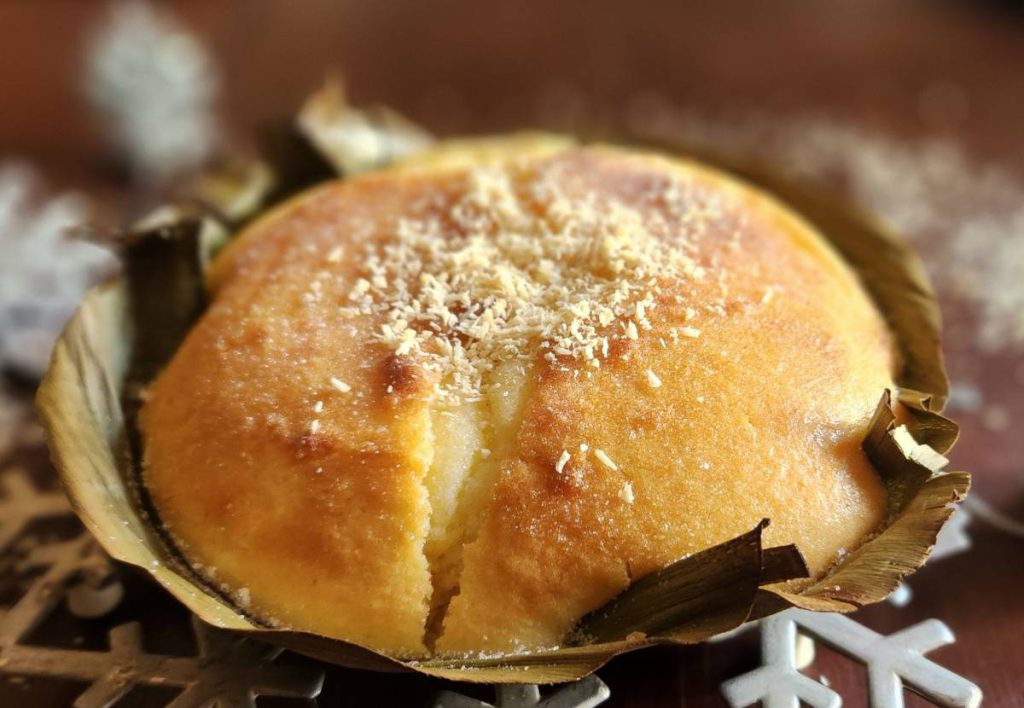
South and South-east Asian tropical and sub-tropical countries such as Malaysia, Indonesia, Philippines, Thailand, Vietnam, Laos, India and Sri Lanka all cook dishes utilizing banana leaves. Babinka (Philippines), Elayada (India), Khao Tom Mat (Thailand/Laos) and Paturi (Bangladesh/Eastern India) are a few examples.
Photos by Daniel O’Donnell
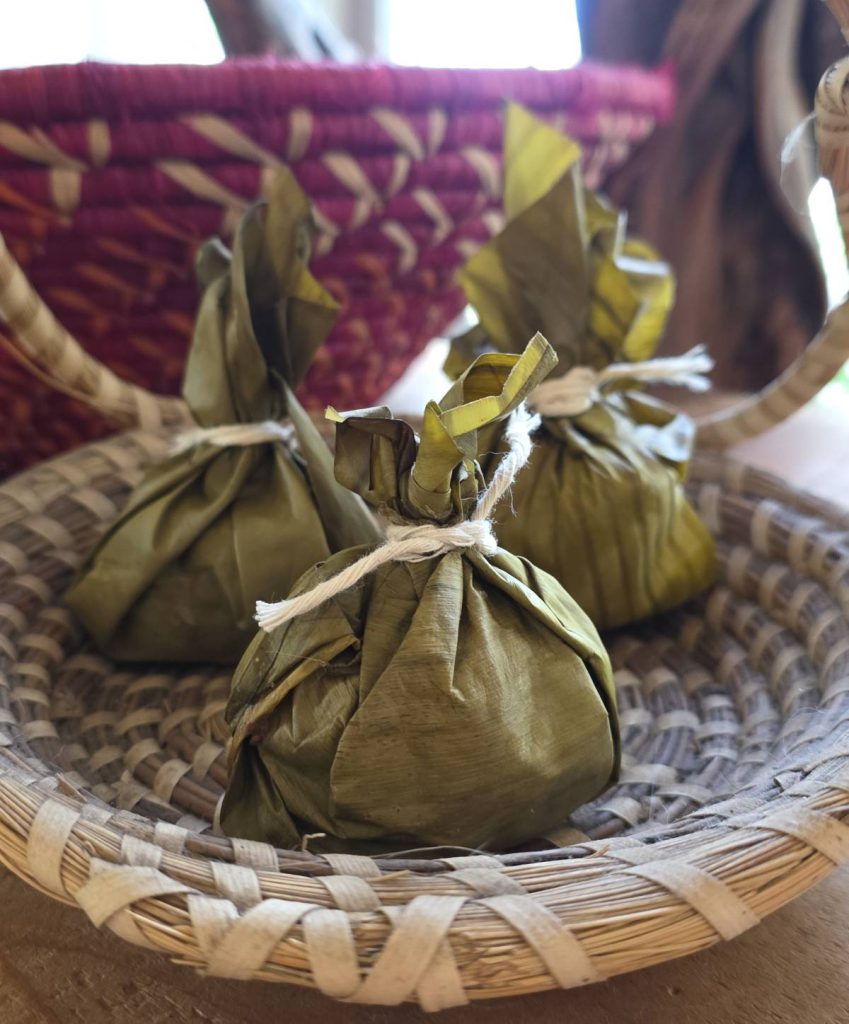
Mexico, Puerto Rico, Cuba, Jamaica, Dominican Republic and Central America countries also use banana leaves in many dishes. These countries all have traditional tamales that are wrapped in banana leaves unlike the most common corn husk tamales sold in the U.S. Hawaii also has many traditional dishes cooked using banana leaves. Kalua pork is one of the most popular.
Uganda, Tanzania, Kenya, Madagascar, Rwanda, Burundi, Cameroon, Ghana, Nigeria, Ivory Coast, Cameroon and Democratic Republic of Congo all feature foods cooked with banana leaves and local African spices. Liboké de poisson is a popular Congolese seasoned fish dish. Another is Luwomboa, which is a traditional Ugandan stew or sauce prepared using young smoked banana leaves.
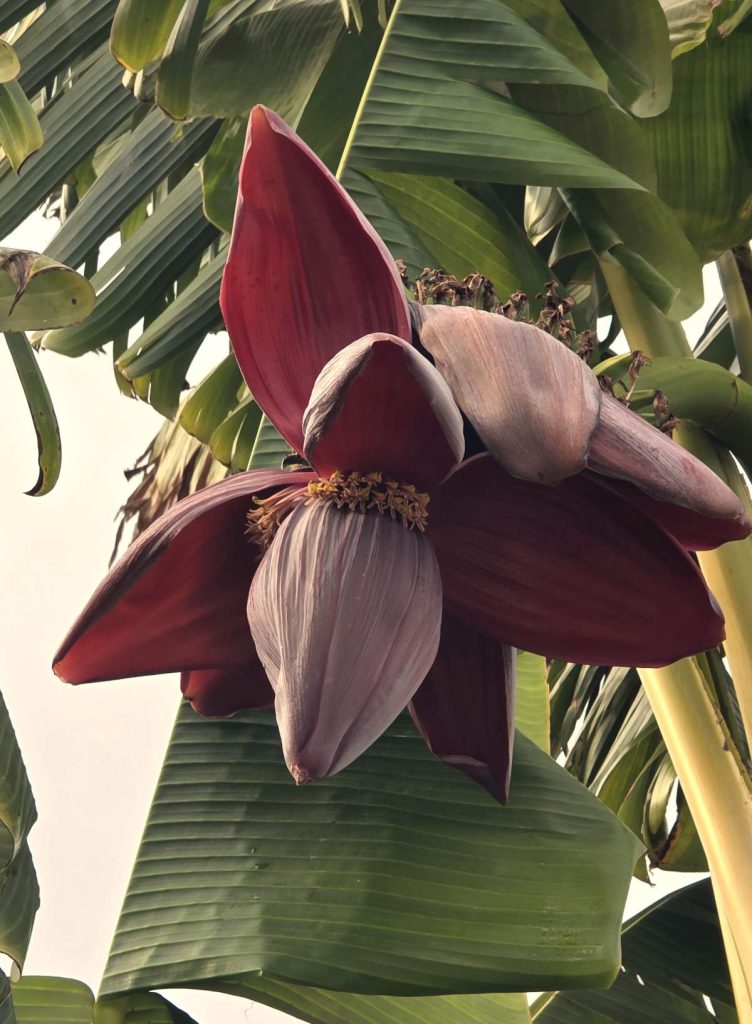
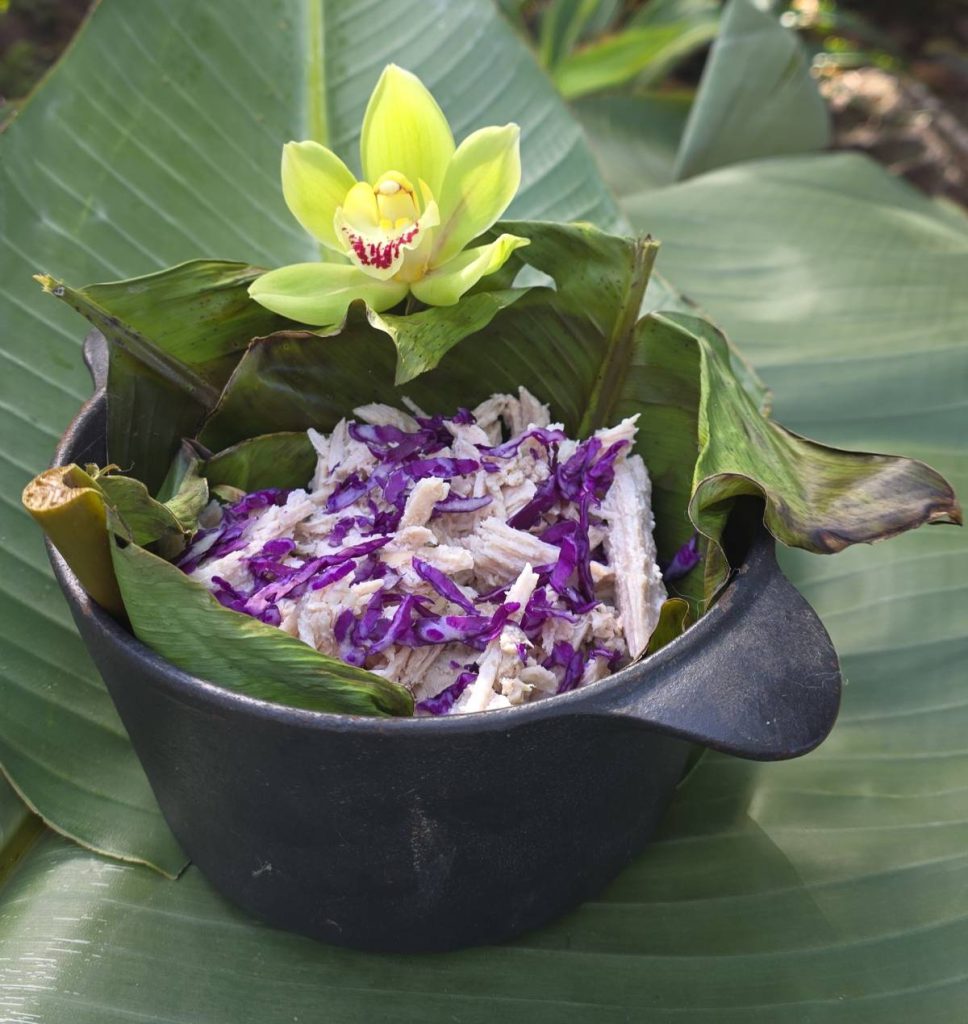
Banana plants offer one more edible delight. The large pinkish purple flowers can be eaten. They have a mild, slightly nutty and earthy taste. They can be chopped, sauteed or incorporated into curries, salads or casseroles. They can be purchased at many local farmers markets, Asian and Indian grocery stores. Banana flowers and banana leaves are an exciting way to bring the taste of paradise into a meal.
Daniel O’Donnell is the co-owner and operator of an organic landscape design/build company in Fremont. Chrysalis-Gardens.com