

The Hanging Gardens of Babylon, constructed around 600 BCE, are arguably the most well-known ancient gardens. The Gardens of Sigiriya in Sri Lanka, built from 477–495 CE, are thought to be the oldest surviving landscaped gardens in the world.
Both of these, as well as almost all of the most noteworthy gardens throughout history, included water features. Water features offer gentle motion, a soothing sound and pleasing visual appeal. They can bring the same to a home garden, patio or balcony.
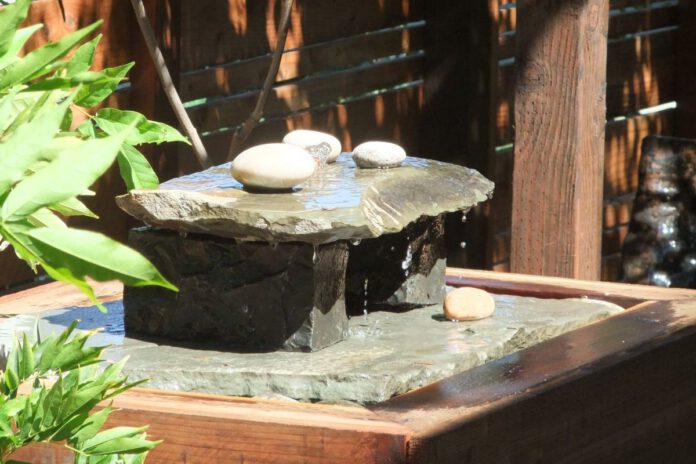
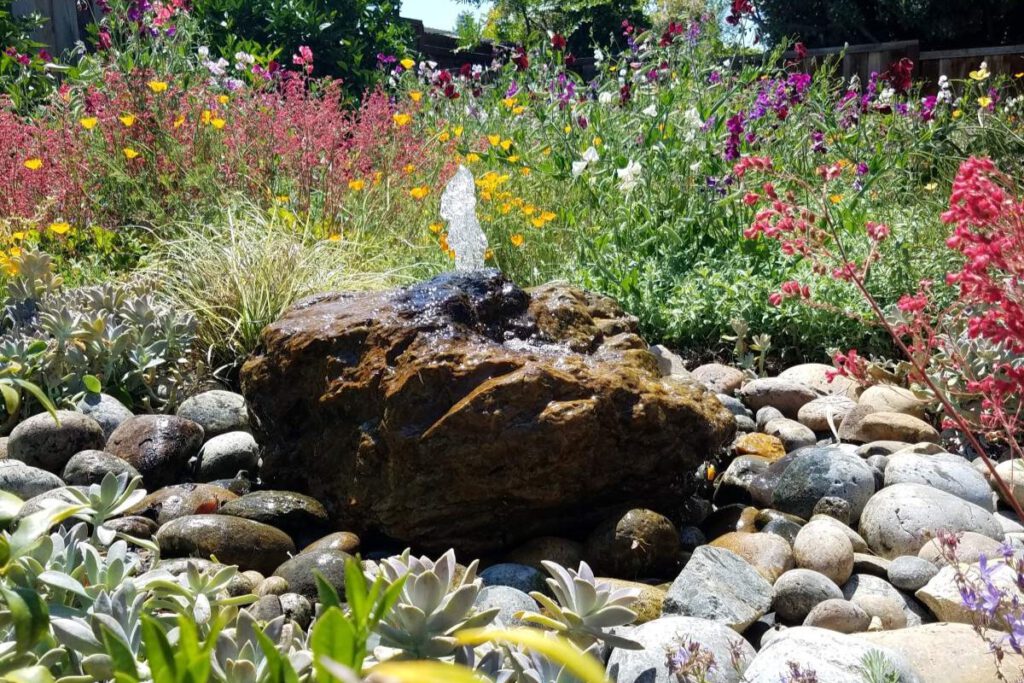
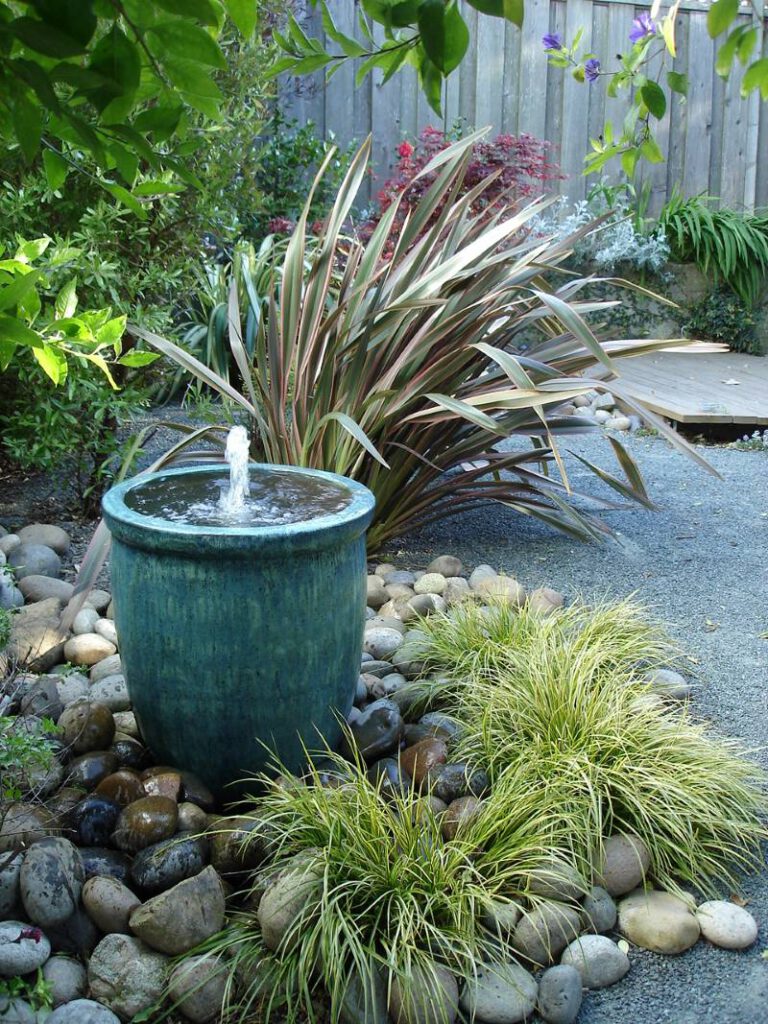
A water feature can be purchased or created. Holes can be drilled in boulders, basalt columns, millstones and pieces of flagstone to create water features. Ceramic pots, half wine barrels, cast iron bathtubs and animal feed troughs can all be used. Almost anything that holds water can be used as a basin, and anything that can have a pipe run through it can be used as a spout.
Location considerations include access to an electrical outlet, proximity to a water source, daily hours of sunlight or shade, whether or not it is a windy location, accessibility to wildlife, visibility, and the sound range of the moving water. Features placed under trees or large shrubs may require more maintenance because of the leaf debris that may fall into the feature. A safe location away from children and pets is also something to consider.
A GFCI outlet will be necessary for water features unless a solar pump is adequate. The outlet should be 6 to 20 feet from the feature depending on the length of the pump cord. A water pump will circulate the water from the bottom of the feature to a spout above and allow the water to trickle, cascade or gush down back into the reservoir.
The size of the pump is determined by the vertical head which is the height the water must travel from the surface of the water to the spout. The correct pump should have a head height rating twice the actual head height of the feature. Circulating water aerates the water for aquatic life, prevents mosquito larvae, and creates the soothing sound of running water.
A water source should be within range of a garden hose to make refilling and cleaning easier. Anytime water is added to the feature with aquatic life, a dechlorinator or water conditioner will be necessary. Water features in direct sunlight or windy conditions, or that provide water to larger animals such as raccoons, squirrels, skunks and opossums, will require more frequent filling. Automatic refills can be installed in some water features without aquatic life.
Water features can attract different kinds of wildlife depending on a few design aspects. A pool at ground level will attract larger wildlife, reptiles like lizards and snakes, frogs and toads, most birds, bees, butterflies and pets. Water features with an elevated basin, three feet and taller, will not provide water for many of the animals that a ground level source would. However, the taller water feature will offer protection for birds, bees, butterflies, frogs and fish.
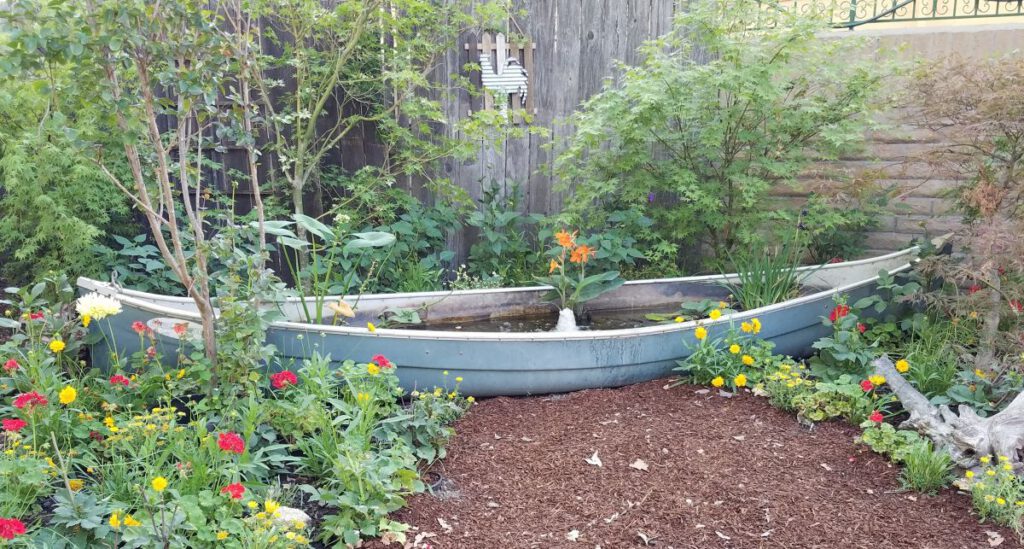
Other safety considerations for wildlife include the depth of the basin. Shallow basins make it easier for animals to get out if they fall in and for birds to stand in and bathe. A deeper basin provides more protection for frogs, fish and other aquatic life. Deeper basins should always have something like a log or large rock above the water surface and near the edge to provide an exit ramp for any animal that falls in.
If the hope is to attract bees, butterflies and smaller birds, then the elevated basin should be shallow and have a couple of flat stones at water level to offer a place to perch while they drink.
Placement of the water feature will depend on its intended purpose. Water features for larger wildlife should be placed away from high-traffic areas and near shrubs so that the animals feel safe when approaching and drinking. Water features intended for visibility and harmonics should be placed where they can be heard and seen clearly from seating areas, open windows or frequently used walkways. Water features that house aquatic life and plants will need a location that receives plenty of sunlight but does not get excessively hot.
Not every water feature has an open pool of water in its basin. Pondless water features have an underground basin usually covered by stones. A submersible pump pushes water up to a spout on the top of the water feature where the water then cascades downwards into the stones at the base and disappears. This type of water feature is more work to install, but requires less maintenance and is safer for children and wildlife since there is no accessible pool of water. There are a wide variety of underground basins that can be purchased online.
Leonardo da Vinci wrote, “Water is the driving force of all nature.” On a smaller scale, a water feature in the garden drives wildlife to the garden and may ultimately be the driving force of enjoyment in the garden.
Daniel O’Donnell is the co-owner and operator of an organic landscape design/build company in Fremont. Chrysalis-Gardens.com