

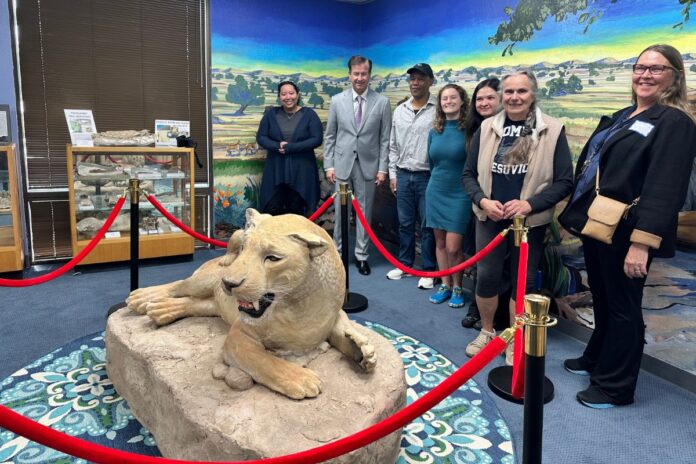
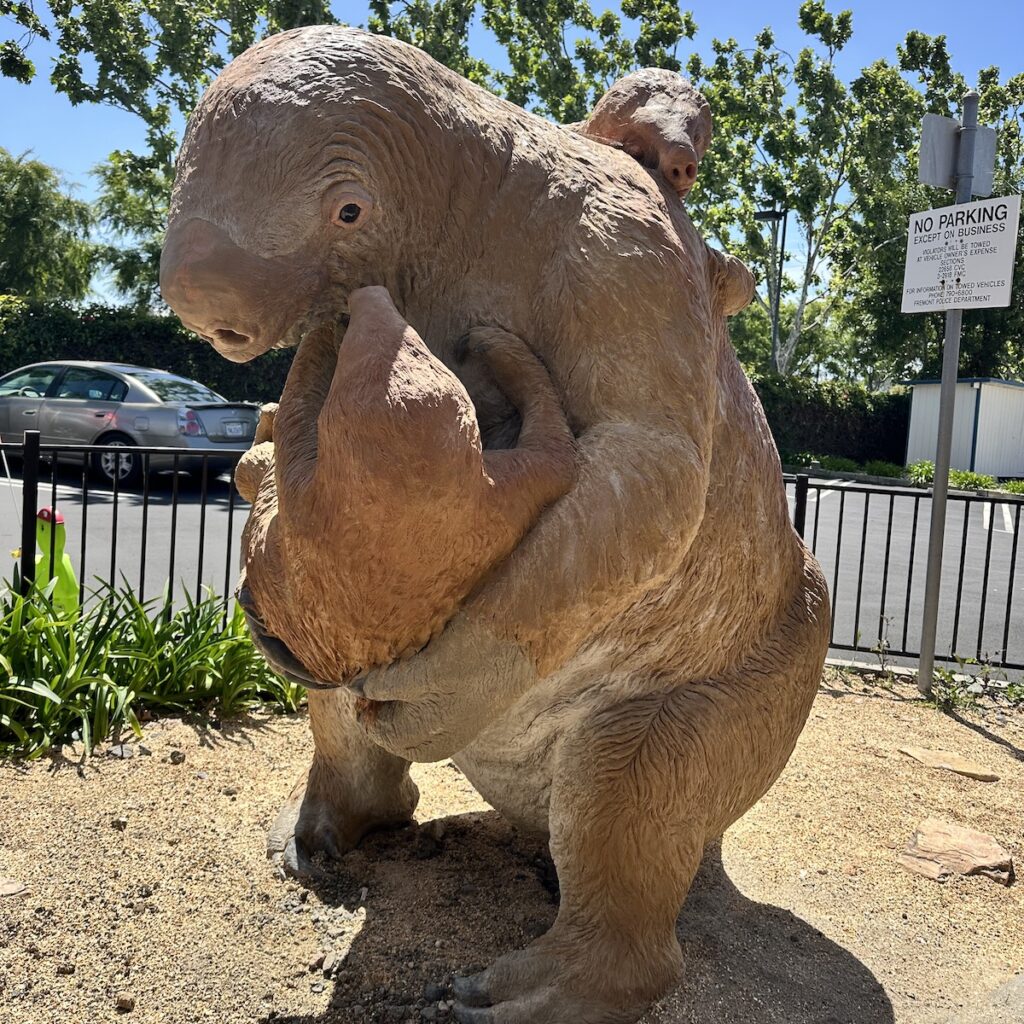
Visitors at the Children’s Natural History Museum in Fremont will find everything from fossils and rock specimens to life-sized replicas of sabertooth cats and prehistoric sloths. This includes a recently created statue of Harlan’s ground sloth—a woolly Ice Age creature that grew to 10 feet tall and weighed over a ton—crafted by a paleoartist using skeletal measurements from a Denver museum.
The Fremont museum is run by Math Science Nucleus, a nonprofit organization founded in 1982 by scientists who visited local schools. Now, hundreds of students visit its three sites: Tule Ponds, California Nursery Historical Park and the Children’s Natural History Museum.
The museum underwent a remodel with state funding and also revealed a new Earthquake Hall made possible with a $75,000 grant secured by County Supervisor David Haubert through the county’s Enhancing Vision 2026 fund.
“We can only keep treasures around so long as we support them financially,” said Haubert at an event celebrating the new exhibit, which contains a massive aerial display of the 74-mile long Hayward Fault. “This is a facility that makes a community special, and helps kids learn in a way that they might not learn from books,” Haubert added.
Field trips remain the primary source of visits, offering hands-on experiences where kids can handle fossils and watch live demonstrations. This year, Math Science Nucleus is also reintroducing summer science camps for children between the ages of 6 and 10, with curriculum exploring subjects like microscope work, paleontology, or physics and engineering principles. The week-long classes cost $300 (or $250 if registered before May 15), according to Susana Esqueda, an anthropologist and educator for the organization.
“We’re scientists and who are now becoming business people,” said Joyce Blueford, the president of the organization who holds a doctorate in geology. But summer camps and funding applications aside, the nonprofit’s core spirit remains unchanged: a tight-knit team dedicated to exposing kids to scientific exploration through enriching activities.
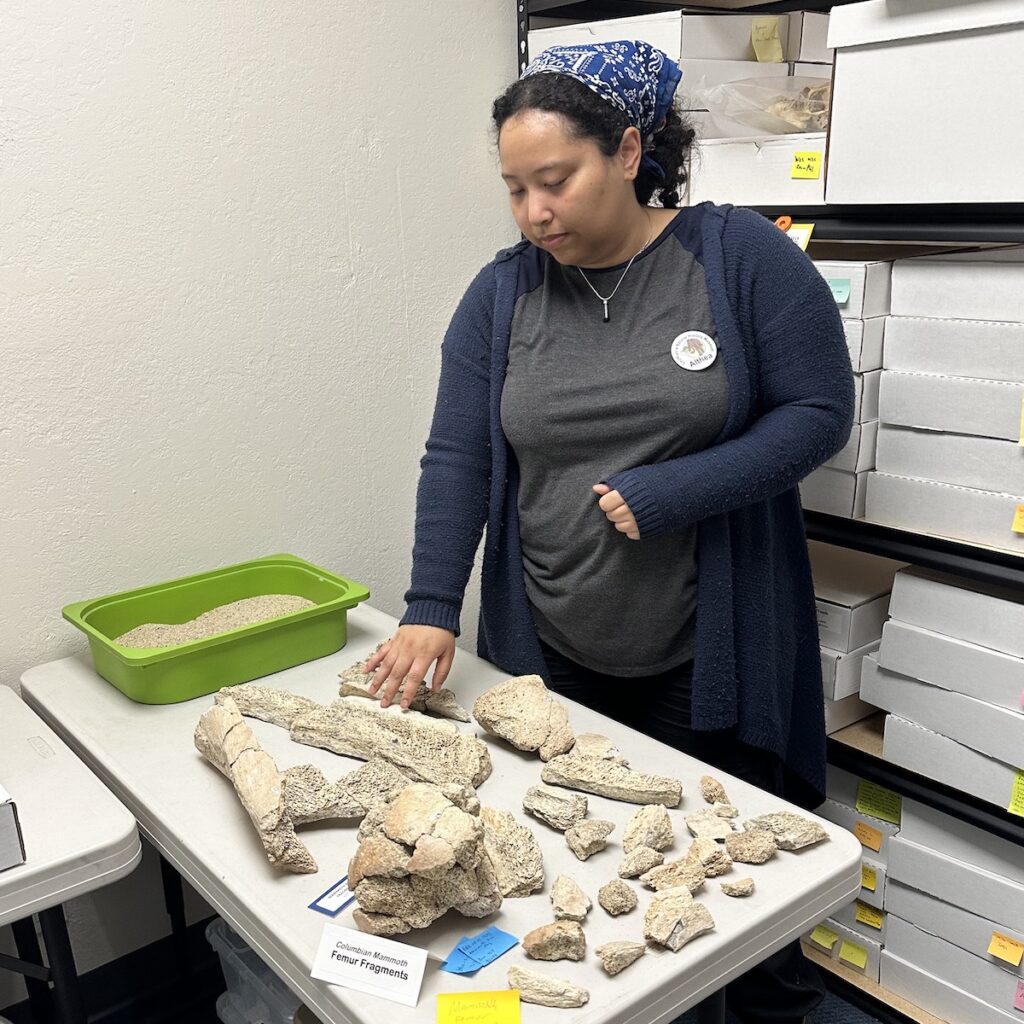
“I want every second grader to experience the ‘Fossils of Fremont,’” Blueford added, estimating that the museum houses over 10,000 specimens. The number of samples increases each year as local construction sites dredge up fossils which are then labelled, identified and eventually pieced together.
Collections manager Althea Weber noted that many samples come from CalTrans and Meta construction sites. Some fragments take nearly a year to identify, Weber explained, adding that ground sloth bones are “the weirdest bones, almost like they’re melting, like a marine mammal.”
The museum also features newly updated, eye-catching exhibits and murals. A digital globe displays current weather patterns before transforming into a visual deep-dive of the solar system with the touch of a button. The site recently unveiled the “Wieckowski Widescreen,” an immersive curved display spanning an entire room.
Virtual visits have also become crucial, shared Christine Tu, math and science curriculum program manager for Fremont Unified School District. “Transportation is a big challenge,” Tu said. Virtual sessions allow schools to bypass the logistics of on-site trips while maintaining interactivity through live worksheets. Topics range from earthquakes to the forces of the universe to “What do teeth help animals do?”
As educational standards evolve, updating classroom materials can be a slow process. California adopted new science standards in 2013, but the approved program list wasn’t released until 2018, and Fremont Unified only adopted its current “Amplify Science” program in 2022.
While educational updates can take a decade from approval to implementation, the Children’s Natural History Museum adapts to modern curricula while preserving its timeless focus on the planet’s ancient history and the principles behind how our world works today.
By bridging the gap between million-year-old ground sloths and modern virtual classrooms, the museum proves that while natural history is often set in stone, the way we teach it doesn’t have to be.
Children’s Natural History Museum
4074 Eggers Dr., Fremont
Open 2-5pm on Tues and Thur, 11-4pm Sat
$10 per ticket
Summer camps available at msnucleus.org