

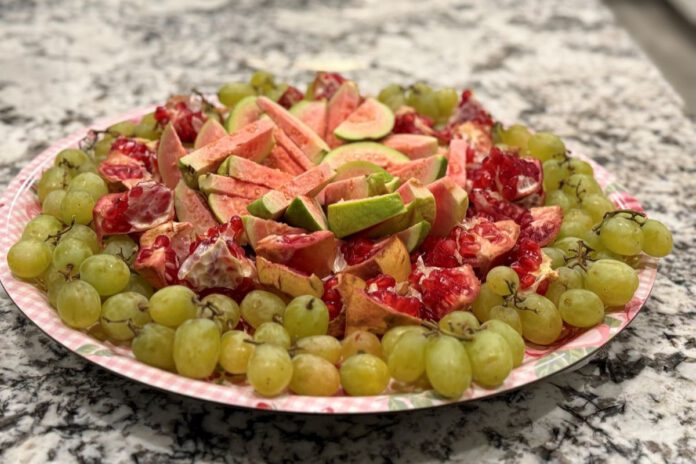
My desire for a fruit that would ripen in the fall and beyond, led me to jujube and guava. Jujube starts to ripen around early fall and continues to produce fruit for one to two months, while the fruit of the guava tree starts ripening from November onwards. In my experience, a warmer fall expedites ripening and shortens the harvest period.
Jujube (Ziziphus jujuba) plants are relatively common and easy to find in Bay Area nurseries and garden centers. Planting is easy as they can handle poor soils, do not require much fertilizing, and tolerate hot and cold weather well. Newly planted trees require consistent moisture to establish roots, and mature trees need a deep soaking about every two weeks. Applying a two- to three-inch layer of organic mulch, keeping it a few inches away from the trunk can help with moisture retention.
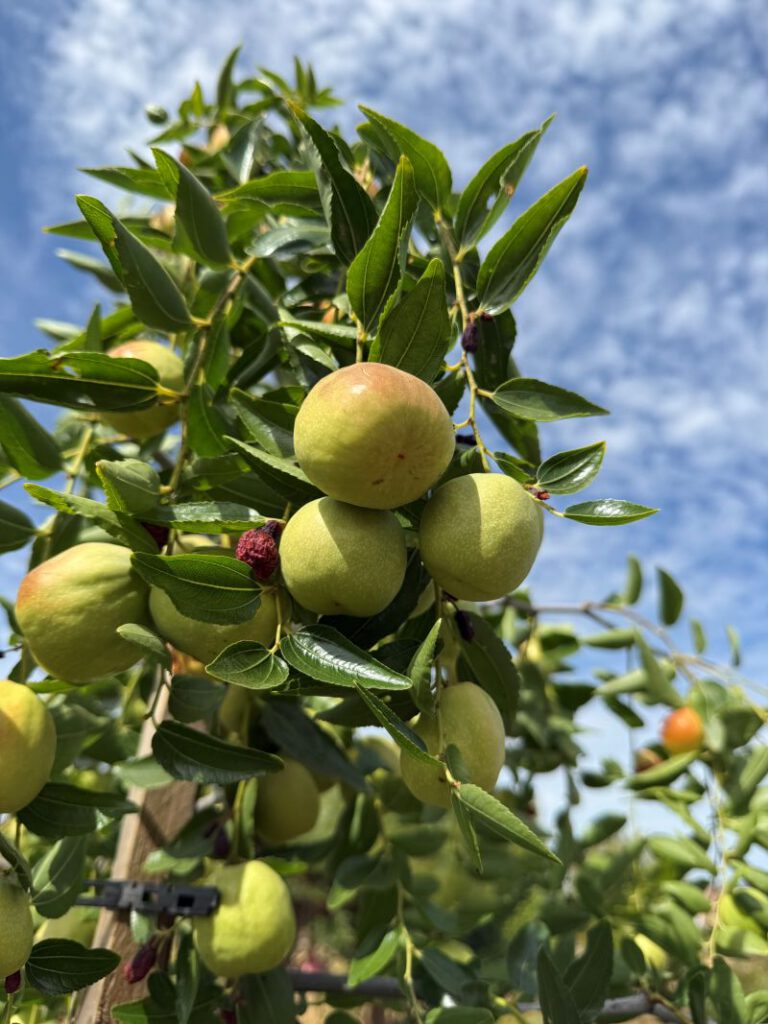
I haven’t seen very many pests infesting the jujube tree, and there aren’t any known diseases that affect it. They require careful spot selection for planting, though, as they grow fast and have a strong, extensive root structure. It’s best to plant them away from structures because they often send up suckers from their lateral roots that can sprout around the main trunk or sometimes even several feet away. Since they grow from the root stock, the fruit from these can be different from the planted variety. Suckers should be pruned away or dug up, if possible.
In our household, we enjoy jujube as a raw fruit when it is green and firm, as well as when it has developed a brownish tan. When it’s green, it has a crunch, and as it develops the brown sheen, it becomes drier and sweeter. After being harvested, the fruit can last in the refrigerator for about a week.
One can also dehydrate jujube for longer storage. The way I like to dry it is to slit it open, let it shrivel up, and dry it to the greatest extent in full sun or under a fan. I then dry it at the lowest setting in the oven for 15 minutes or until it can be broken into a piece with a crackle, and store it in a paper bag. The dried fruit can be used to make tea or in traditional medicinal practices.
Popular jujube varieties are Honey Jar, Lang, Li, Sugar Cane, Shanxi Li and GA-866. I have the Sugar Cane variety, and I’m quite happy with the quality of the fruit and how low maintenance the tree is.
While jujube tends to be hands-free, guava (Psidium guajava) trees need a bit more planning, care and attention. Picking the right location, variety and the local microclimate are important factors for growing guava. It’s sensitive to frost and prolonged cold, making site selection especially important.
Pick a location that receives bright sun for at least eight hours every day—the more the better. A south or south-west facing location near a wall or fence can be beneficial because of the heat that the structure retains during the day and releases at night, keeping the tree warm. Areas with shade, where cold air might collect, that expose the tree to harsh cold winter winds, or with poor draining soil should be avoided. In the first year or two after planting, the tree benefits from protection with a frost blanket during cold spells.
In my experience, planting guava trees in the spring after the danger of significant frost has passed allows them to establish their roots in the warm growing season. While there are different recommendations for size of planting holes, the practice that I’ve found to have worked is to dig a hole approximately as deep as the root ball and two to three times wide.
Fill the hole with water and observe how it settles. The idea is to assess if there’s insufficient drainage, which might mean the site is not best suited as guava prefers well-draining soil. Set the tree in the hole so that the top of the root ball is level with or slightly above the surrounding area and add good quality compost to the soil. Water well and check regularly for moisture.
I keep my guava tree to about six feet tall with a main trunk and well-spaced lateral branches that allow for convenient fruit harvesting. Since guava produces fruit on new growth, pruning helps with increased fruiting in addition to maintaining shape and height. The young tree can be trained with a single main trunk and well-spaced lateral branches.
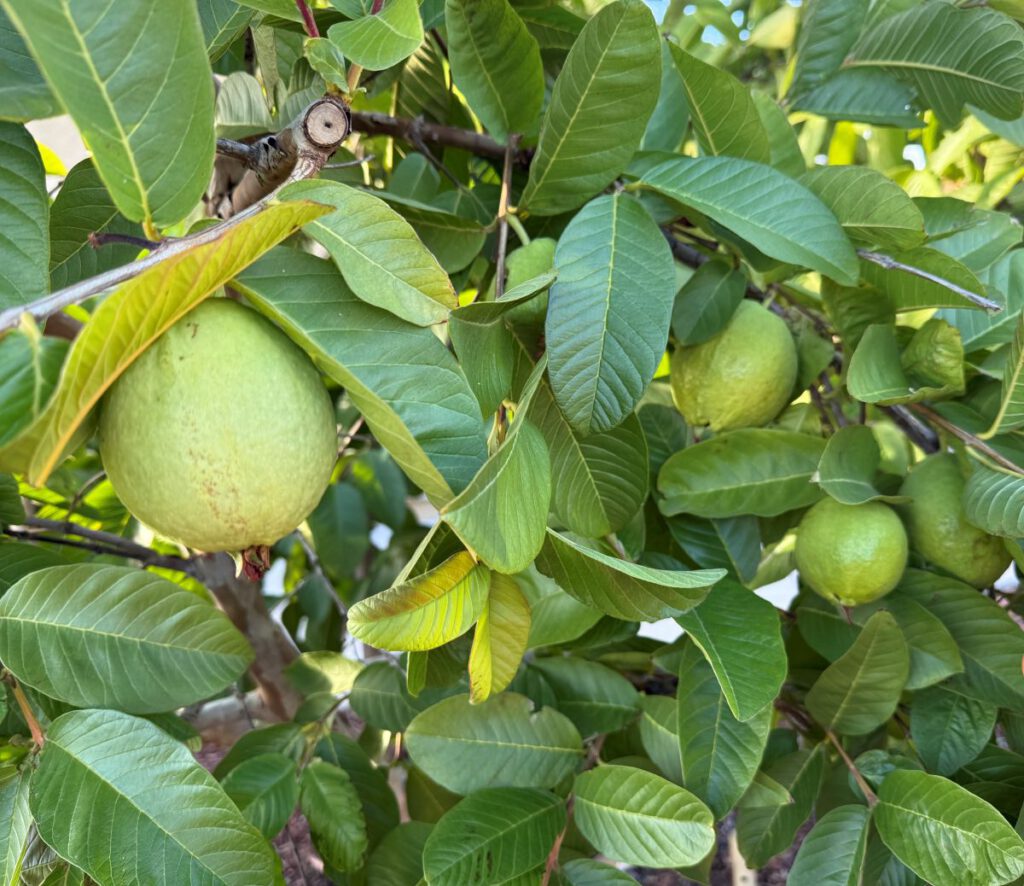
Fruit is ready to be picked when the dark green color changes to a lighter shade, and the fruit starts giving off its fragrance. Guavas can last for a week or so in the refrigerator, and they soften as they sit. It helps to store them wrapped in a kitchen towel or a plastic bag to protect them from moisture.
For us, jujube and guava are childhood favorites, and their presence in the yard creates nostalgia along with bestowing on us delicious fresh fruit over many weeks without much upkeep.