

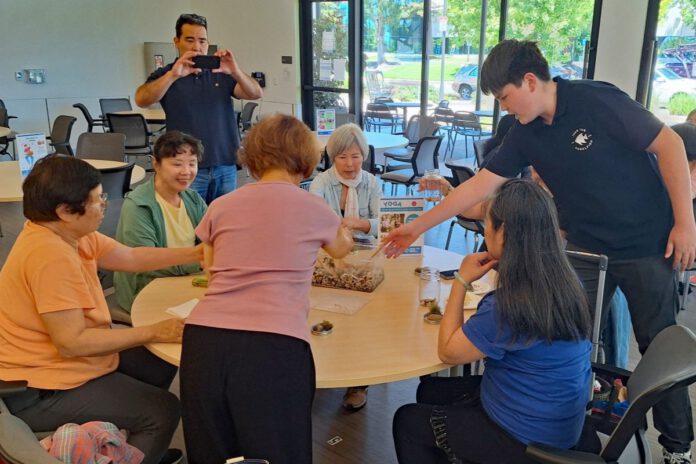
During a recent trip to Fremont, San Jose teenager Evan Johnson shared his longtime passion for building terrariums with an enthusiastic crowd at the Age Well Center at South Fremont. His focus: to promote wellness, creativity and connection.
Johnson is founder and president of Ivan the Angelfish, a nonprofit organization that creates naturalistic aquariums and holds free terrarium building workshops and ecological presentations for senior communities, schools, hospitals, veteran centers and healthcare workers.
“I started it after seeing how an aquarium helped my grandfather, Ivan Sitalov, cope with stress and sleep difficulties,” Johnson explained. His grandfather served in the Soviet-Afghan war during the 1980s and suffered from post-traumatic stress disorder. Johnson named his organization in honor of his grandfather, with the “Angelfish” name added to connect to aquariums which represent the calming and uplifting experience Johnson hopes to give each community in his workshops.
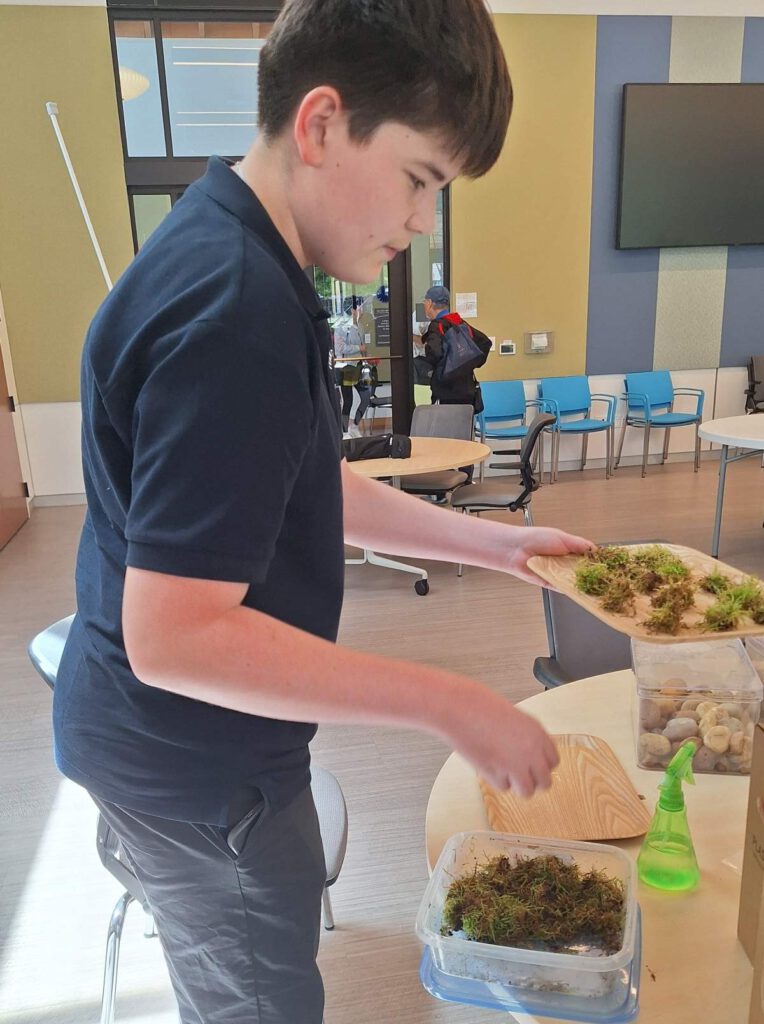
Photos by Rob Klindt
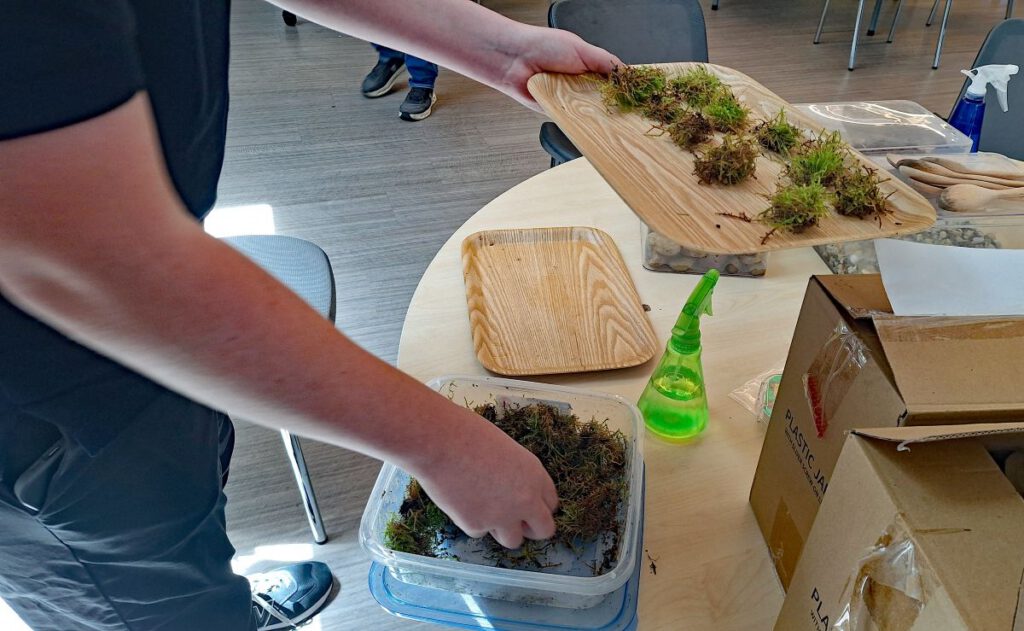
Rob Klindt
Johnson, 15, is a student at Bellarmine College Preparatory high school in San Jose and founded his organization in February 2025 with co-founding partners Rahul Shrivastava and George Kolotouros. Johnson’s passion started when he was gifted two aquariums at the age of eight. Immediately he started learning about the ecosystems of simple and complex aquariums. He soon expanded his studies to open or closed glass terrariums which host living plants to create a miniature indoor garden and thriving ecosystem.
Building a custom ecosystem
The July 23 workshop in Fremont attracted 20 participants. Johnson started by explaining the science, ecology and biology that goes into building a terrarium using basic materials. Then, each person was given a six-inch terrarium jar with a screw-on lid to create their custom natural ecosystem.
Johnson guided each person in preparing their terrarium, which they could take home. At the bottom they placed lightweight clay pebbles to absorb and promote oxygen. The middle layer, called the substrate, included a potting mix blended lightly with charcoal to keep water drainage fresh and clean. Finally, they placed a topsoil consisting of coco coir mix from coconuts to promote growth.
Creativity came into play
With the soil in place, participants added a small piece of moss and a piece of spider wood on top, then framed it with two or three smooth, small river rocks to add visual interest and depth. From there, Johnson encouraged everyone to experiment with placement of items and the angle of the soil to create a unique living world inside their jar.
Johnson said he likes to use the Iwagumi rock layout method to add balance to the display while using a “rule of thirds” item placement to captivate the viewer. “The point is for people to see textures and how they come together and visualize while they create their own natural ecosystems,” Johnson explained. Finally, the display is sprayed with a spritz of water and the lid attached to the jar to promote humidity.
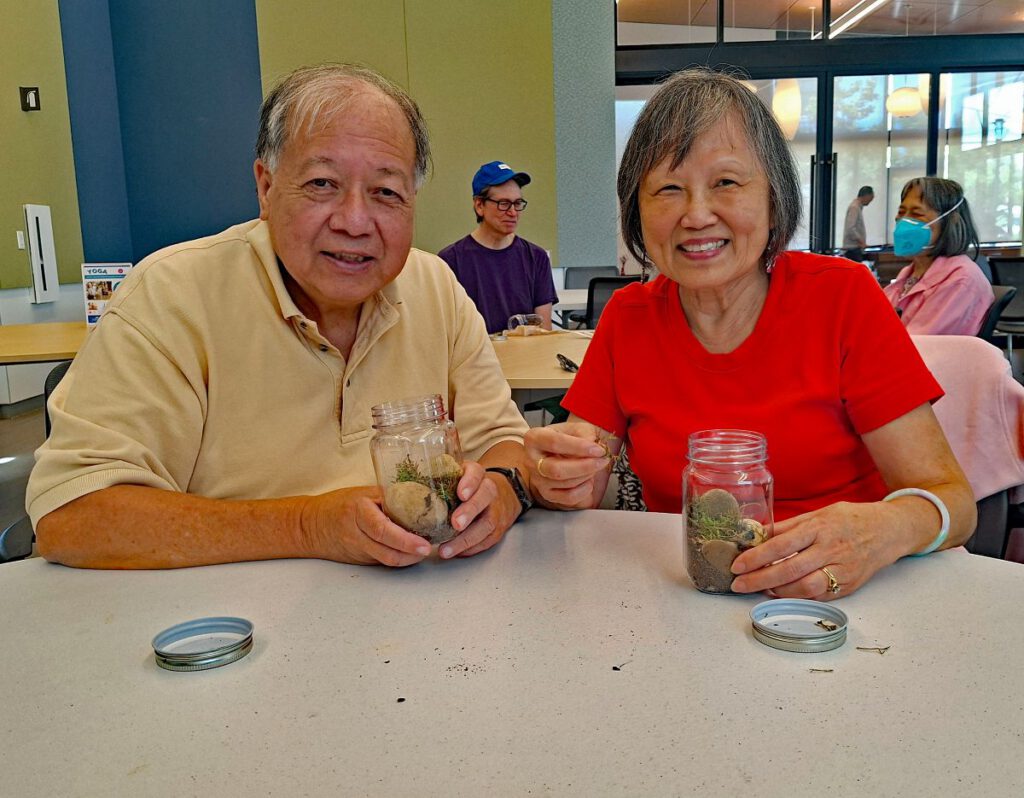
Fremont residents Ron Woon and his wife Dominique eagerly arranged—and rearranged—their terrariums multiple times to create just the right fit. “It looks really nice and peaceful,” Ron Woon said after slightly tipping his jar and making a small hill from the topsoil.
Spreading the word
Johnson regularly hits the road to share his expertise in building small terrariums at dozens of locations in California, Arizona and Colorado. “I usually spend about 30 to 40 hours per month during the school year and 60 to 90 hours per month during the summer,” Johnson said, adding that he doesn’t work alone. “I am supported by student volunteers, interns, chapter leaders, advisors, facility staff, sponsors and community partners.” Additionally, his father Tom Johnson helps with transportation, set-up and planning.
On a larger scale, working with corporate partnerships, the organization installs therapeutic aquariums in skilled nursing facilities, teaches ecology in schools and shares the science of aquatic therapy with the public. There are also international chapters in Europe, Japan, Russia, Greece and China.
Ivan the Angelfish has partnered with various aquarium companies and local businesses to provide donated equipment, supplies and educational partnerships. These include Hygger, AQQA, Pet Zone San Diego and El Camino Hospital in Mountain View.
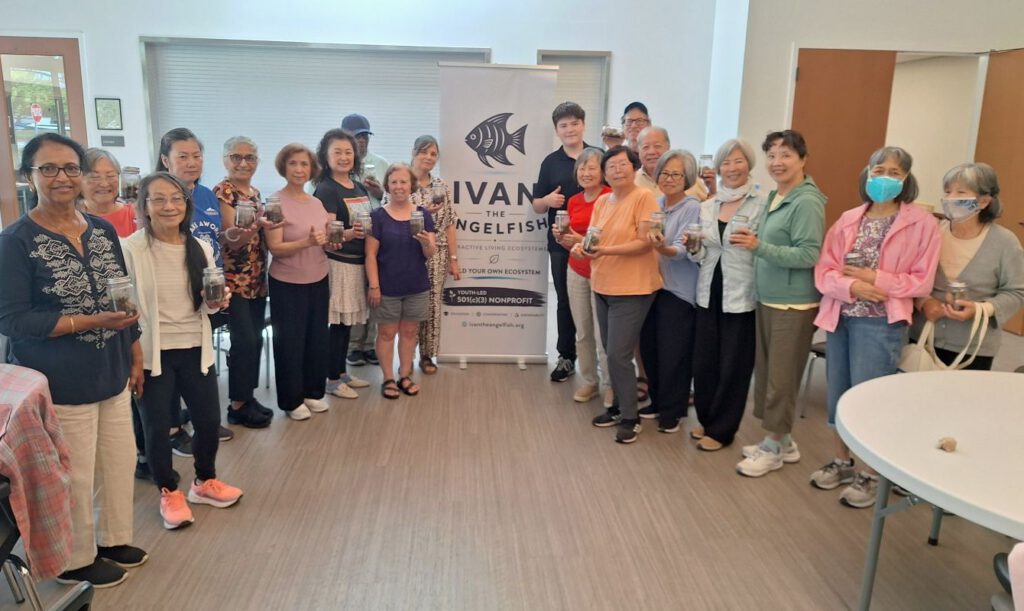
“We have now reached more than 5,000 people across over 40 facilities,” Johnson said. “Our goal is to make nature-based wellness experiences accessible while teaching people about ecosystems and environmental care.”
Ivan the Angelfish is a 501(c)(3) nonprofit.