

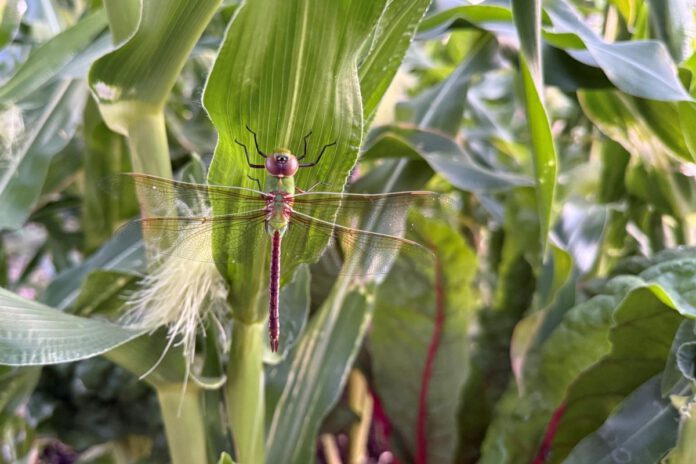
A garden or natural environment is home to a wide variety of organisms. A vast majority of them are desirable parts of the ecosystem and do not harm plants. Many are even beneficial. The ones that are harmful can become a problem when conditions favor their aggressive growth and development, or when environmental stress or poor cultural practices weaken the plant and make them susceptible.
We call such organisms pests when they compete with, feed on or infect plants to the extent that they threaten plant survival or damage produce. Pests include certain fungi, insects, mites, nematodes, slugs, snails and others.
There are a few ways to minimize the damage to plants caused by pests while keeping the risk to human health, beneficial organisms and the environment low. Biological control leverages other organisms to control pests and their harmful effects. One method is the use of beneficial predators, which attack and eat pests. Some specialized beneficial predators feed on only one or a few related species, while others are general predators and feed on a wide variety of pests.
Beneficial predators can play an important part in maintaining balance in the ecosystem by controlling the population of harmful pests. They provide an effective, non-toxic, chemical-free way of dealing with pests. By contrast, chemical agents can have consequences that affect the wildlife, habitats and the environment in general.
While a garden with biodiversity can naturally attract beneficial predators, a gardener might need to introduce them if they do not appear naturally. Two of these beneficial predators are the lady beetles and beneficial nematodes.
There are many species of beneficial lady beetles, some of which are native to California. All lady beetles are insects belonging to the Coccinellidae family, and are commonly known as lady bugs, although the name lady beetle, or ladybird beetle is preferred to avoid confusion with tree bugs.
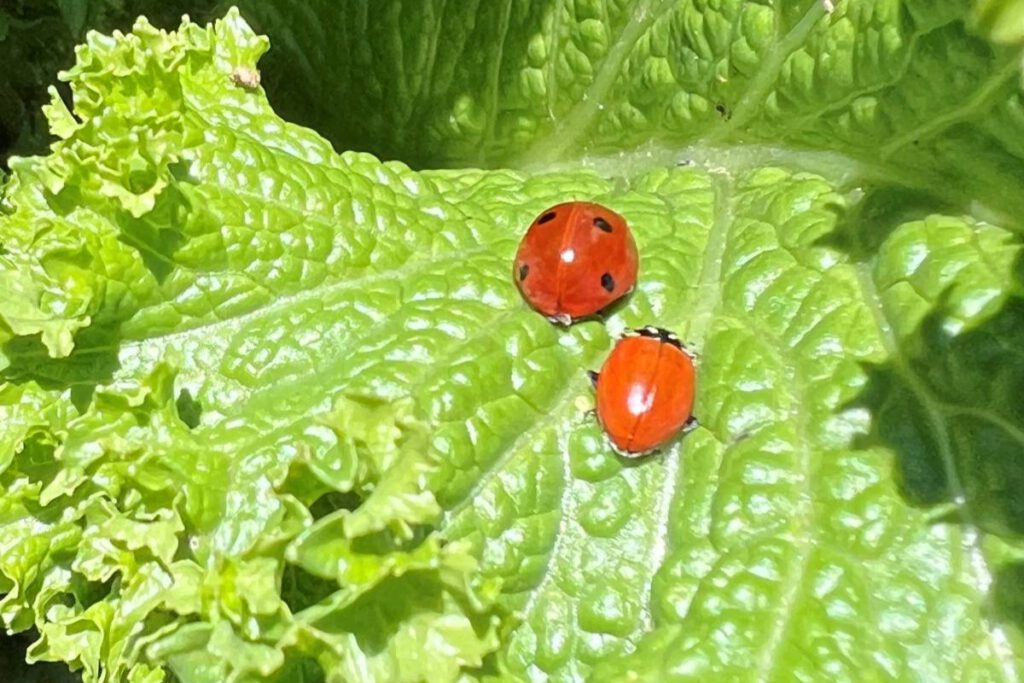
The most common lady beetle species in California is the Multicolored Asian Lady Beetle (Harmonia axyridis), and the most common native lady beetle is the Convergent Lady Beetle (Hippodamia convergens). Multicolored Asian lady beetles are probably one of the better known beneficials, with their bright colored smooth dome shape and black spots. They come in many different colors, but yellowish orange to red with 18, 19 or no spots are common in California.
Lady beetles of these species are voracious aphid eaters, and will also eat other soft bodied pests like mites, scales, moths and thrips. They can eat up to 100 such insects per day, and are helpful for fruit trees, flowers and vegetables alike.
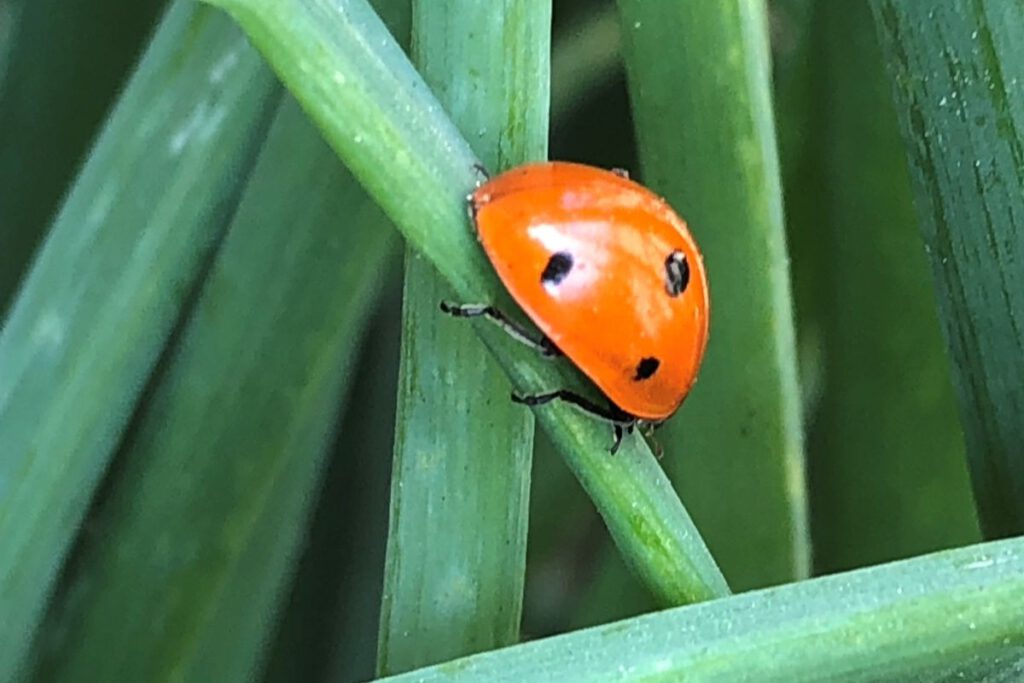
One can buy lady beetles at most local nurseries or through online vendors. Young lady beetles in their larval form have a shape very different from adult ones—they are thinner and have alligator-like ridges along their sides—but they have an equally large appetite for pests. Keep them in the refrigerator until it is time to release them into the garden.
To make sure they will have enough water and food, spray the plant with water and let them out near the base of the plant at night when it is dark and cool. As the sun comes up and it gets warmer, they start moving up the plant and eating up the pests. Make sure not to spray insecticide around the time of their release.
To encourage the population of beneficials like lady beetles in the garden, one can incorporate plants that attract them. Some examples are herbs like dill, cilantro, fennel and parsley. Flowers like sweet alyssum, calendula, cosmos, sunflowers and yarrow also invite lady beetles to the garden.
While lady beetles work on pests on the plant, beneficial nematodes work to clear up soil-dwelling pests. Nematodes are microscopic roundworms, and those that belong to the two genera Heterorhabditis and Steinernema selectively target harmful pests, and hence are called beneficial nematodes. They invade the body of the target pests, infect them with bacteria that causes the pest to die within days, and feed on the dead pest to reproduce. They attack pests like cutworms, fleas, fungus gnat, gypsy, moths, white grubs and many more.
To encourage beneficial nematodes to grow naturally, it helps to add organic matter like compost and mulch in the soil to create a food rich environment. Maintaining moist soil also helps the nematodes move around and hunt. However, use of broad-spectrum insecticides can harm their growth by disrupting the natural soil food web.
Like lady beetles, beneficial nematodes can also be purchased from a local nursery and released in the garden. They can be deployed as a soil drench, or sprayed, and should be released when it is dark and cool, as light and heat kill them. The soil should be moist when they are applied, and the temperature should be above 60 degrees Fahrenheit. To deal with heavy infestations, a second application after two weeks will enhance control.
It is important to keep the soil moist for about two weeks after application for them to keep working. Application of beneficial nematodes involves a few steps, so I find it very helpful to watch a video and follow along.
These beneficial organisms show us how having a thriving garden with a natural variety of plants and organisms can help protect against diseases and sustain itself, while reminding us of the complex interdependent ecosystem we live in and are a part of.