

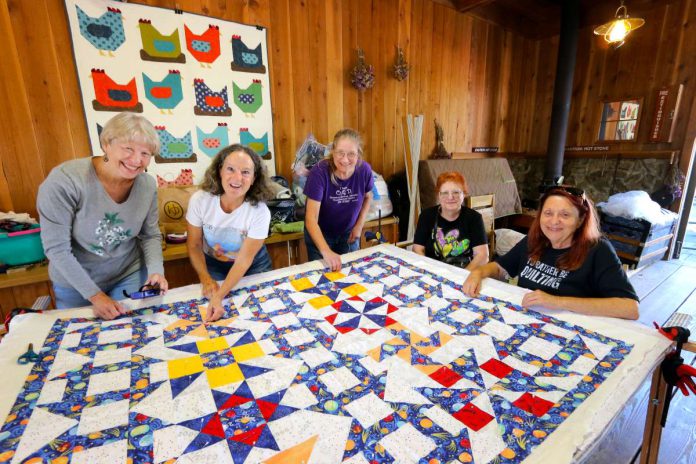
An iconic American textile art, quilts have been known to play an important thematic role in short stories like Alice Walker’s “Everyday Use” and Susan Glaspell’s “A Jury of Her Peers.” Both the intricate process of their creation and their enduring meaning as keepsakes make quilts transcend their function.
In the East Bay, Piecemakers Quilt Guild keeps the art of quiltmaking alive and preserves the original function of quilts as an expression of creativity and care.
For American settlers, quilting was a way of reusing fabric scraps, as well as for women to socialize at quilting bees, sometimes even finishing an entire quilt in one day. Piecemakers got its start in 1981, with a group of women organized by Patches Quilt Shop owners Gladys Clayson and Judy Shelton. They revised bylaws used by Santa Clara Valley Quilt Guild.
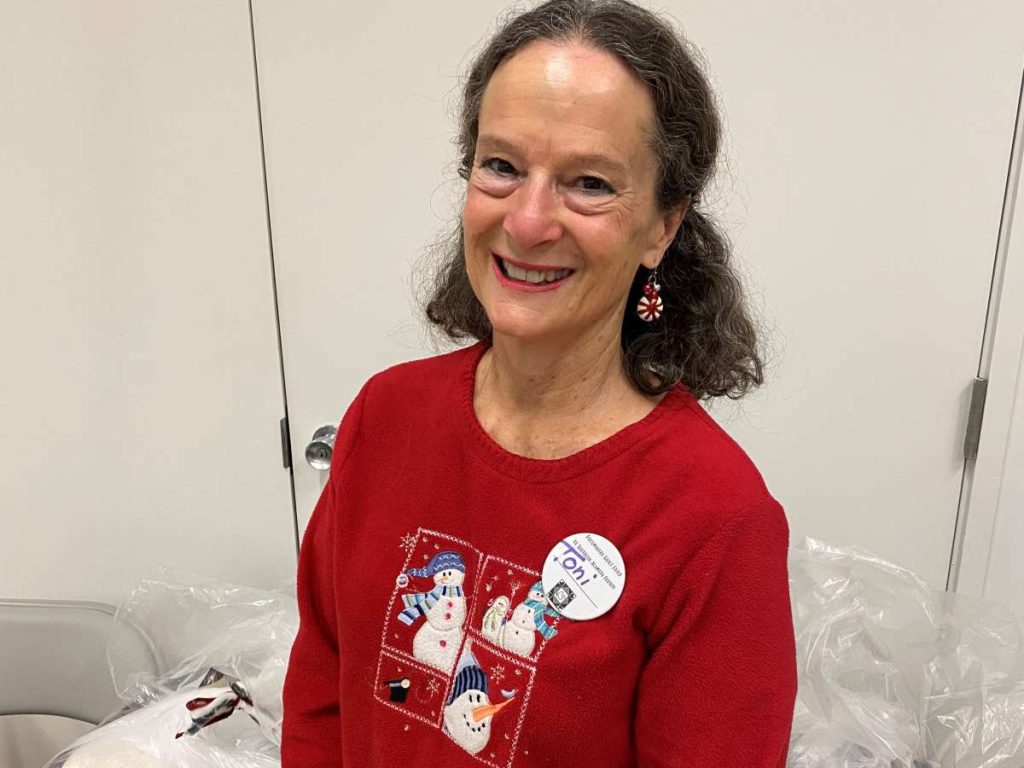
Member Toni Mathues, who has been quilting for 15 years, called quiltmaking “a healthy addiction.” (In fact, she was piecing together a quilt while interviewing.)
A traditional quilt starts with sewing together different pieces of colored fabric into a geometric design. This is the quilt top. Quilts also need a backing, with fluffy batting in between. This makes what Mathues called “the quilt sandwich.” Then the three layers are sewn or tied together.
“Any good quilter will have at least three quilts in different phases of completion,” said Mathues. “You can have a quilt that you’re cutting, and you have another quilt that you’re putting together, and then you have another quilt that you’re quilting, and another quilt that you’re doing handwork on. Then there’s those quilts where you get started and go, Eh, I don’t like it. And you put it away and come back to it five years later.”
Much of the draw is camaraderie, as members stitch together and swap fabrics, sometimes pulling all nighters. Quilting itself is a calming, meditative practice. Plus, quilts make great gifts.
Gwen George, a member since 1999, said many members are “between children and grandchildren.” She joined when her son went off to college and she was looking for a way to spend her free evenings. “Seventy-five percent of the quilts I’ve ever made I’ve given away as gifts. Wedding presents, baby showers, everything. They make beautiful gifts.”
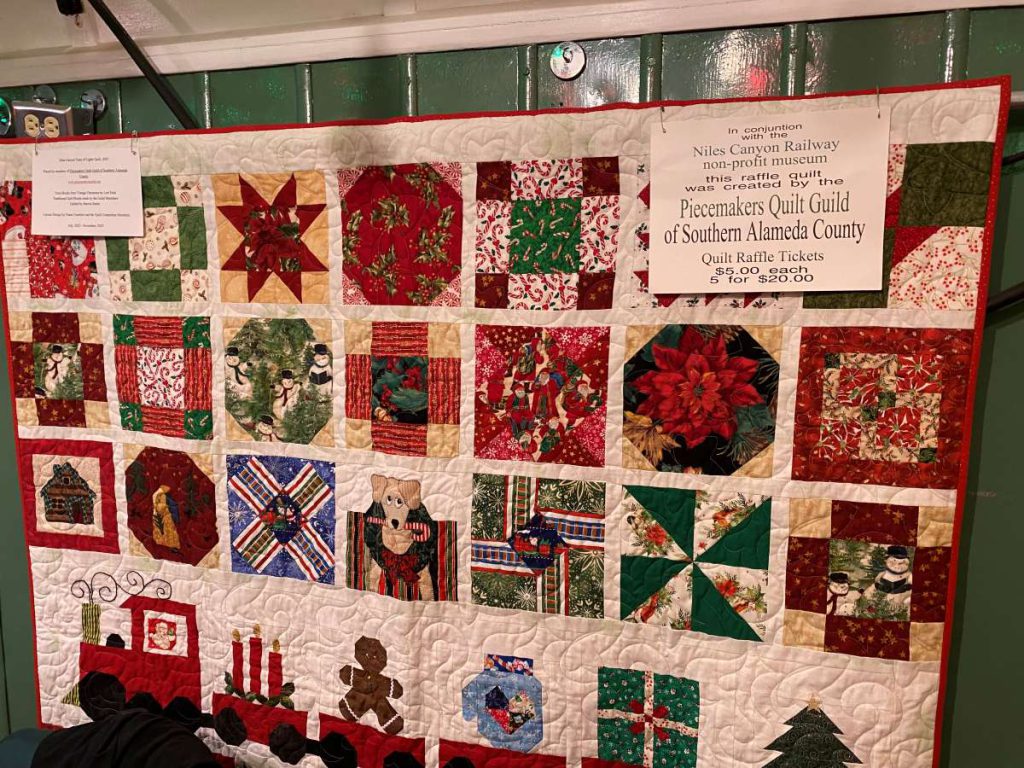
Piecemakers members get free admission to Ardenwood, and appear there to tie off quilts and introduce the public to the art. Kids can practice making their own mini quilts out of paper squares. On a recent 4th of July, patriotic quilts from the guild decorated beds at Patterson House.
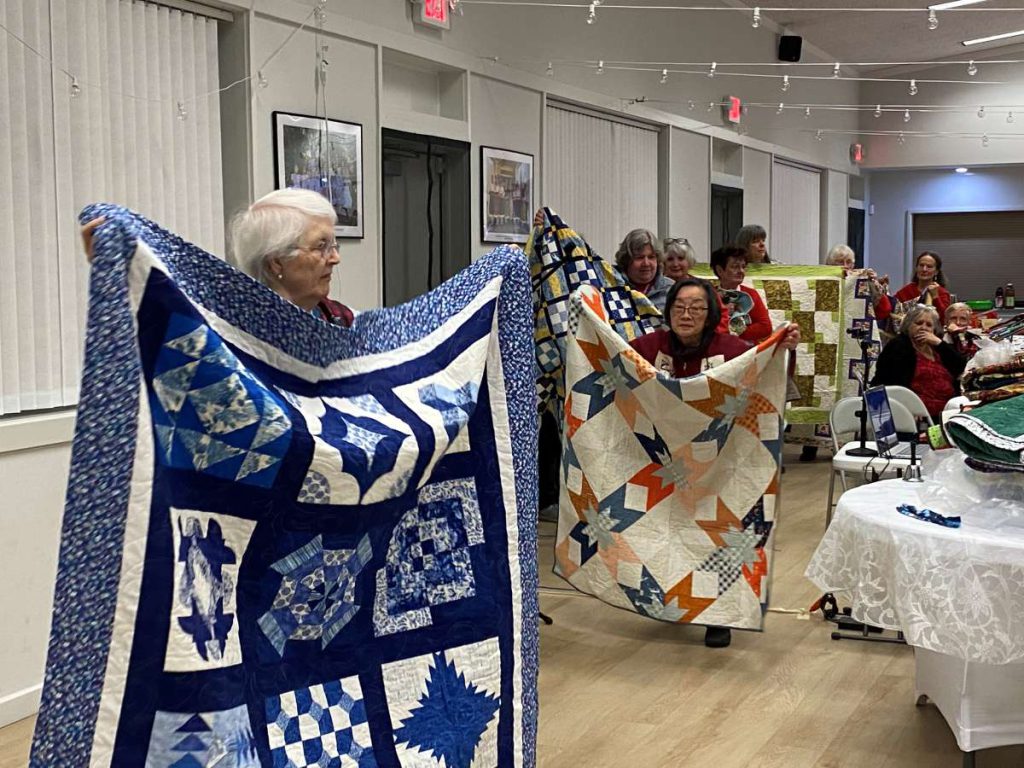
Piecemakers is a 501(c)(3) nonprofit. In addition to sharing techniques and fabric, and quilting together, the 60 or so active members donate quilts to community organizations twice per year. In 2024, they gave away a total of 185 quilts. In Dec. 2025, Piecemakers held a party and “quilt parade” where they showed off and donated dozens of quilts to organizations such as Viola Blythe, Kaiser, Tri-City Volunteers and Newark Police Department.
Jenifer Miller, a healthcare chaplain at Kaiser, shared a story of when she used a small quilt for a newborn who had sadly passed away during delivery. Originally, the body had been wrapped in a plastic sheet, which was rustley and cumbersome for the parents to handle. “Even though the quilt itself was not going to be enjoyed per se by the baby, it did become a meaningful keepsake,” said Miller. “Because it was one of the last things that touched the baby, and the baby wasn’t coming home.”
Salvador Sandoval of Newark Police Department said, “I can’t remember a time when these quilts weren’t in my career. I can remember as a young officer giving these quilts out, and they were always around.”
Quilts donated to the police department are used for people undergoing trauma. “Our officers often meet people on what may be one of the worst days of their lives,” said Sandoval, “and at those times a small gesture can have a big impact.”
He said having something “warm, personal and handmade” can make a big difference to someone cold, scared or displaced. It gives them dignity and reminds them that someone in the community cares. In his words, quilts say, “You matter, we see you, you’re not alone.”
One quilt donated in December came from a friend of George who had passed away. Although the maker was no longer there, the quilt itself ended up on the Viola Blythe table, slated for a family in need.
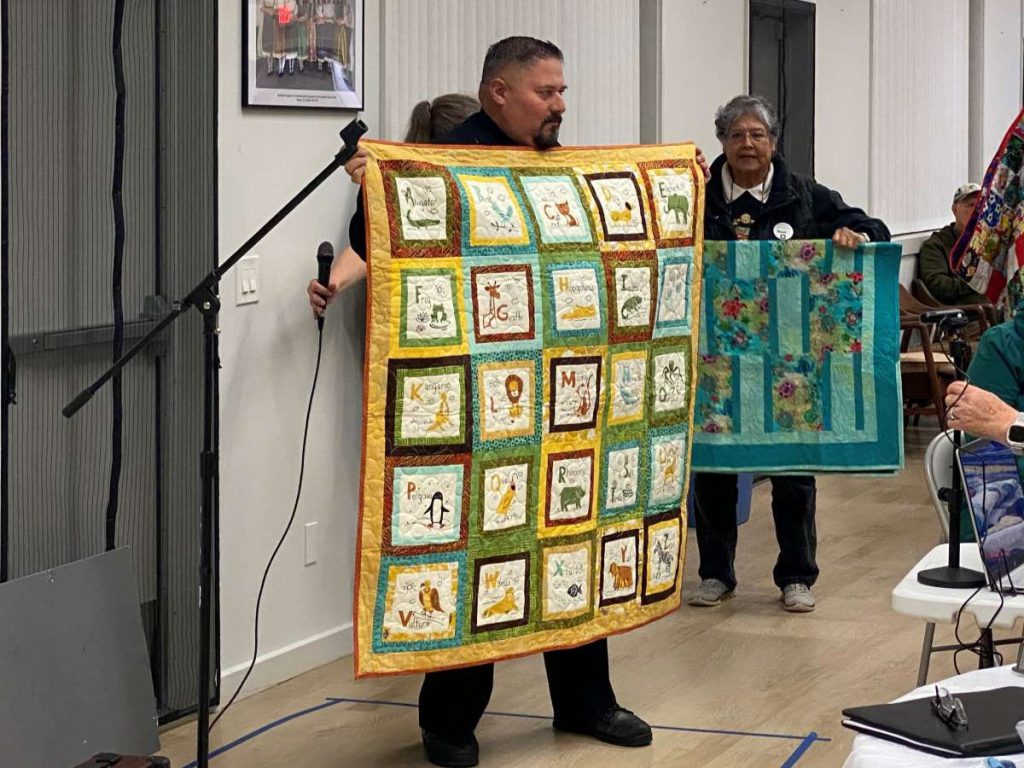
Stephanie Uchida
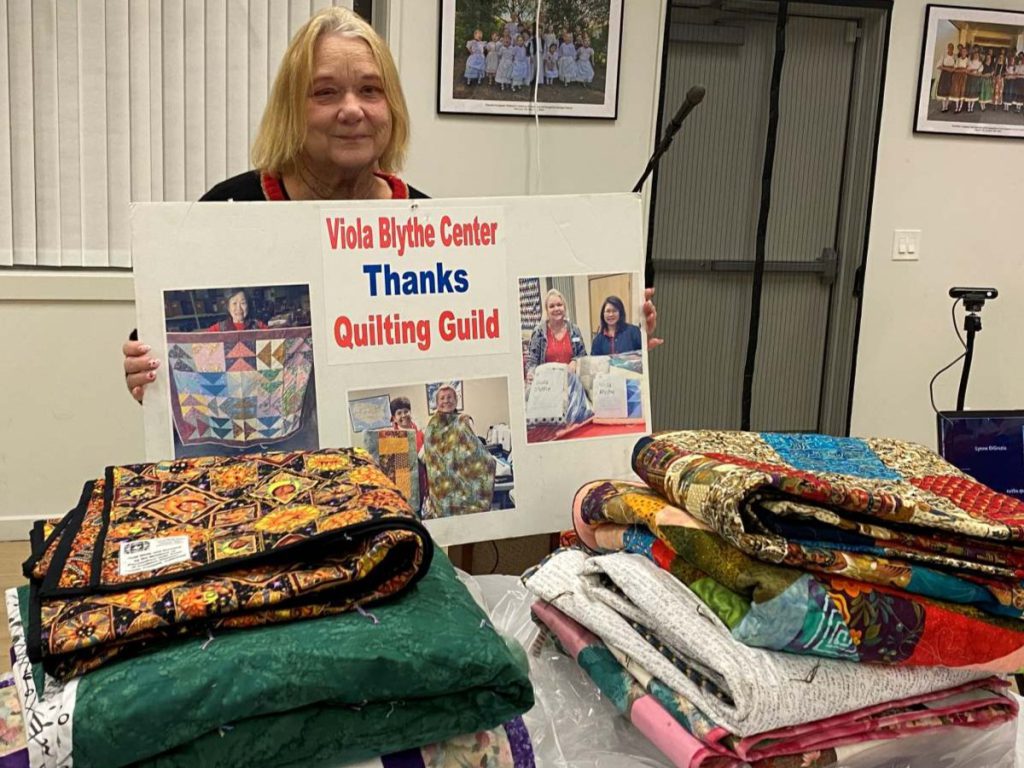
Stephanie Uchida
As with many hands-on arts in the digital age, interest in quilting has waned. George said there’s been a decline in guild membership. “We used to have 215 members. Now we’re down to like 75.” Likewise, there’s only one quilt store left in the Tri-City area, Not Just Quiltz in Niles.
In this modern age, innovations like the heated electric blanket have outstripped the ingenuity of frontier homemakers making the best of fabric scraps. Why spend weeks stitching when Amazon Prime delivers in two days? (Someone has to make those blankets too, but it’s easy to forget that.)
“People go, ‘Why do you cut up fabric only to sew it back together?’” said Mathues. Essentially, that’s asking: Why create? Why connect? Why care at all? It might not earn fame or money, but quilting has power, as the process itself translates a person’s (or group’s) intangible ingenuity into a physical object that may even outlive them.
Matheus said, “There’s no quilts alike, ever.”