

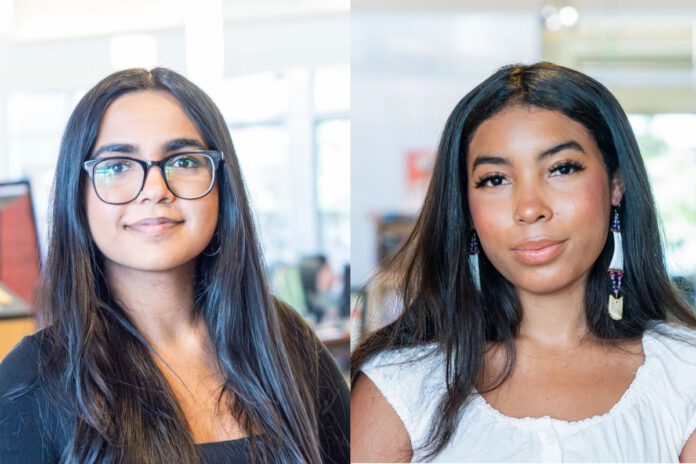
It was a surreal moment for Dublin’s Krishita Kataria and Tatiana Hernandez when the winners of Alameda County’s 2026 Youth Poet Laureate Competition were announced at an afternoon ceremony in August at Castro Valley Library. After submitting their work to the competition earlier that year, the two learned that they had been chosen as this year’s poet laureate and vice laureate, respectively.
Since it began in 2021, Alameda County’s Youth Poet Laureate Program has selected emerging teen poets in the county each year to serve as ambassadors, perform their work at public events and inspire civic engagement through community projects.
Kataria, a senior at Dublin High School, said that her submissions reflected a range of experiences, from her cultural background to social justice issues.
“My goal with the submissions was to show that I am a multifaceted person,” said Kataria. “One poem was about being South Asian, another was about environmental issues I see in Oakland, another was about what womanhood means to me.”
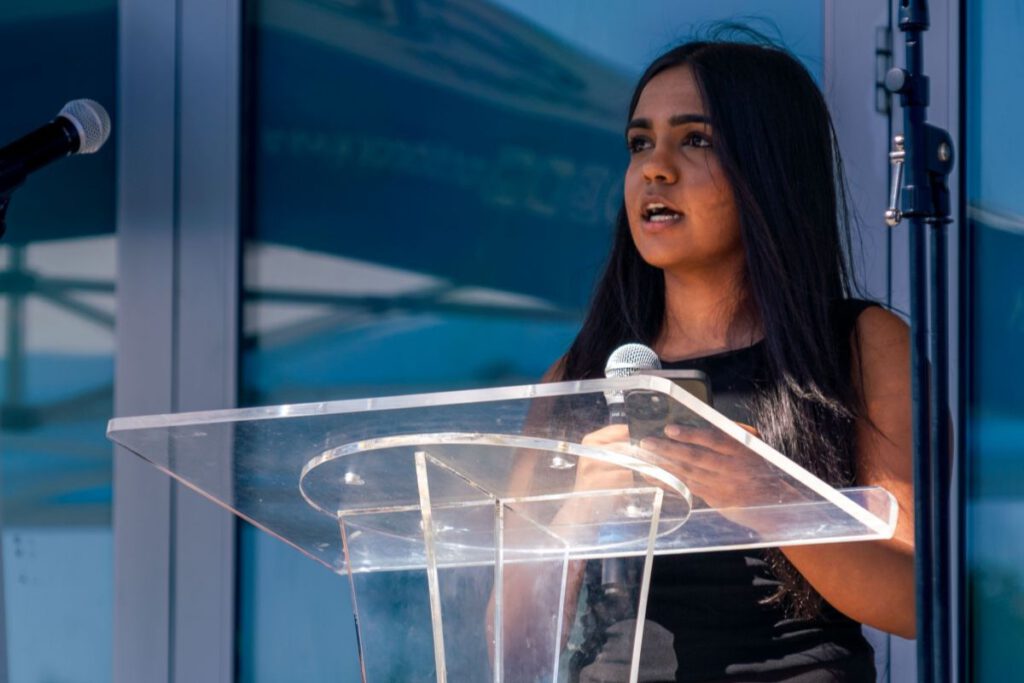
Studying African-American history has also impacted Kataria’s work, as she takes inspiration from poets like Maya Angelou, June Jordan, Sonia Sanchez and Phyllis Wheatley. “These poets wrote out of necessity. That’s what really inspires me—their work is really raw and vulnerable,” she said. “Poetry is something that’s supposed to come from your true self, something that you use to express the things you wouldn’t be able to do otherwise.”
Hernandez, who graduated from Dublin High School and is now a freshman at Cal State Monterey, said her Choctaw heritage strongly influences her work. “As an indigenous person, I grew up almost thinking my tribe was the last to exist,” she explained. “That’s very much not true, and I think a lot of people aren’t aware of how many federally recognized tribes there are. My work is how I keep my culture alive.”
Hernandez reflected on the first time she read her poetry out loud for an audience. Earlier last school year, she said that her high school, which has historically been inclusive when it comes to culture, did not acknowledge Native American Heritage Month. Hernandez raised her concern with school officials, which led to a school event where she read out her poetry. “It was just about the significance of acknowledging that Indigenous people are here,” she added.
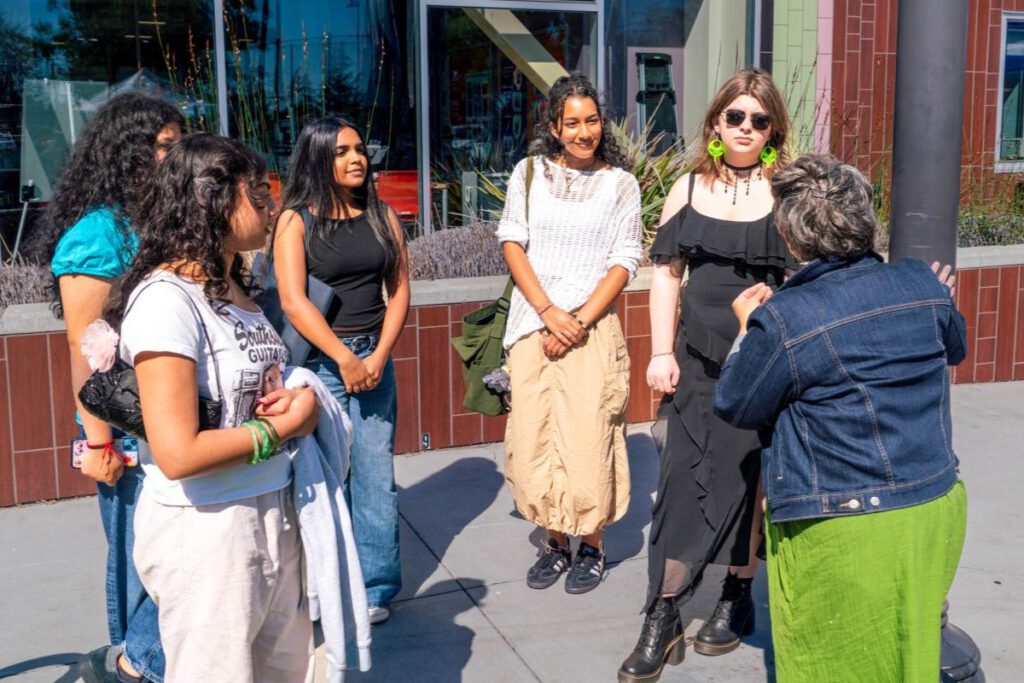
Along with Kataria and Hernandez, Fremont students Sana Arora, Dhatrisri Biruduraju and Dhaanvi Jaipuriar were also selected as finalists. As part of the program, the students will work together over the course of this year to develop a community-wide project to increase local engagement with poetry-writing.
As laureate, one of Kataria’s goals is to potentially increase the role of poetry in local curriculum. “I remember that as a middle and high schooler, I didn’t have a lot of opportunities to workshop through my poetry,” she said.
Moreover, she offers a piece of advice to young students who are interested in sharing poetry. “Just get it out—open a document, get a journal or get a piece of paper out and build all your ideas on it. You may have to write some bad poems first, but that’s how you grow, so don’t be scared of doing it ‘wrong.’”