

The words “senior center” brings to mind certain images: Linoleum floors, old sofas, a musty or rubbery smell, bland but healthy food, and people engaged in mindless pastimes.
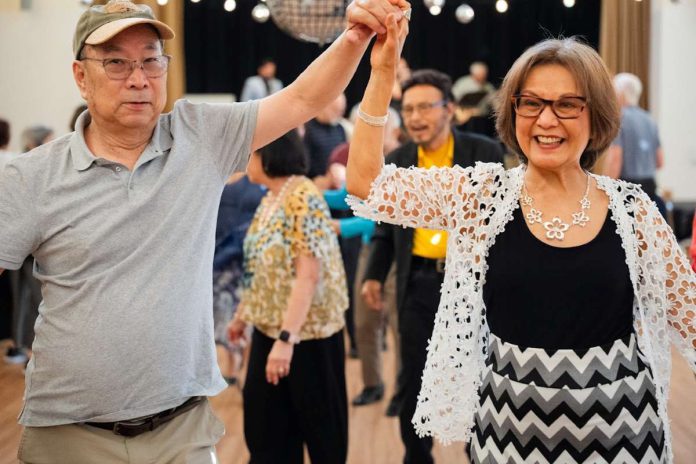
However, if those 54 and under actually step past the doors, they’ll see a different picture: activity, laughter, diversity, community. The image of senior centers is changing from a quiet out-of-the-way corner for the vulnerable elderly to the place everybody wants to be.
Why the change? Thank the Baby Boomers, who are quickly entering the senior set. Dana Dieterle, a recreation program coordinator in Union City, says, “By 2030, all Baby Boomers will be age 65+…The Census Bureau projects that by 2040, older adults will represent 22% of the U.S. population, according to the National Council on Aging.”
As a demographic, the Boomers bring their own viewpoint. “Baby Boomers are reshaping the culture and expectations surrounding senior centers,” says Dieterle. “We’re even seeing the term ‘senior’ slowly phase out, as many in this generation don’t identify with it. They’re drawn to more modern, wellness-focused, active and social experiences—concerts in the park, wine-and-paint nights, volunteer opportunities, and energetic dance classes like Zumba and aerobics.”
Dean Nissen, at 72, falls into the Boomer category. He stops by Ruggieri Senior Center four days a week for West Coast Swing, aerobics dance and ballroom dance. He DJs for events at the center. He also volunteers at memory care facilities with Musical Memories Foundation. He started coming to Ruggieri three years ago, saying after his wife passed away he needed “somewhere to go and be.”
Lillian Martinez, who gives her age as “71 going on 19,” is a staff volunteer at Ruggieri, teaches Zumba twice a week—plus helping with lunch prep on occasion. Her classes include up to 60 people.
“When I first started, people were not mingling,” she says. At first, people would huddle in their own groups, such as Filipinos or Taiwanese. “Since then, that has so changed. They all talk to each other, hug each other.”
Martinez brings in music from a variety of cultures—Taiwan, Philippines, Caribbean, South America, Mexico, Africa—and also encourages participants to adjust dance moves.
“I tell them to modify,” she says. “If they can’t keep up, they modify. I will model lower impact, and I model higher impact. Everybody’s at a different level.”
Over email, Fremont’s two Age Well Centers shared their philosophy. “There is a tendency to see older adults as one group, all having the same needs and fitting the same stereotype of being frail, unfamiliar with tech and isolated. In reality, older adults are one of the most diverse populations, with a wide range of lifestyles, interests, abilities, cultural backgrounds and family dynamics.”
The Age Well Centers offer more physically challenging classes such as line dancing, Zumba and full-motion fitness alongside slower activities like yoga, tai chi for arthritis and fall prevention. There’s also coffee and art socials, book clubs and needlecraft.
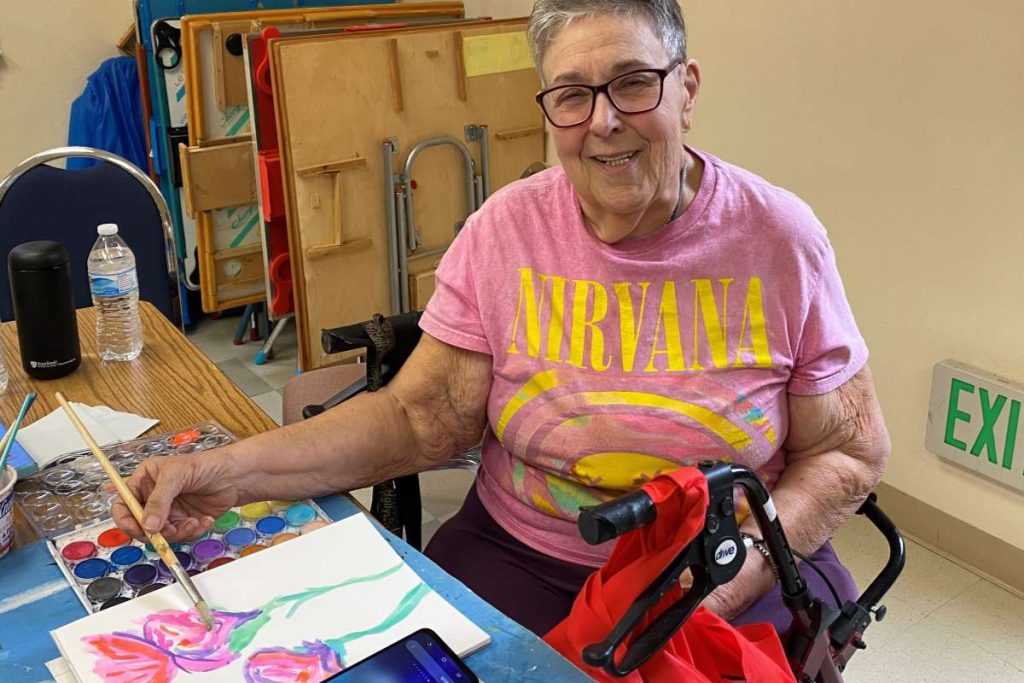
Dieterle says, “The Greatest Generation and Silent Generation tend to prefer more traditional and quieter activities such as bingo, card groups, knitting and painting—many of which we still offer.”
Ironically, age itself can be an overlooked factor in accessibility for the senior population. In a recent comment on the Tri-City Voice website, community member Yvonne Brum said that she would appreciate more sedate classes and social hours geared towards the 80+ crowd. Brum wrote, “When you are in your 90s it is very lonely. We have outlived family and friends.”
One activity Brum recommended was “high tea.” While historically a British high tea meant a formal dinner, some Americans observe high teas too. On Dec. 2, Country Club of Washington Township Women’s Club met for high tea at Double Tree by Hilton in Newark, taking snacks from elegant towers of sandwiches and fruit. The women dressed up for the occasion with fascinators and even some tiaras. This poshness is one custom of the Silent Generation set (1928-45) that all can enjoy.
A slower-paced activity at Ruggieri Senior Center is the art class led by Paula Fischer. “Coming here is really the only outing I have,” says Fischer, who lives alone with her dog. Her classes encourage mental limberness—as important as the physical kind.
“A lot of these people have done really specific jobs,” she says. “Lab tech or accountant, where everything has to be perfect. And they’re wound up so tight. My thing is to loosen them up. So I don’t allow erasures in my class.”
As it happens, Nissen will help Fischer try out dancing to rehabilitate after an injury. While the individual programs at centers change with shifting trends and demographics, the goal is to bring people together.
The Fremont Age Well Centers shared the story of “Frank” and “Nancy,” two seniors who met at the Lakeside Cafe and built a strong friendship. “‘Frank’ who is in his 70s and still drives, picks up ‘Nancy,’ who is in her 90s, no longer drives and lives in an assisted living facility, so they can enjoy the Age Well Center’s special events together.”
Martinez says that age is “just a number. That’s what all the seniors say. ‘It’s just a number.’”
Nissen says, “We gotta care about everybody. Everybody’s important.”