
There is a viral trend on social media with people cooking food inside hollowed-out pumpkins. One of the more popular recipes is called Cinderella Chicken. An entire chicken is slow-cooked with autumn vegetables and herbs inside a pumpkin. The moisture and delicate flavors from the pumpkin infuse with the other ingredients to create a wonderful stew. Surprisingly, it is not the first time that this recipe went viral, nor is it the first time that pumpkins were used as cooking vessels.
Long before metal, ceramic, cast iron and tempered glass pots, ancient people throughout the world used depressions in rocks, animal hides and organs, carved wooden bowls and water-tight baskets for cooking. These primitive vessels were filled with water and whatever was to be cooked. Fire-heated stones were dropped into them, the water brought to a boil and the food cooked. People in certain areas could make cooking vessels from indigenous plants: sections of bamboo in Asia, dried calabash gourds in Africa and hollowed out pumpkins in North America.
Some of the earliest physical evidence of Indigenous people in Northern Mexico using hollowed out wild pumpkins to store water and grains dates back to 10,000 years ago. Pumpkins were also used by Native American tribes for thousands of years in Central America, throughout the entire Southwestern and Southeastern United States, and northward into the Great Plains and the mid-Atlantic and Chesapeake Regions.
We have the first accounts of native Americans teaching colonial settlers to use pumpkins as cooking vessels in New England in the mid-1600s. However, Native Americans may have been cooking food inside pumpkins for thousands of years.
Native Americans cooked local foods inside pumpkins to make stews and soups. Ingredients could include maize, wild rice, beans, onions, nuts, berries, wild game, fish and herbs depending on availability. When colonists began to use pumpkins as cooking vessels, they made the same types of stews and soups as well as a custard using milk, eggs, honey and spices.
People were cooking dishes inside pumpkins around the same time in Europe and around the Mediterranean. Early explorers brought pumpkins back from the New World, and growing these new plants became popular. A Menorcan recipe called for cooking a chicken with vegetable and herbs in a pumpkin around 1750. This recipe was the predecessor of Cinderella Chicken.
The “Rouge Vif d’Étampes” pumpkin was cultivated southwest of Paris in the early 19th century. It was the most popular pumpkin sold in Parisian markets by the latter part of the century. Disney’s Cinderella was released in 1950. The pumpkin gained widespread fame in the U.S. as the “Cinderella pumpkin” due to its resemblance to the carriage in the movie.
Many social media channels claim that the recipe for Cinderella Chicken was a popular dish in the U.S. in the 1960s. However, this is a myth, perhaps due to the predominance of classic 1960s chicken casseroles such as Chicken Divan and Chicken Kiev. The dish went viral on social media in 2026.
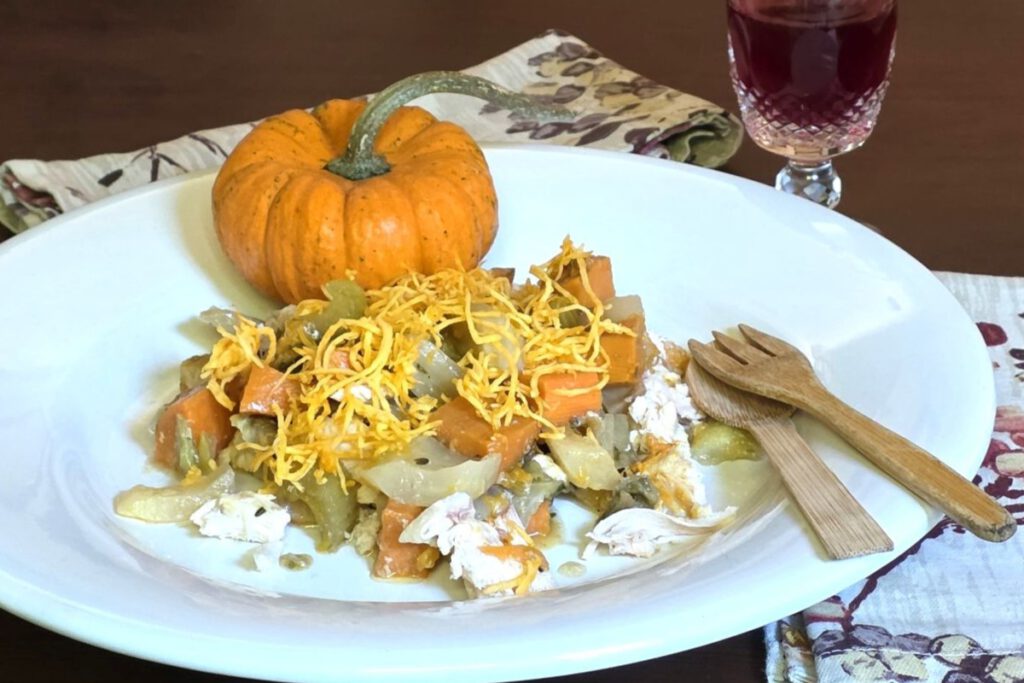
The basic recipe for Cinderella Chicken is to cut a lid off the top of a Cinderella pumpkin or any baking pumpkin large enough to hold a whole chicken. Remove the seeds and stringy pulp. Place the chicken in the cavity, add autumn vegetables such as sweet potatoes, potatoes, onion, fennel, carrots, celery, garlic and fresh herbs. Season with salt and pepper and add a half cup of olive oil or butter.
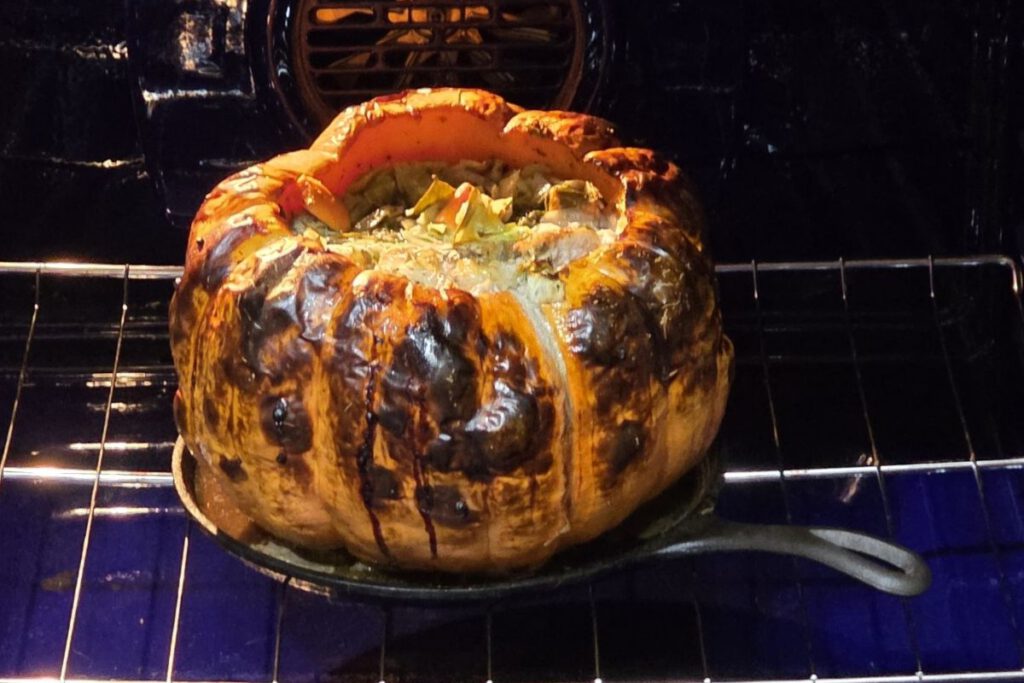
Place the pumpkin on a cast iron pan or baking sheet, place the lid back on top, and bake at 375°F for three hours or until the internal chicken temperature is 165°F–175°F. Lightly scrape the interior pumpkin wall before serving to incorporate the cooked pumpkin into the stew.
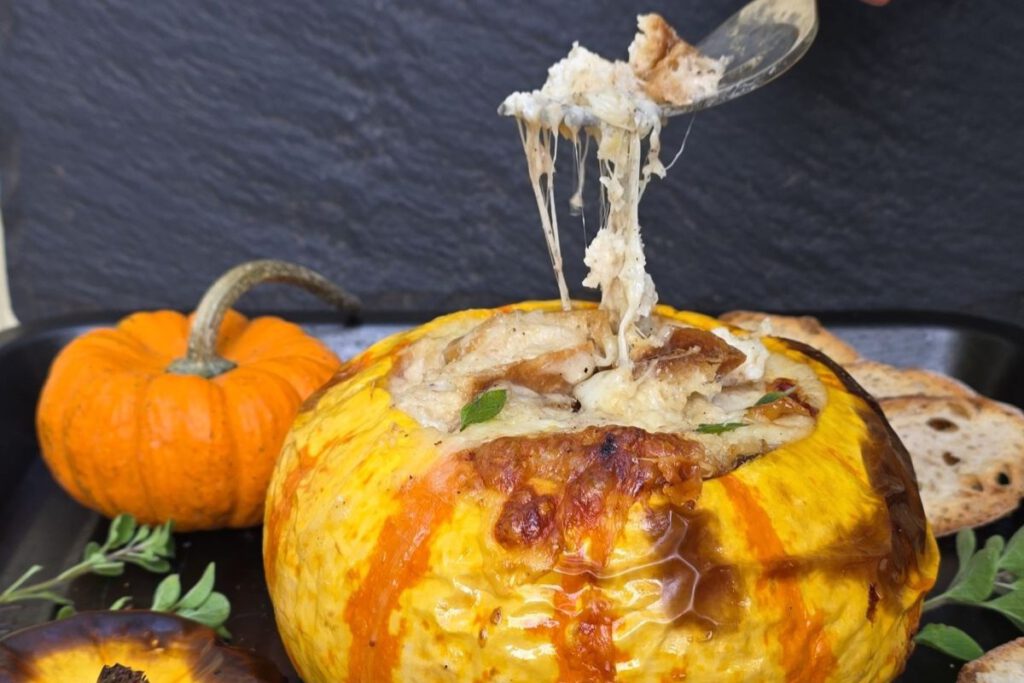
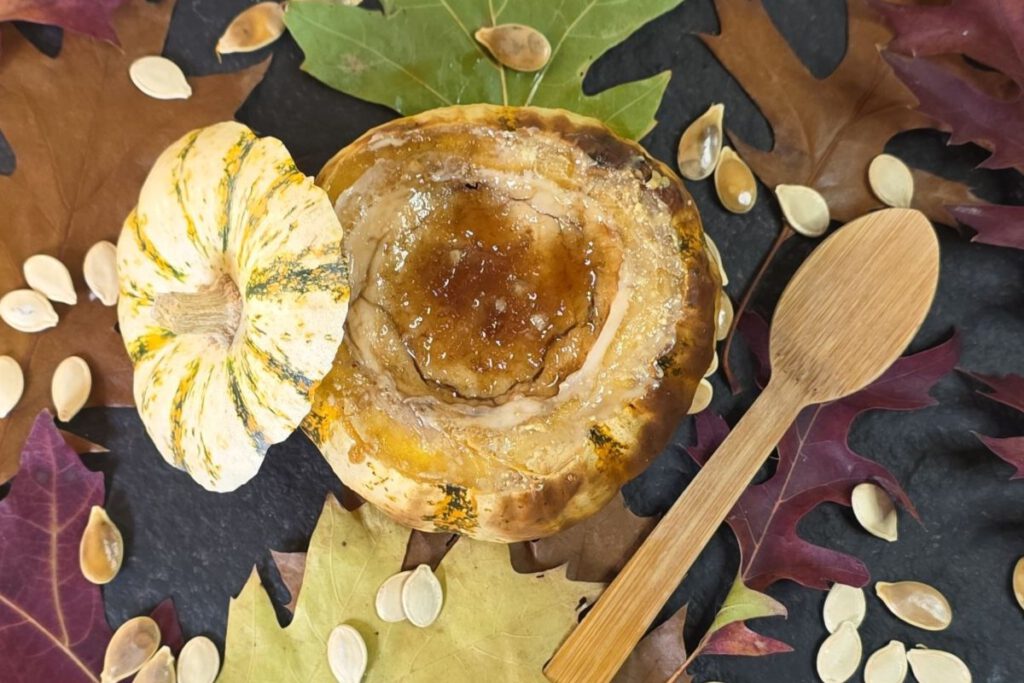
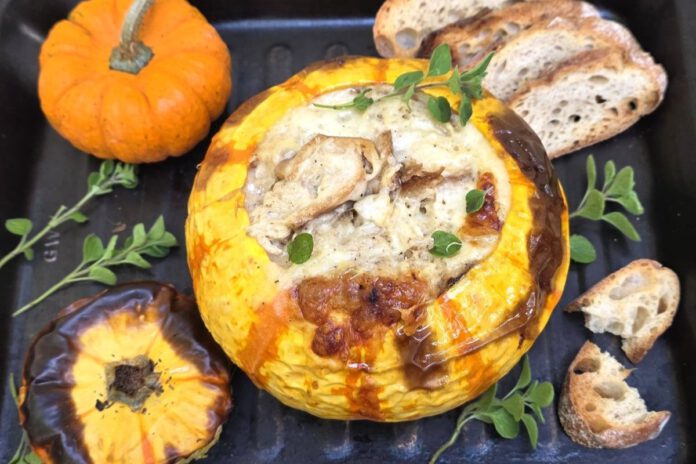
There are many other dishes that can be cooked inside a pumpkin. Appetizers such as hot dips, baked brie, layered cheese bread pudding and side dishes such as macaroni and cheese, stuffing and fondues can be made in individual mini pumpkins or larger ones for sharing. Other main dishes include rice, risotto and pasta casseroles. Desserts include crème brulée, cheesecakes and pumpkin pies.
A decorative pumpkin used as a vessel for cooking locks in steam, which keeps meats, vegetables and rice tender and moist. The thick wall infuses sweet earthy flavors while high levels of potassium, fiber, and Vitamins A and C permeate into the dish. The thick wall also keeps the food warm for an extended period of time.
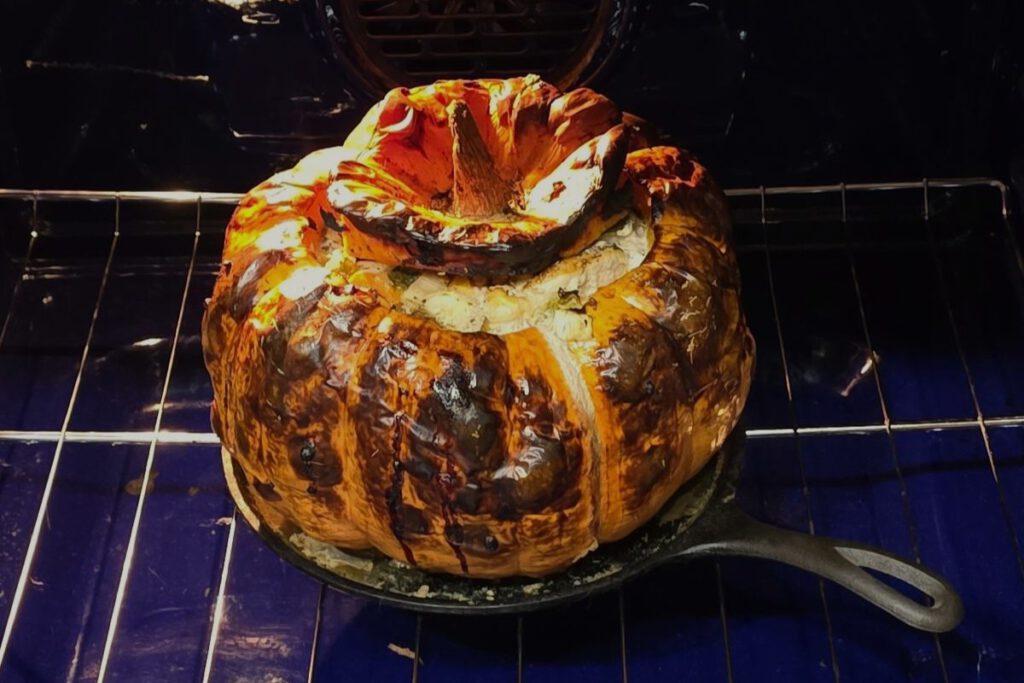
There is no scrubbing and washing after cooking, since the cooking vessel is completely edible. After the food cooked inside is served, anything left over can be harvested to make pumpkin puree, which can be used in many other recipes.
Much like Prince Charming, who found his ideal match, try cooking Cinderella Chicken and you will have a perfect fit for a delicious autumn dinner. Unlike Cinderella, it will be gone well before midnight.
Daniel O’Donnell is the co-owner and operator of an organic landscape design/build company in Fremont. Chrysalis-Gardens.com