

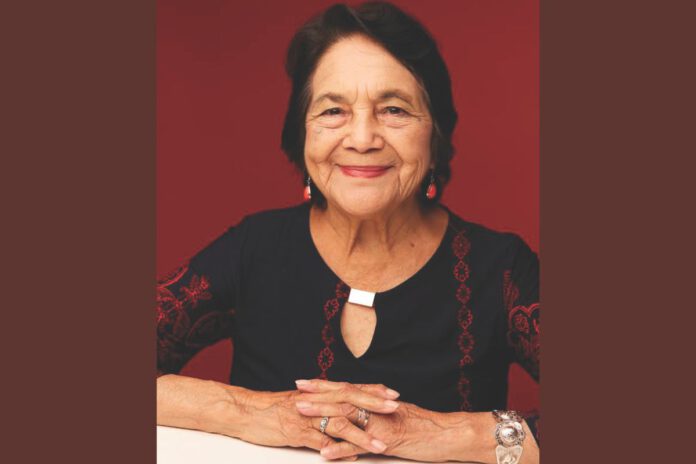
When Dolores Huerta died on Oct. 28 at age 96, she left behind a long legacy of fighting for farmworkers’ and women’s rights. She was active in Democratic politics and supported LGBTQ+ rights and immigration reform. In addition to receiving numerous awards for her humanitarian work, Huerta was awarded the Presidential Medal of Freedom in 2012. California law established April 10 as Dolores Huerta Day in 2018, with the first annual proclamation following in 2019.
In March of this year, Huerta joined several other women in coming forward with accounts of sexual abuse by César Chávez in the 1960s. She had kept her experiences private for decades because, as she said in a statement released to The New York Times, “exposing the truth would hurt the farmworker movement I have spent my entire life fighting for.”
Even as she carried this painful history, Huerta continued to advocate for others to be heard. She remained committed to ensuring “that our communities are treated with dignity and given the equity that they have so long been denied.”
Her labor and civil rights work had a profound impact on California’s Central Valley and urban centers such as San Francisco and Sacramento. But her advocacy and organizing also reached the Tri-Cities.
During the United Farm Workers’ historic table grape and lettuce boycotts of the 1960s and ’70s, supporters across the greater Bay Area joined the campaigns. Local volunteers in Fremont and Newark reportedly participated in picket lines outside Safeway in support of the union’s efforts.
In March 2022, Huerta spoke to students at Ohlone College about grassroots organizing, labor rights and the Chicano movement.
And Dolores Huerta Middle School, which opened in 2021 in North San Jose, carries her name just south of Fremont and Milpitas.
Huerta’s legacy is one of tireless advocacy for a better life for her community, even in the face of formidable obstacles. Honoring that legacy means more than remembering what she accomplished. It means continuing the work: organizing, speaking up and insisting that every person be treated with dignity. That responsibility belongs to all of us.