

Irish and Scottish immigrants to the U.S. brought the tradition of carving scary faces on turnips and placing them in doorways around Halloween to scare away wandering ghosts around 1840. They quickly figured out that it was much easier to carve pumpkins, which are readily abundant in October.
Pumpkins were prevalent at American Halloween festivals and home parties, and in magazine and newspaper Halloween-themed articles by the late 1800s. Today, the tradition continues in October as homes and businesses are decorated with pumpkins, including glass pumpkins.
Molly Stone, the co-owner of Cohn-Stone Studios in Richmond, created her first glass pumpkin in 1990. She had a failed pumpkin crop in that year which left her nothing to decorate the garden with for her daughter’s October party. She decided to create glass pumpkins for the event as she and her husband Michael Cohn are artists specializing in hand-blown glass. Other local glass-blowing artists were experimenting with the form within a couple of years.
Bobby Bowes and Mike Binnard, founders of the Bay Area Glass Institute (BAGI), launched the first Great Glass Pumpkin Patch in Palo Alto in 1996. This showcased 750 glass pumpkins. All sold, and the proceeds funded the startup of a community glass studio. The next year featured 1,000 glass pumpkins and in recent years over 10,000. Today, a percentage of the proceeds go to BAGI and the Palo Alto Art Center Foundation.
Daniel O’Donnell
Daniel O’Donnell
The Great Glass Pumpkin Patch inspired glass studios, universities and schools across the country to create their own autumn events to benefit local glass artists. Tens of thousands of glass pumpkins and gourds will be sold across the country this fall.
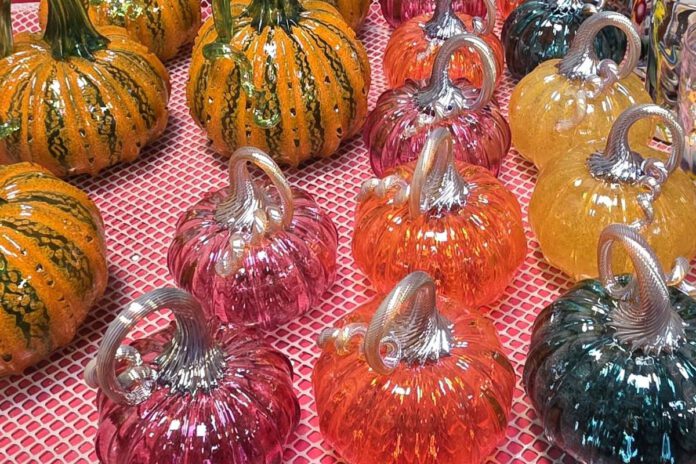
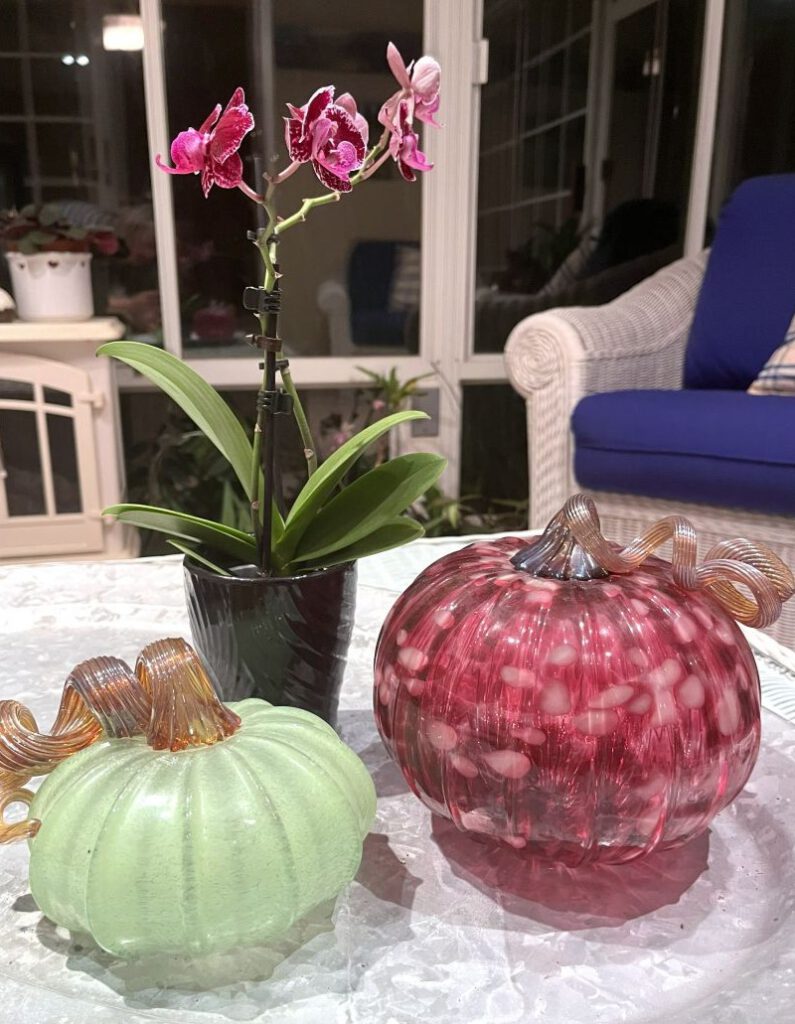
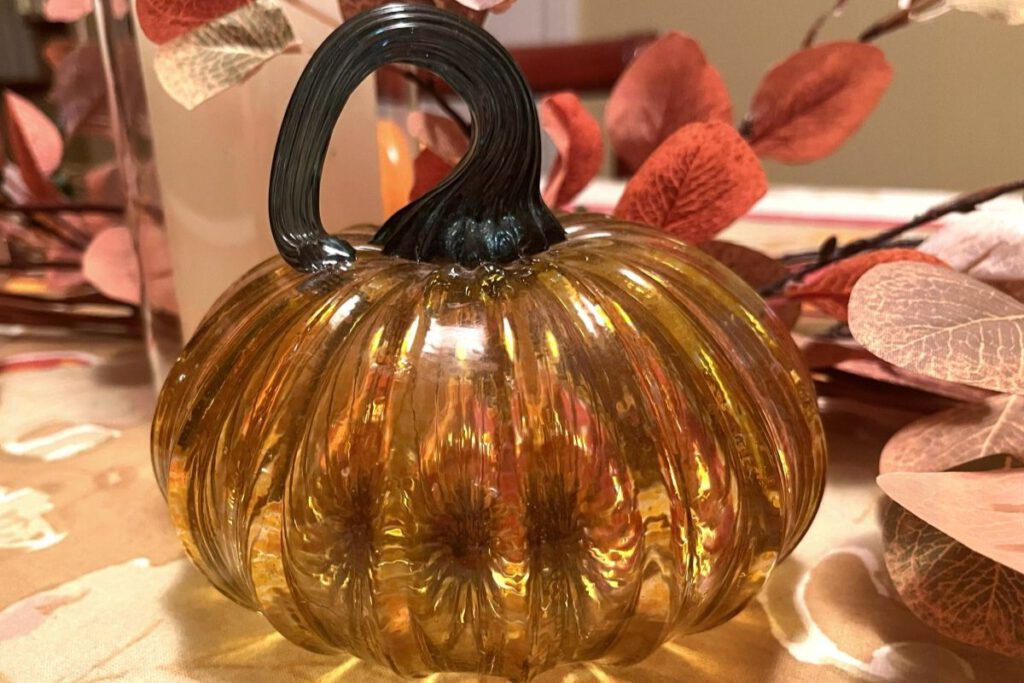
Each glass pumpkin is unique, as they are all handmade. They come in almost any color or imaginable combination. Some are shades of orange, white or green with brown stems to resemble natural pumpkins. Others have whimsical body and stem color combinations. Some pumpkins are transparent, others are translucent and some are opaque.
There are many different pattern styles as well; marble and swirled, speckled, iced and cracked, and gradient changes and color fades. They can have symmetrical or asymmetrical shapes which can range from flattened, to spherical, to elongated. Their average sizes can range from a few inches in diameter to just over a foot.
The optimal time to purchase a glass pumpkin from one of a few featured events is in late September and October. Unfortunately, the Great Glass Pumpkin Patch is already finished. There is still plenty of time to visit some other glass pumpkin events. The Santana Row Glass Pumpkin Festival in San Jose runs from Friday, Oct. 2 to Sunday, Oct. 4. The Magical Glass Pumpkin Patch in Los Gatos, happens on Saturday, Oct. 10.
The technique for blowing glass began in the eastern Mediterranean area of modern-day Israel, Lebanon, Syria and Palestine around 50 BCE. It quickly spread throughout the region and the Roman Empire, replacing a molding method, as a quicker and less costly way to make glass products. The same blowing technique is used to make glass pumpkins.
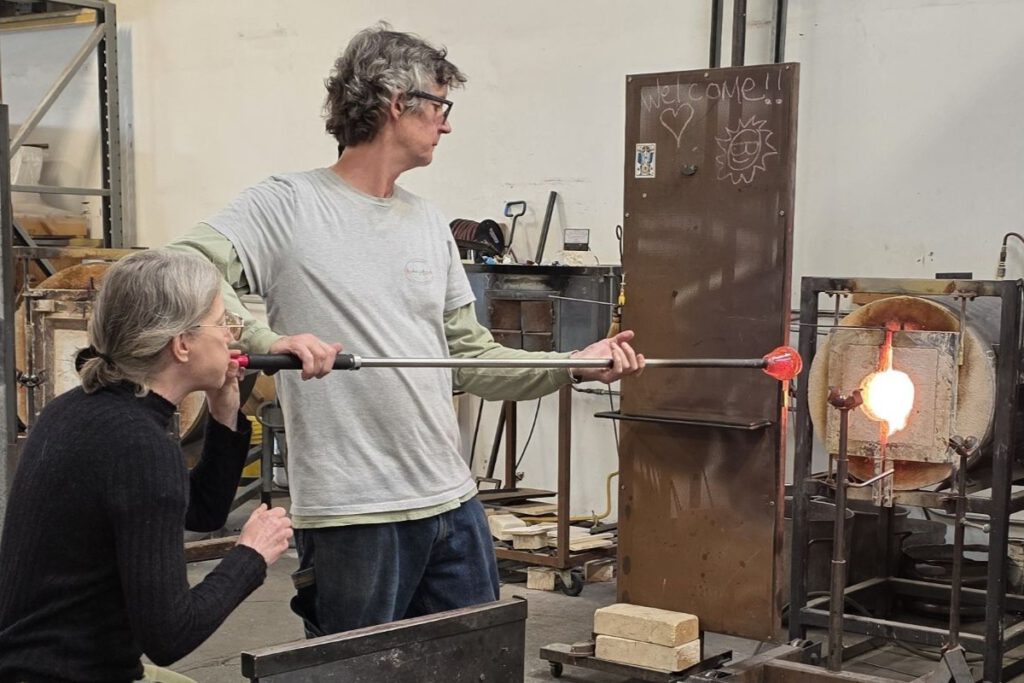
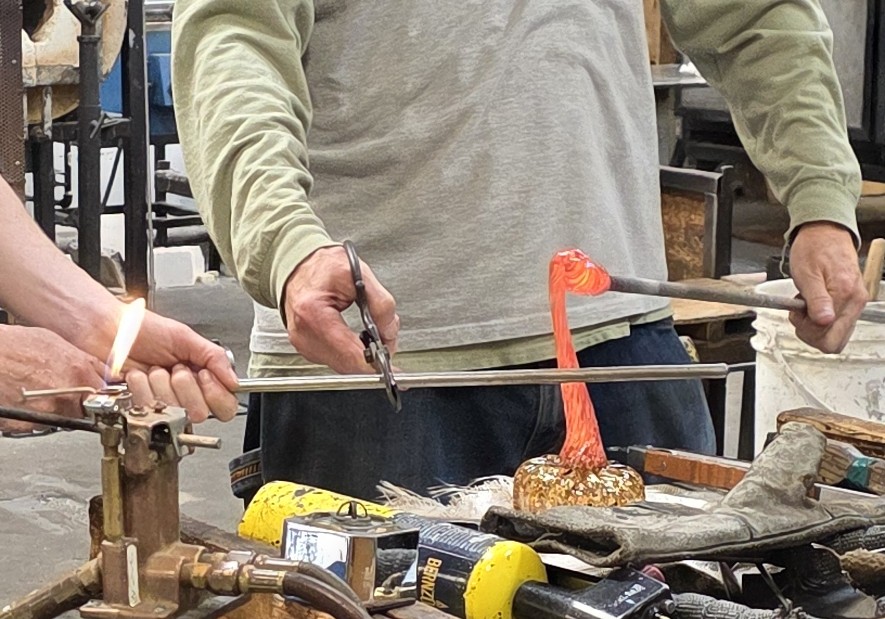
Glass pumpkins are made by dipping a long blowpipe into a furnace of molten glass at over 2,000° F. The blob of glass is then shaped by rolling it on a marver, or metal table. Air is blown through the pipe to create an interior bubble. The process is repeated and then the glass is dipped into colored glass chips called frit, which will give the pumpkin its final color, and then spun in a wet wooden block to melt the color in.
The glass gets re-heated and placed in a ribbed optic mold. More blowing expands the glass to fit the mold. The glass is again re-heated and blown to create a spherical shape. The bottom is then smoothed and flattened with a wooden paddle. The pumpkin gets detached from the blowpipe, a stem is added and it gets placed in a cooling oven to reduce the temperature slowly.
The above is the general process for making glass pumpkins. Creating them is a bit more involved and requires much skill. You can make your own glass pumpkin this Halloween season with help from Slow Burn Glass in Richmond. They offer blown glass pumpkin workshops. You will be individually guided by a glass-blowing artist to make your own glass pumpkin in a one-hour workshop, limited to six people. At the end you will have your personal glass pumpkin to take home.
Glass-blowing pumpkin workshops are offered between 9am and 5pm on Oct. 3, 24 and 31. Workshops can sell out, so book as soon as possible.
Glass pumpkins have become traditional Halloween and fall decorations in many homes. Their uniqueness, beauty and artistry make it crystal clear that they are something special.
Daniel O’Donnell is the co-owner and operator of an organic landscape design/build company in Fremont. Chrysalis-Gardens.com