

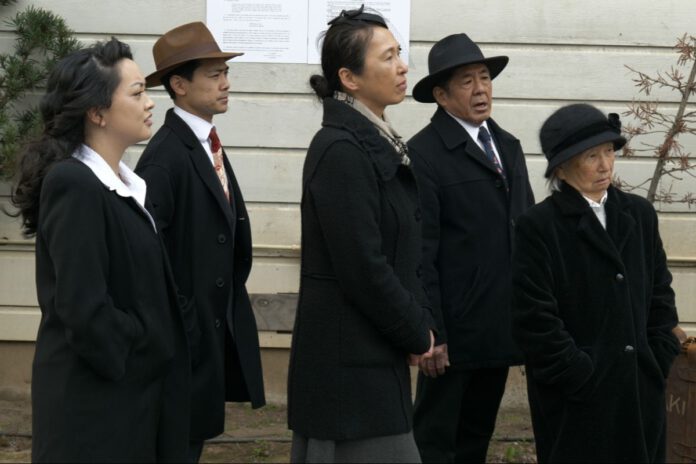
The 2024 indie film Kintsukuroi, focusing on the experiences of Japanese Americans during World War II, has seen a few small screenings around the Bay Area, including at Ohlone College earlier this year. But word of mouth has exploded, creating a demand to see this low-budget passion project. Registration for an Aug. 29 screening at Fremont Main Library filled up quickly, and on the day an anxious line stood outside the door hoping to score seats.
The film is the project of writer/director/co-producer Kerwin Berk, but it came to be thanks to enthusiastic support from the Nikkei and wider Bay Area community. Production started in 2018, but was suspended for a few years because of Covid. Actors did line readings together over Zoom. Shooting started in 2022, and the film is shot at various locations around the Bay Area and Placerville.
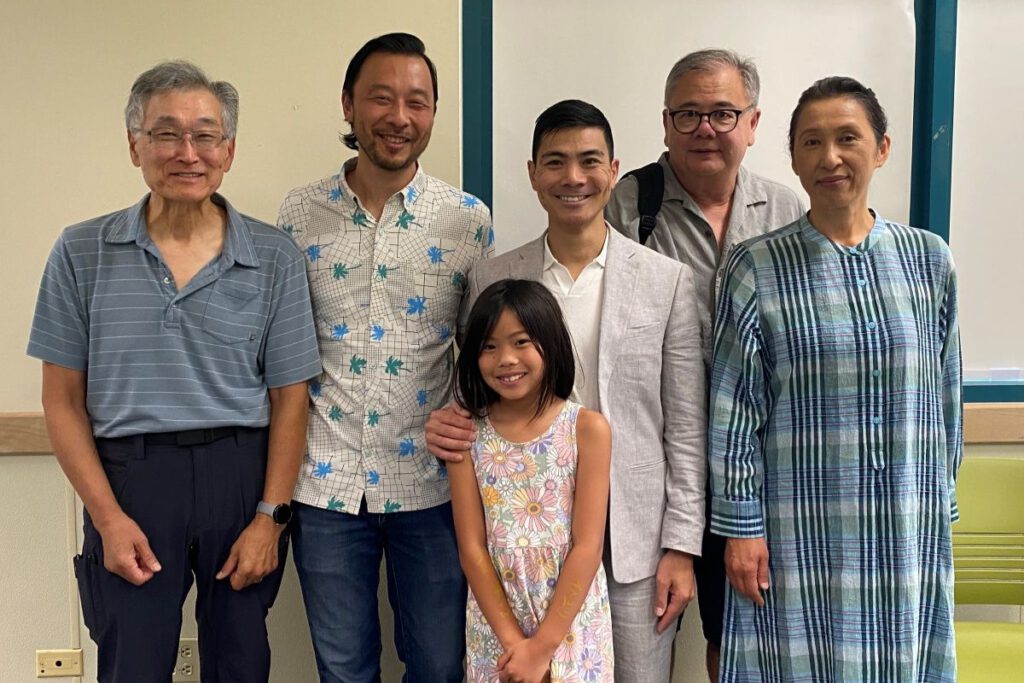
After the screening, Berk answered questions from the audience, joined by others who helped bring the film to life: actors Ryan Takemiya, Ken Takeda, Kiyomi Koide; director of photography Ben Arikawa; swing dancer Michael Quebec and Tom Shafer from the Pacific Bus Museum in Fremont.
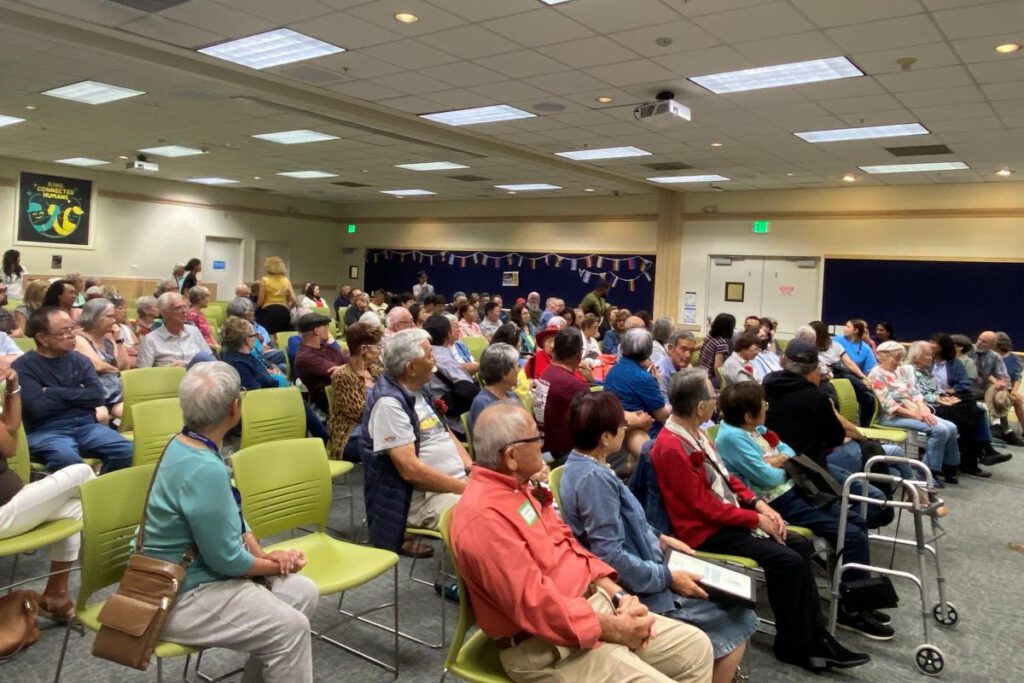
“We didn’t really have a budget, so we got a small grant from the San Francisco Art Commission to make the film,” said Berk at the screening. “These guys and about another 150 people volunteered their skills and their time to work on the project.”
Kintsukuroi has the same meaning as the more commonly used term kintsugi, or repairing broken pottery with lacquer mixed with powdered gold. Kintsugi emphasizes the joining together of elements, while kintsukuroi emphasizes mending what has been broken.
The look of the film is inspired by Dorothea Lange’s photos, and locations around the Bay Area. Viewers might recognize the San Francisco Japantown, and the Japanese American History Museum in San Jose.
The acting is definitely more community theater-esque than what you would see in a professional film. The vibe is “all your actor friends got together and made a movie.” In fact, some of the standout performances are from people who aren’t professional actors—notably Kiyomi Koide as Mrs. Ito, and Chizuko Omori as Obaachan. Koide originally joined the project as the translator for the Japanese dialog, and she delivers her lines with naturalism and sincerity.
Omori, who herself spent three-and-a-half years in the Poston camp, received one of the biggest audience reactions for a dinner scene near the end of the film where she bemusedly welcomes a stranger into her family, a moment that’s funny and sad and heartwarming all at once.
The script is literal and exposition heavy, and moments of levity where the characters gossip or crack jokes are appreciated. These moments not only ground the characters in the details of everyday life, they give the actors a chance to loosen up before the next dramatic moment hits, giving the necessary contrast. And as in most war stories, the other shoe is always ready to drop.
For example, a tense conversation at a camp dance about the loyalty questionnaire and a satirical rendition of “Ain’t We Got Fun” wouldn’t hit so hard if the characters hadn’t been joking about an illegal still and drawing on stocking seams moments before.
Duane Takahashi of San Jose Chidori Band provided jazz music for the dance scene. The rest of the film’s music is mostly royalty-free due to the budget constraints, but there’s a good variety of strings, jazz and orchestral soundtrack to lend tone and pacing to the scenes.
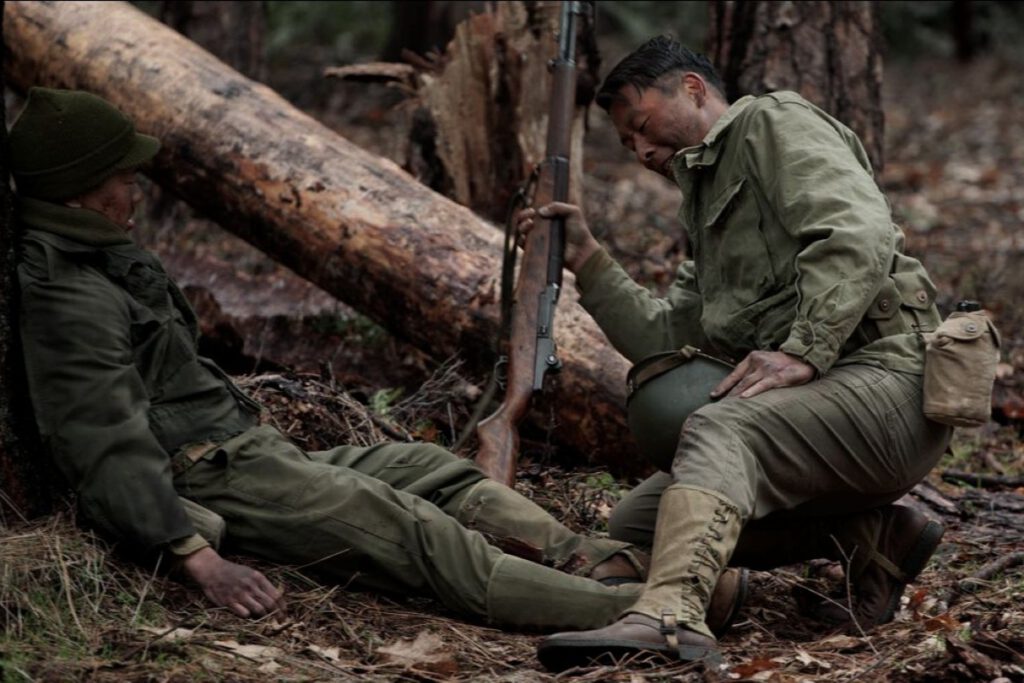
Standing out in a “zero-budget” film are the war sequences following characters who enlist in the 442nd regiment. Reinactors helped get the costumes, equipment, and even the handling as close to historically accurate as possible. The sequences were shot in the Sierra foothills, standing in for the Italian countryside, with rifles shooting blank charges that deliver a bang on screen.
“The running joke was we’re not doing any more war scenes unless we get a tank,” noted Berk. This turned out to be prophetic as a collector in Livermore donated his WWII tank to the project and allowed the crew to film on his property for free. “Turns out he liked the story,” explained Berk. “He grew up in Oakland—family next door, sent to a camp. Individuals do great things, they really do.”
The cinematography and editing are overall well put to the purpose of framing a scene, with some fun creative touches here and there (for example, an extended sequence of characters sitting on a bench with jump cuts to convey time passing). A few scenes drag in the two-hour film that needs to span years and a big cast of characters.
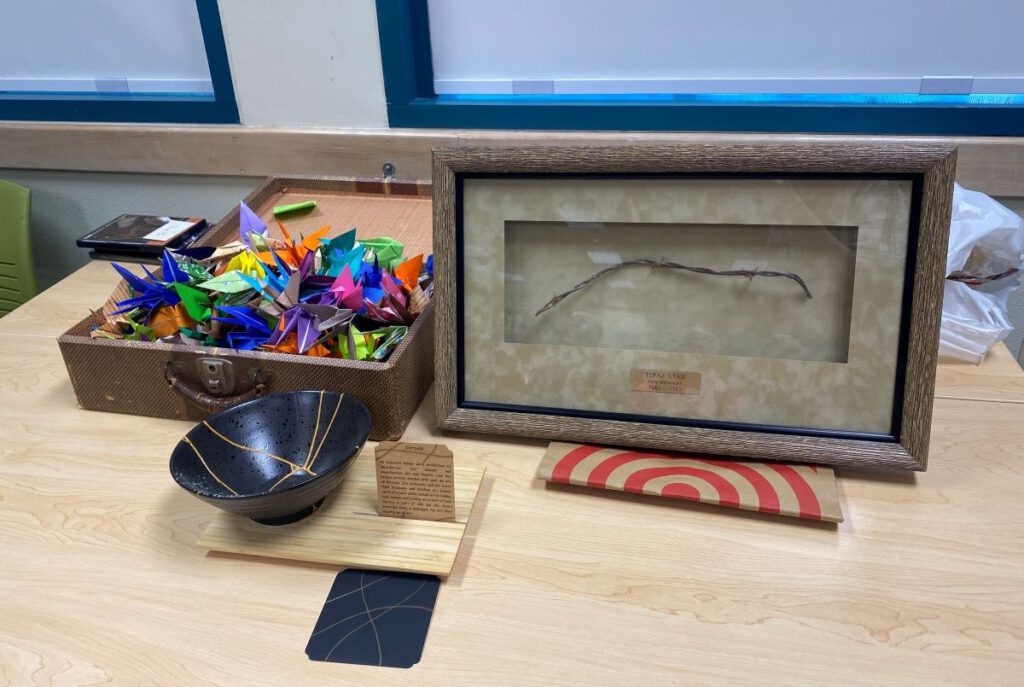
Berk said he wanted the script to stay close to what real people experienced: “I had been collecting stories since I was a kid. I’d been a journalist for many years. So I had notebooks full of stories that I’d heard from people in J-Town and family friends. Most of this is rooted in reality.”
At the end, you feel that the story has followed a complete arc for a war movie. You start with the characters in their everyday lives, see how those lives are disrupted, who dies and who survives, and get a sense of how the characters will move on (in this case with some glimpses into the future).
This is a movie to watch on comfy couches with snacks and discussion questions to talk over with friends afterward. If you can point to the screen and say, “I’ve been there!” it’s even better.
With all the people coming together for the screening, maybe Kintsugi isn’t far off the mark. Luckily, the library is already planning to have another screening on Feb. 20, 2027, the day after the Day of Remembrance.



Is the film showing anywhere else before next year?