

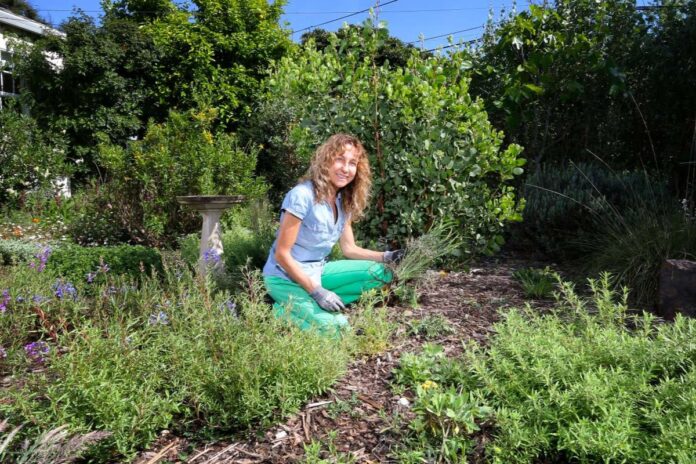
On Saturday, May 2, and Sunday, May 3, the public will have the privilege to tour more than 70 beautiful private gardens showcasing plants, trees and flowers native to Northern California.
Since 2005, visitors have had a yearly opportunity, thanks to Bringing Back the Natives Garden tours, to visit homeowners’ gardens across the East Bay featuring foliage native to the area. Visitors then see for themselves the beauty and practicality of adopting these low-maintenance, drought-resistant and wildlife-friendly species.
Kathy Kramer began the tours a few years after moving to Northern California.
“When I was 30, I moved up here from Los Angeles,” says Kramer. “I had read in the paper that steelhead trout were migrating up Wildcat Creek, and I was just enchanted by the idea that I could live in a place where that could happen.”
After hearing The Ohlone Way author Malcolm Margolin speak, Kramer says, “I wanted to take my garden and try to make up at least a little for all the habitat that was destroyed to make my life pleasant.” She wanted to see what other people were doing, but says, “It didn’t work for me to go to the UC Botanic Garden or the Tilden Botanic Garden and look at these big places with professional landscaping, so I decided to start a garden tour. That allowed me and others to see what people were doing in their own yards, and that would hopefully make it easier and more attractive for others to garden with native plants.”
Victor Carvellas
Victor Carvellas
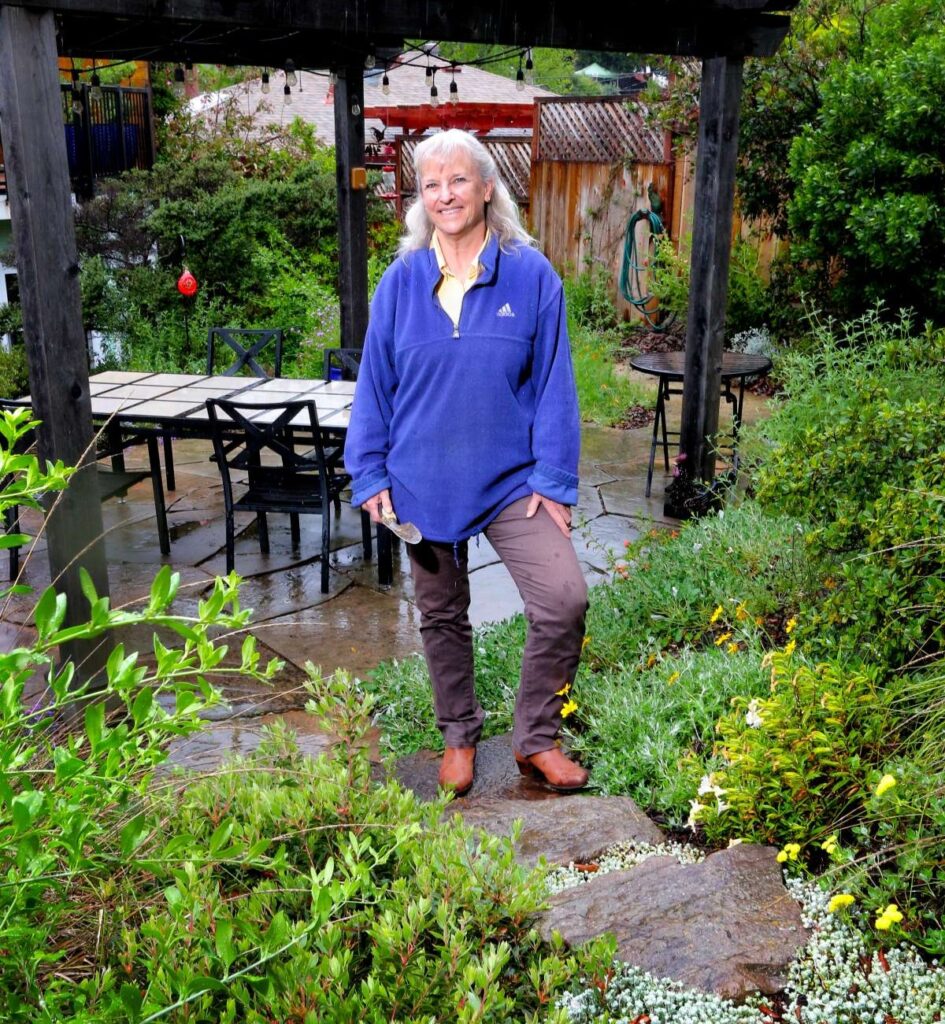
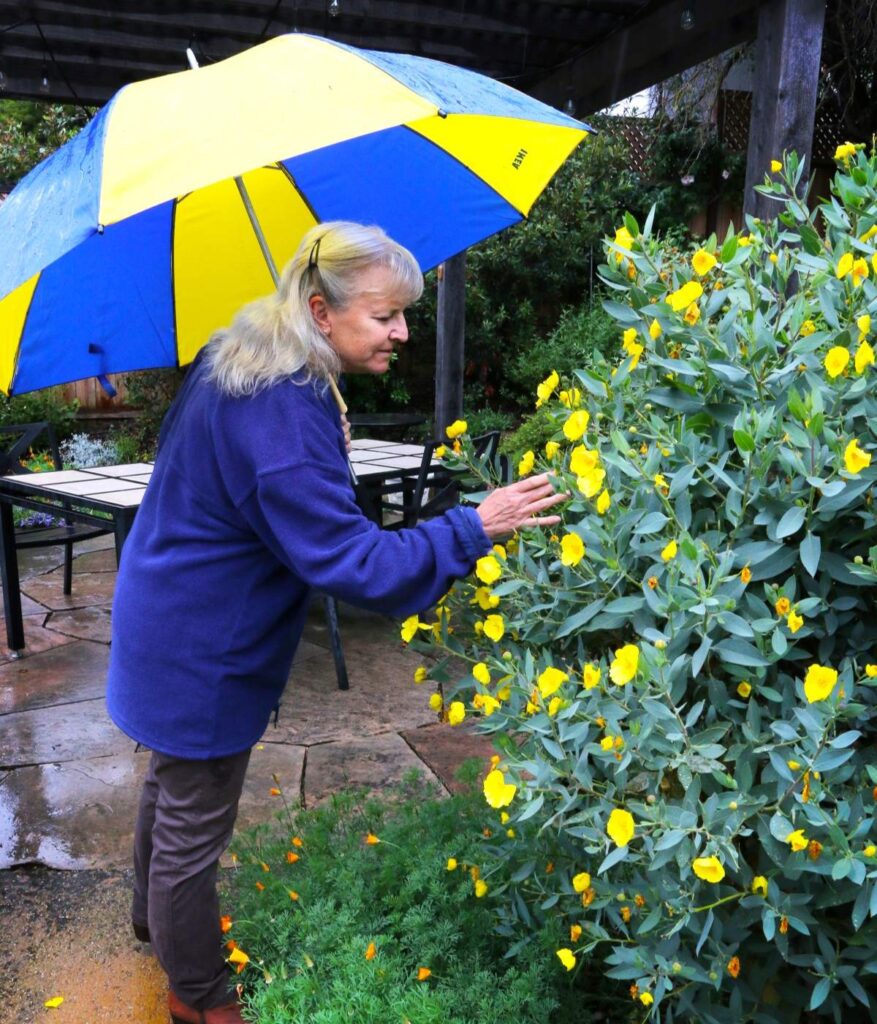
This is Susan Teefy of Castro Valley’s third year with the tour. She has adopted native plants for their ease of maintenance and water conservation, but she especially loves the birds they attract. “All kinds of birds will visit,” says Teefy. “I can take the screen off the window and photograph them from the kitchen.”
The birds also take care of the bugs. “I never have been one to use a lot of pesticides, anyways,” she says. “But once I understood the connection between local plants, local bugs and local birds, it really just made sense to go all native.”
Stefanie Pruegel of San Leandro also enjoys the abundance of wildlife. “I bought this property in 2016 specifically because I wanted a place with a large lot that I could turn into a wildlife refuge,” she says. “I did the garden first, even though there was a lot to be done on the inside of the house. The garden was always the most important part.”
Even though Pruegel’s yard covers about 6,000 square feet, she’s planted nearly all of it herself.
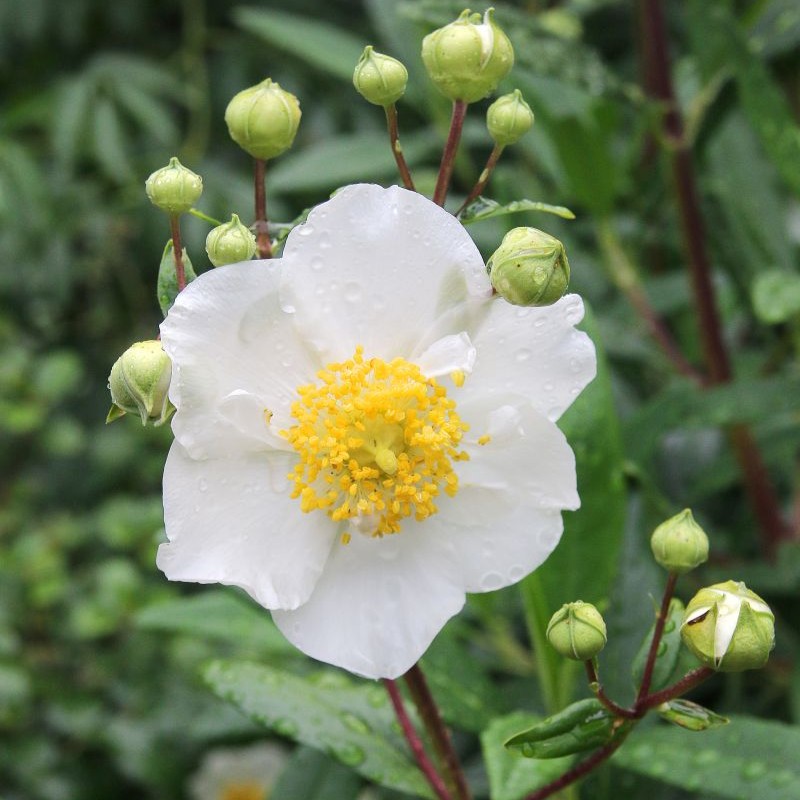
“There were a couple of fruit trees, a lemon and a pomegranate that’s still here, but everything you see was planted either in 2017 or since then,” says Pruegel. “They grow so fast, it’s quite amazing how quickly you can make a difference. In the beginning, you’d see the usual sparrows and mourning doves, but over the years I’ve seen so many different species, I have to keep a list. It’s so rewarding to see them thriving, and that keeps me going.”
For Pruegel, the garden is a place of renewal. “Being in the garden is very grounding, you literally have your hands in the ground, and it resets you.”
One unique feature of Pruegel’s garden is her rain catchment system. Three large tanks on the side of her house take care of all her watering needs. “I never touch a pesticide, never fertilize, and the garden is very drought tolerant, though I do water in the summer to keep some plants that would go dormant just a little fresher.”
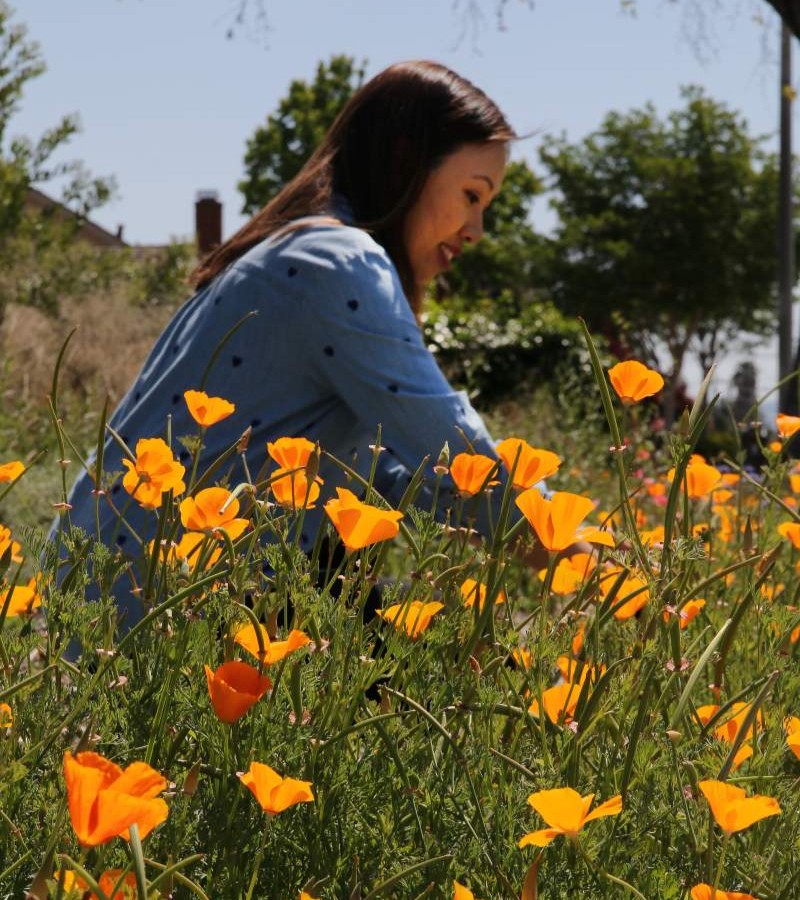
CALIFORNIA PRIDE Newark resident Yen Bui’s garden is bright with California poppies.
Victor Carvellas
Victor Carvellas
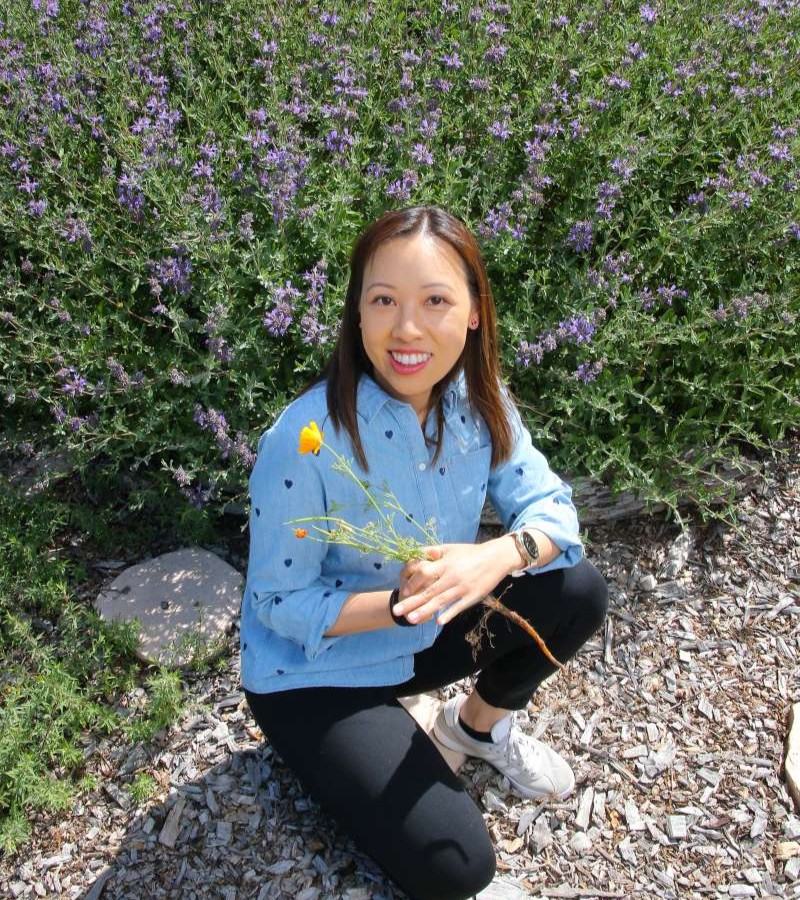
In Newark, this is Yen Bui’s second year with the tour. Her encounter with native plants started as a volunteer with the California Native Plant Society. “I was just helping them plant native plants in places like the public parks,” says Bui. “That’s how I learned about how to plant and maintain them.”
For her, the monarch butterfly has a special place. “I remember seeing them all the time when I was a kid in San Jose,” says Bui. “Now the population is dwindling tremendously.” In response, Bui populated large areas of her garden with monarch-friendly native milkweed, helping her achieve status as an official Monarch Waystation.
As more gardeners discover their desire to act for the environmental good, more knowledge is required. Reading and research are excellent pathways, but there is something truly inspiring about visiting the real thing. To learn more and register for the free tour, be sure to visit bringingbackthenatives.net.
Teefy sums up the garden tour experience best: “Without exception, everyone who comes to the garden tour is smiling. They’re excited about the plants, they’re excited about the birds, they want to see an example of this or that plant they’ve heard about, and they’re really enthusiastic. The energy just builds on itself with that many people sharing a vision. It’s so, just, wow!”
Bringing Back the Natives
Saturday, May 2 – Sunday, May 3
10am-5pm
Tour is free, but registration is required
bringingbackthenatives.net/view-gardensAccessibility and parking vary