

Legumes, belonging to the family fabaceae, are one of the oldest cultivated crops and used widely for their high plant protein content, dietary fiber and essential minerals such as iron and folate. They are not only a staple in cuisines around the world but also play an important ecological role by fixing atmospheric nitrogen in the soil through symbiotic bacteria, mycorrhizae.
One well-liked legume in our household is garbanzo beans or chickpeas (Cicer arietinum L.). They are particularly significant in Mediterranean, Middle Eastern and South Asian cuisines. I have a forever bond with this hearty and versatile legume and can perk them up for an indulgent meal or simply use them to top a salad. From falafels to burgers to hummus and savory chaats, garbanzo beans are always making their way to the plates in our household.
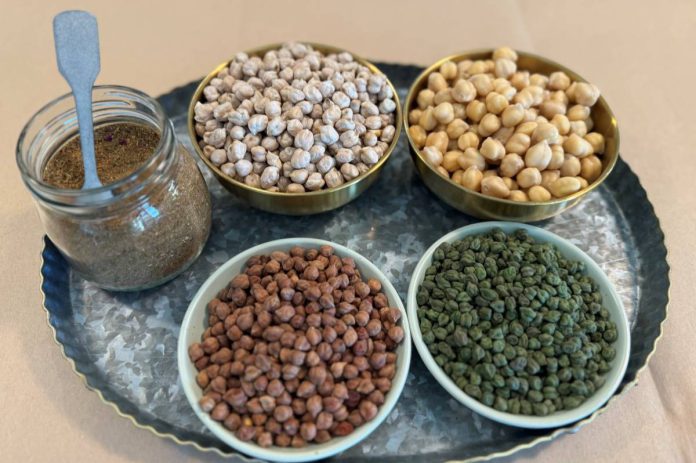
Garbanzo beans are also called “Kabuli chana” because of their historical association with the Kabul region of Afghanistan. In Hindi, “chana” means any kind of chickpeas. “Kabuli chana” are light colored, and “desi chana” are smaller and green or brown colored. Kabuli chana have more body and yield a creamier, softer texture. Desi chana are smaller, denser and have a stiffer outer skin. They need longer soaking and cooking. Upon cooking, they retain their firm texture.
While I prefer to soak dried beans, followed by pressure cooking for curried dishes, I use canned ones when in a hurry. They both come out just fine, but overall quality and purity of ingredients can be a culinary talking point.
Another legume, masoor daal, is a staple in my pantry. Masoor daal is available in three forms: whole with skin, whole without skin and split without skin. The whole with skin is generally called whole brown or whole red lentils (“sabut masoor” in Hindi), and the others may be referred to as pink or orange lentils as taking the skin off exposes the pink-orange color.
Ones without skin cook quickly and come in handy on a lazy day. When I am out of options, they cook in no time and lend themselves to a quick meal. When cooking with skin, I like to soak for at least one hour. Pressure cooking helps speed up the process. They also take a bit more of the tempering and flavoring.
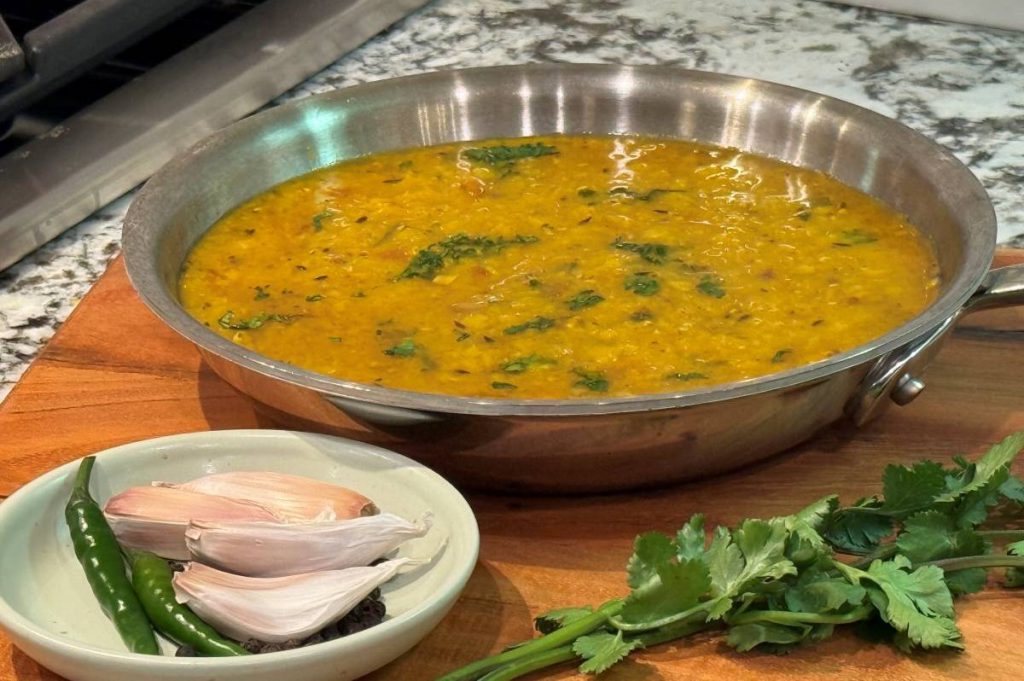
Masoor daal – spiced lentils
1 cup skinned masoor daal, washed
3.5 cups water
1 tsp cumin seeds
1 medium tomato (chopped)
2 – 3 garlic cloves (minced)
1 – 2 green chilies (optional)
½ tsp coarse ground black pepper
½ tsp turmeric powder
½ tsp red chili powder
Salt to taste
2 tbsp oil or ghee
Fresh cilantro to garnish
Pinch of asafoetida, optional
Inspect lentils for any debris and rinse until water runs mostly clear. While a lot of recipes suggest that soaking is not needed for skinned lentils, I like to soak them for 15 minutes before cooking, for no particular reason other than “mum said so.”
In a heavy bottom saucepan, add the lentils along with water, turmeric and salt. Bring to a boil on high heat and skim off any foam that might form on the top. After a few minutes of boiling, reduce the heat to medium-low and allow it to cook until tender, occasionally stirring to make sure they are not sticking to the bottom. At this point check if the lentils are low on water, and add hot water if needed and gently stir it in.
Once daal is done cooking, heat oil or ghee in a pan and add a pinch of asafoetida. Add cumin seeds and let them splutter. Add garlic and chopped green chili and cook for about a minute. Add tomatoes, red chili powder and/or freshly ground black pepper and cook until tomatoes soften. Make sure to keep turning over the ingredients to prevent them from sticking to the pan.
Once done, pour on top of the daal and stir gently. Garnish with chopped cilantro. Alternatively, all the tempering ingredients can be added directly without fat to the lentils while cooking to make a fat free version. It is a personal favorite although the taste and texture differ from the one that has fat. Goes well with roti, rice or on its own.
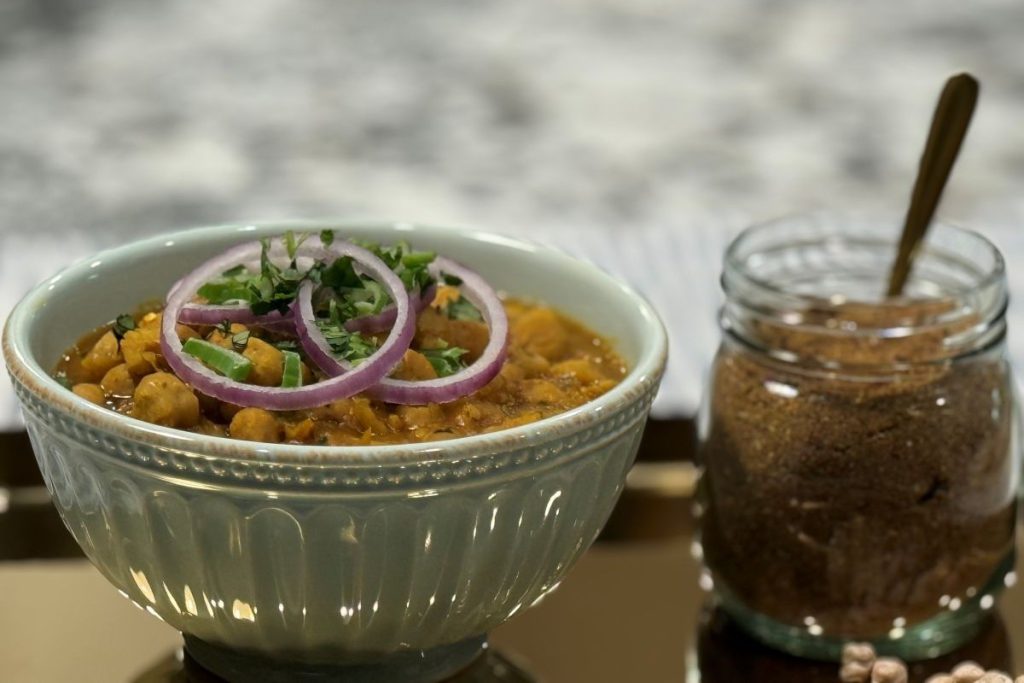
Chana masala – curried garbanzo beans
2 cups dry garbanzo beans
Base ingredients for the curry
1 medium sized yellow onion, roughly chopped
3 medium sized tomatoes, in quarters
1 inch piece of ginger roughly chopped
2 tsp cumin seeds
2 tsp garam masala powder
Red chili powder to taste
1 tsp turmeric powder
3 – 4 green chilies, to taste
4 tbsp any neutral oil
Salt to taste
Wash and soak garbanzo beans in six cups of water for at least ten to twelve hours. Rinse them again prior to cooking. Cook in a pressure cooker and allow them to cool. As there are many variables in equipment and settings, please follow the instructions for the cooking times.
With a four-quart pressure cooker, it will take about 35 to 40 minutes and seven to eight whistles for two cups of soaked garbanzo beans to cook. Once done, one can adjust for consistency by adding water if needed or cooking for some time without the lid to let the water evaporate.
In a heavy bottom pan, add oil and warm it up. Add cumin and allow it to splutter. Add onions and cook on medium to high heat until golden brown. Add ginger and sauté. Add tomatoes and cook until soft. Reduce heat to the lowest and add green chilies, turmeric, red chili powder, garam masala powder and cook for a few minutes. Let it cool completely.
Blend this mixture to a fine paste and add to the cooked beans. Gently stir the contents and simmer the curried beans for about ten minutes. Garnish with onion and chopped cilantro. Enjoy with rice, pitas or pooris (fried flat bread). They last in the refrigerator for more than a few days and improve in taste as they sit.
Legumes—beans, lentils and pulses—are a staple in our vegetarian household. String beans blanched and sauteed with garlic and topped with slivered almonds or added to stir-fry, sprouted mung beans for salads and steamed fresh edamame sprinkled with salt and lemon juice are some of the other ways we use them in addition to traditional preparations.