

Egg hunts are one of the most joyful events for children as they race through the grass looking for hidden treasures.
The LightHouse Little Learners (LLL) program hosts a chirping egg hunt so blind and visually impaired children can also experience this joy. This year it was held at the California School for the Blind in Fremont on Saturday, March 21.
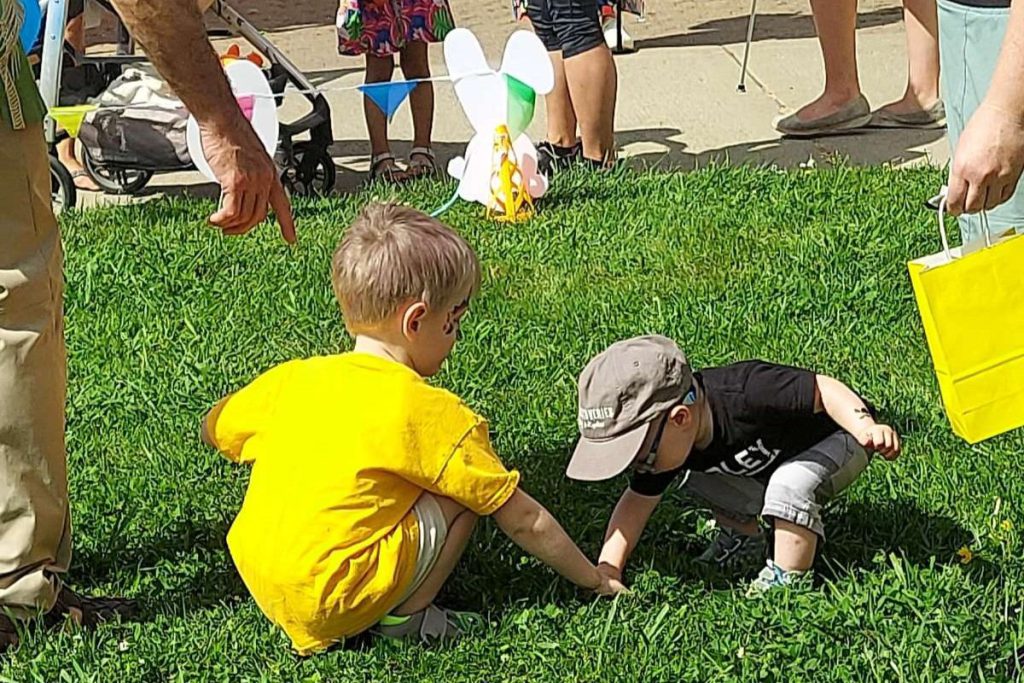
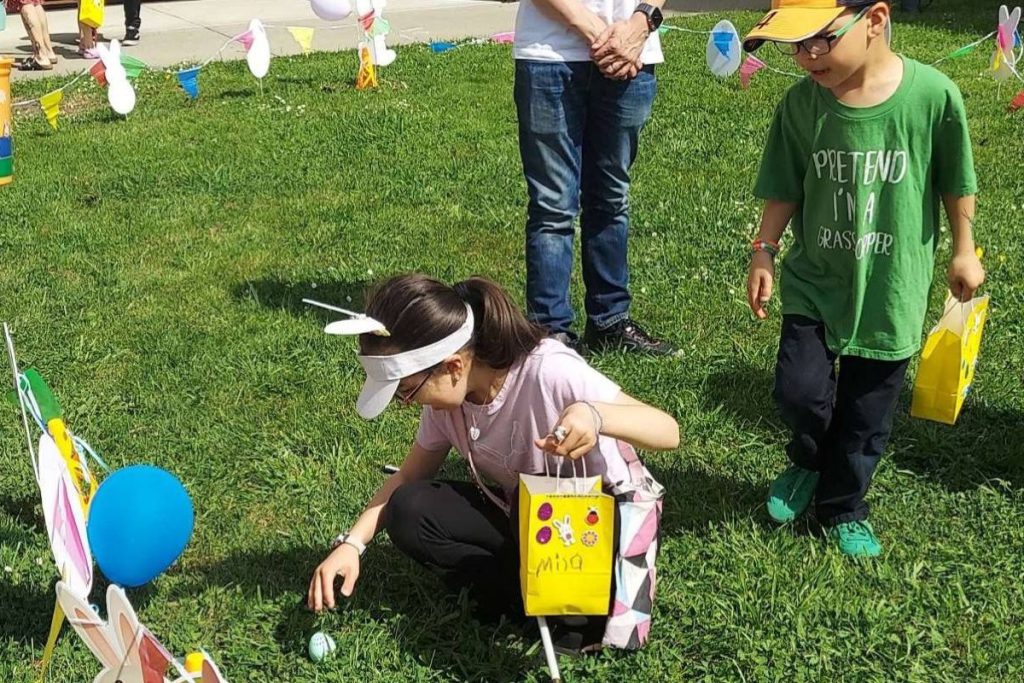
Plastic eggs were fitted with tiny battery-operated devices chirping away like a chorus of songbirds beckoning the children. Blind or visually impaired people often rely on a heightened sense of hearing in their daily lives, and the chirping egg hunt celebrates that strength. The children feel for the eggs in the grass with their hands or white canes.
“Having community events like this egg hunt is one of the ways LLL helps families build community,” said Pam Chapin, director of LLL. “Our goal for this event is just to create a fun, accessible community experience for the families.”
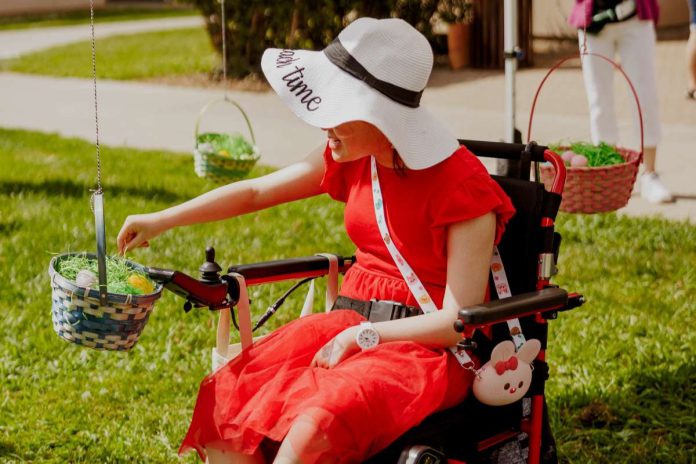
Baskets with chirping eggs were suspended in the air for children in wheelchairs. There were also craft tables, including a plant potting experience where kids used their sense of touch to plant a flower and take it home. Books were available that had both words and braille so parents who didn’t know braille could read the book together with their child.
Families frequently describe these events as emotional. One parent who was at the March 21 event said, “The Beeper Egg Hunt was a fun and intimate event where we connected with other Bay Area families who have children with visual impairments. My older daughter [H.] guided her little sister L.’s hands towards the beeping eggs in hanging Easter baskets—such a fun and creative idea!”
The parent continued, “We also had the pleasure of meeting another family with a daughter who has the same genetic disorder as L. We shared our experiences and provided them with information about the Facebook TUBA1A [a rare genetic disorder] community page and our TUBA1A nonprofit organization’s page. I hope this will help guide the family to additional support and resources, given how rare the disorder is.”
LLL services are provided at no cost to families and are designed to help young children from birth to age three. The LLL service area covers about 10 counties in California, and they served over 300 families in 2025.
“It’s always best to start this program with the children as young as possible,” said Chapin, “because once they turn three their vision teacher is going to be through the school district and not the early intervention system. Then the focus is very different. It’s not in the home; it’s not focused on a whole family. It’s focused on classroom instruction. Whereas we’re focused on relationships, the most important people in their lives, going out into the community…we show parents how to be the best advocate for their baby as they’re growing up.”
LLL offers other events too. Each February, LLL holds the Lowenfeld-Akeson Early Years Symposium, bringing together pediatric ophthalmologists, educators, and parents for a day of learning and connection. And in June, they host the LLL Camp in Napa, a special weekend retreat for families that offers opportunities for learning, community, and joy. For many, it is their first time experiencing such an empowering gathering, and families often leave describing it as life changing.
Headquartered in San Francisco, LightHouse for the Blind and Visually Impaired has provided education, training, advocacy and community for blind individuals since 1902. For more information visit lighthouse-sf.org.