

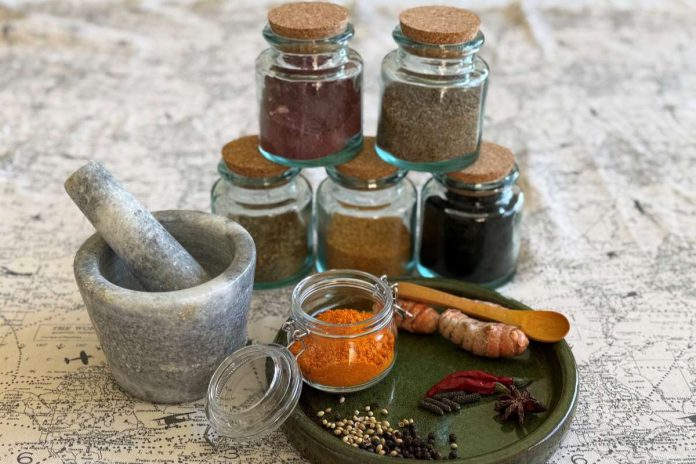
The word spice refers to the dried part of a plant, other than the leaves, used for seasoning and flavoring a recipe, but not typically used as the main ingredient. The leafy part of the plant used in this fashion is considered an herb. Spices add aroma, color and flavor to the food. They are also used in traditional systems of medicine across various countries.
If one wants to try out a new spice, deciding where to start can be daunting. I would use a couple of factors to decide. Is there a spice that speaks to you, or a restaurant dish you want to recreate at home? Spices come in different forms: whole fresh, whole dried, ground and as blends with other spices.
Although buying a whole spice is budget friendly, when I am trying a new spice, I like to go with the ready to use version for convenience. Quality and freshness make a difference. While fresh spices bring robust flavor and aroma, an old or rancid spice can easily ruin the dish. I prefer buying spices locally from an ethnic store for a wider selection.
If you are buying the whole spice, make sure you have a coffee or a spice grinder, or a mortar and pestle to process it. Keep spices fresh in an airtight container, away from light, heat and moisture, and always use clean, dry spoons for measuring.
Some spices need a medium to release their flavor, such as dry roasting or tempering.
Dry roasting
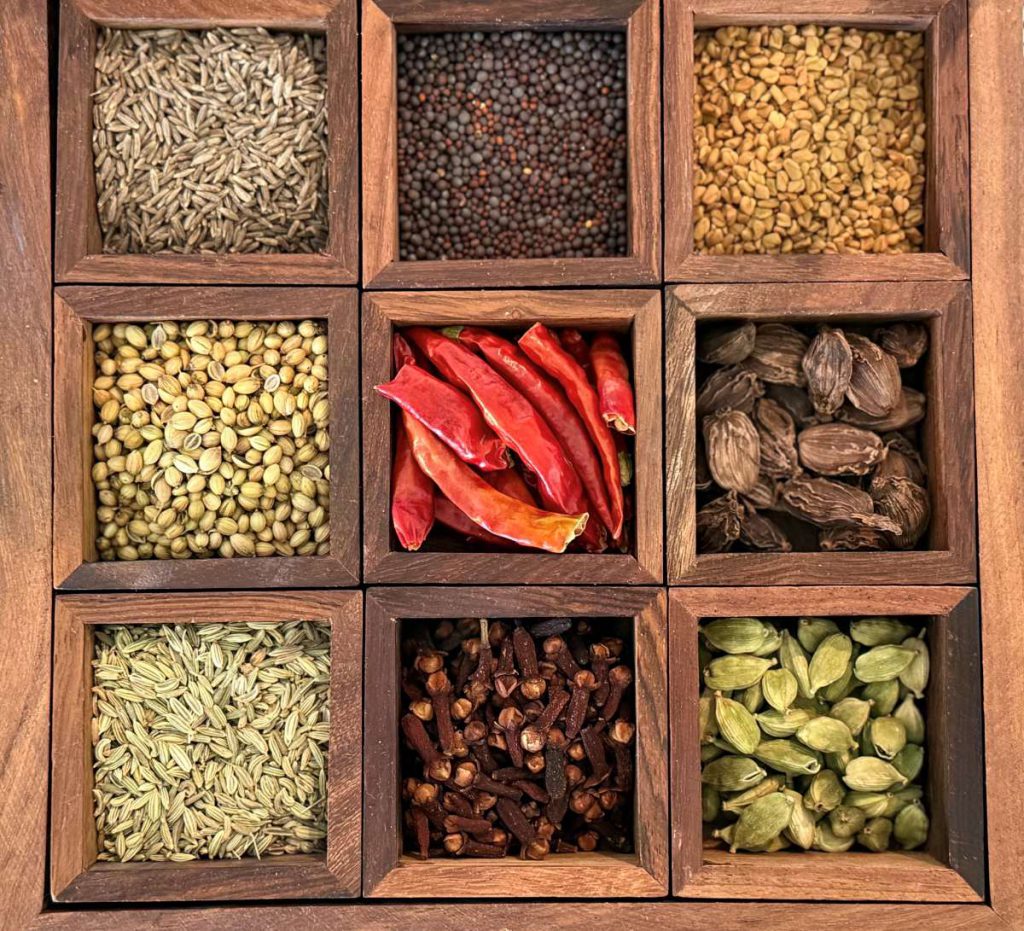
Add the whole spice to a dry skillet, gently tossing over medium heat, until it begins to smell toasty and fragrant. Transfer to another container and allow to cool. Once cool, grind with a spice grinder or in a mortar and pestle. Store in a cool and dry place. Dry roasting takes out any excess moisture, making the spices easier to grind and improving their shelf life. A popular example is dry roasting the garam masala and then making a powder.
Tempering
Heat any fat with a high smoke point and add the whole spice to it without letting either burn. The fat should be hot enough for the spice to sputter, but not burn. Let it infuse for a few minutes and pour it over the dish of choice. Spices that can be used this way are cumin, mustard seeds, fenugreek seeds, crushed coriander seeds, red dried chilies, coarsely ground black pepper and asafoetida.
How much spice to use varies based on personal preference. For example, I use one teaspoon of spices for two cups of cooked daal (generic term for lentils and legumes). I measure everything before tempering. When using multiple spices, one must achieve a balance in taste, aroma and digestibility to suit individual needs.
The following are some of the everyday essentials in my spice box.
Asafoetida (Ferula assa-foetida, hing)
A tree resin, asafoetida is an essential spice and usually one of the first ones to be added to hot oil or ghee. It is assertive in its expression and is more of an acquired taste. It lends an umami to garlicky flavor to a dish. When using, less is more.
Black pepper (Piper nigrum)
This flowering vine is cultivated for its fruit, which is used as a spice. It gives off spicy, woody and some floral notes. Use whole in rice dishes, pickles, fritters and freshly crushed over pastas, salads and soups.
Cardamom (Elettaria cardamomum, hari elaichi)
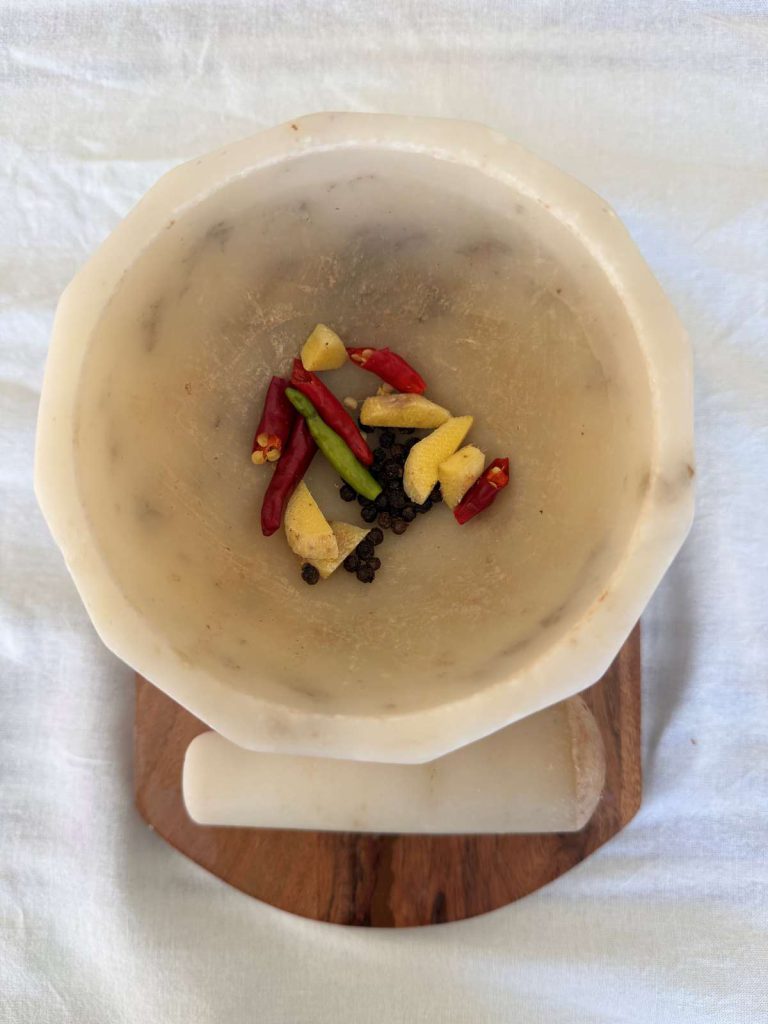
A tropical aromatic, herbaceous plant in the ginger family commonly used in chai, rice dishes and desserts to lend a sweet, floral and eucalyptus-like fragrance. While the whole pod can be used in a spice blend, some like to use just the seeds. It can be added whole to a just-started dish, preferably lightly pounded to expose the seeds. Or its powder can be sprinkled over desserts before serving.
Clove (Syzygium aromaticum, laung)
It can be used whole or a part of a spice blend in savory and sweet dishes alike. It’s perfect for fall fruit-based desserts, like an apple crumble, along with cinnamon and nutmeg. It can also be added to chai along with cardamom for a flavor bomb.
Coriander (Coriandrum sativum, dhania)
Coriander seeds have a pleasant, sweet and spicy aroma. They are used for flavoring stews, meats, sauces, chutneys and such. They are also used in mouth freshener recipes.
Cumin (Cuminum cyminum, jeera)
An essential ingredient in Indian cooking that adds nutty and warm flavor, it is truly a versatile spice—add it to rice, soups, daals, chutneys, curries, salads, plain yogurt. Whole cumin seeds can be added to the tempering, and roasted and ground cumin is great for adding later in the cooking process.
Fennel seeds (Foeniculum vulgare, saunf)
These can be used whole, gently crushed or powdered and impart earthy and fragrant notes when sprinkled over pickles or roasted vegetables.
Fenugreek seeds (Trigonella foenum-graecum, methi dana)
They can be used whole or powdered in pickles and in dry roasted vegetables. Fenugreek is bitter in taste and should be used sparingly if one is just getting started.
Turmeric (Curcuma longa, haldi)
A culinary staple, turmeric is added to a vast number of dishes for color, flavor and health benefits. I add the ground spice to dried beans while they are cooking and to vegetables when nearly done. I also use grated fresh turmeric in various gravy-based dishes, smoothies and flat breads. Turmeric infused milk is my all-time favorite.
This short list is just the beginning. The world of spices is vast, and so are the ways and foods in which they can be used.