

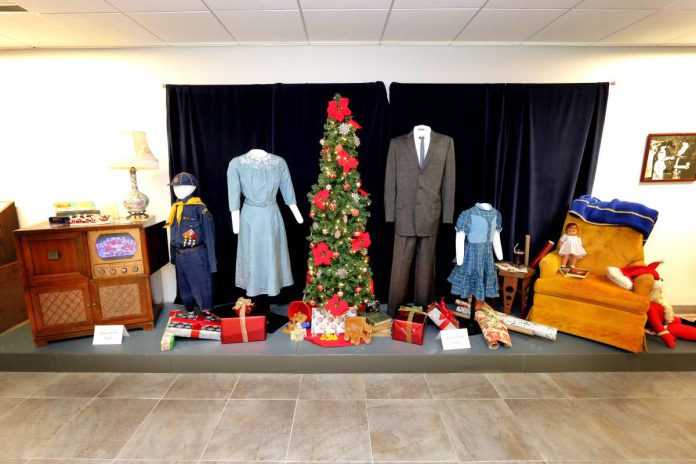
An archive isn’t just a collection of dusty remains. It’s a repository of events and ideas, and the Hayward Area Historical Society (HAHS) has an extensive one, full of surprises.
For example, radical journalism wasn’t confined to Berkeley in the 1970s, as Hayward had its own “Hayward Area County Press,” published by the Country Press Collective. The archive description states tellingly, “as with many alternative organizations of the time, the FBI may have attended their meetings.”
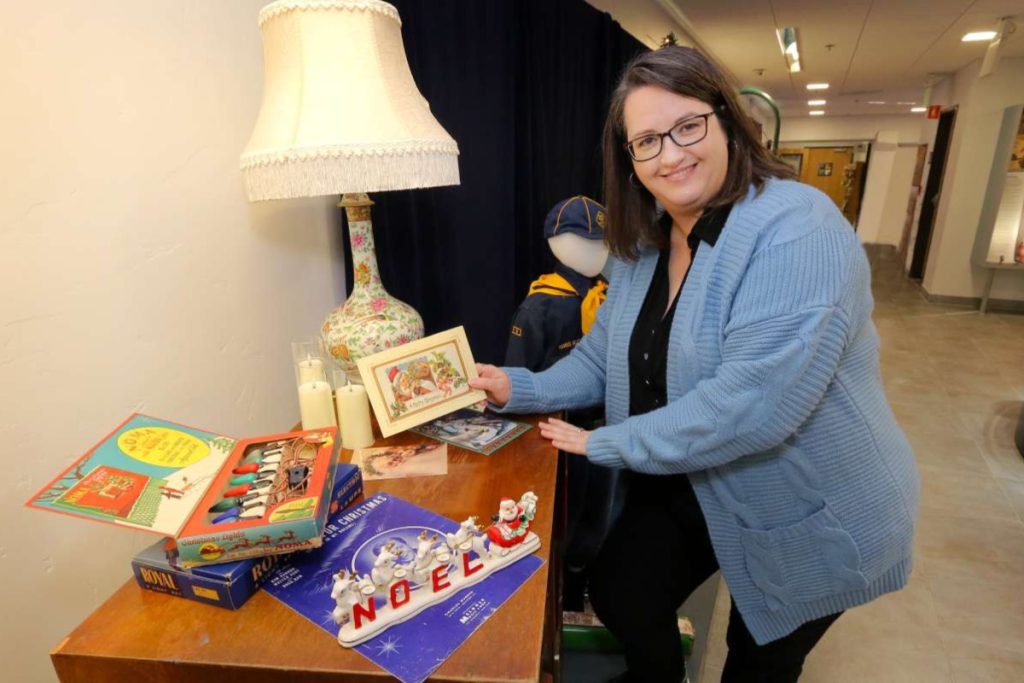
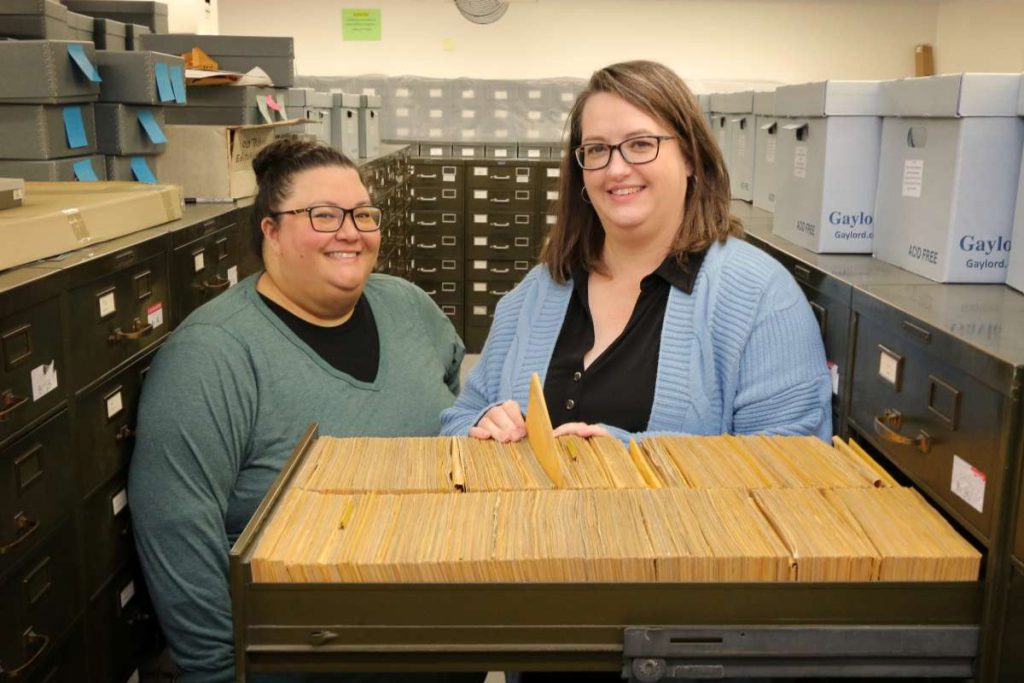
Visitors to the HAHS museum, presently showcasing Christmas nostalgia, are only seeing the tip of the iceberg. The basement houses collections of newspapers (70 years of the Oakland Tribune, to start), furniture, clothing, household items and even such personal belongings as a Pet Parade trophy given in 1940 to one Janet Scott Martin. The impressive pet’s name is not mentioned.
Since 1956, HAHS has collected the documented history and personal stories of the city of Hayward and the surrounding unincorporated communities, including Castro Valley, San Lorenzo, Fairview, Cherryland, Ashland, Russell City and Mt. Eden. Following World War II, huge numbers of people poured into the area, tripling the population within a 20-year period.
“We went from nothing but farms and growing vegetables to a huge city and growing houses,” says director and curator Diane Curry.
One of the oldest pieces in the collection is a brick, alleged to be from the original Castro Adobe. “We can’t verify it,” says Marcess Owings, the museum’s advancement manager, “but the building was destroyed in the 1868 earthquake, and it did sit right on the fault.”
Some of the more unusual items in the archives include a wicker carrying basket the size of a person, used as an early form of body bag; a full set of both sides of a couple’s correspondence from World War II (they married after the war); a set of masks of various heads of state used in a history talk, and a Cold War-era bomb shelter kit found under the pool at the Hayward Plunge.
To stay viable, public outreach is important. Owings says that readership of the quarterly newsletter is higher than the industry standard for similar organizations. But one of the most effective outreach tools has been classroom support materials called Discovery Kits, curriculum that teachers can rent when there’s a topic they want to bring to their students.
“Our most popular trunk is the Ohlone kit,” says Owings.
The very existence of an institution like HAHS means the question of what constitutes history can’t be ignored. “There’s a difference between the history of the mind and documented history, and somewhere in all of that is truth, I believe,” says Owings.
For Curry, the concern is to address both aspects. “We document stories with objects and archives, but we collect the personal stories in order to connect real people to those artifacts. We’re interested in people’s memories because those color the collected facts, and that’s how you preserve the history.”
Viewing the museum displays triggers memories, and visitors want to share them. Unfortunately, there isn’t the time or resources to record proper oral histories of everyone with a story.
“But we do encourage people to write,” says Curry. “We don’t need 600 pages. Write about one thing, write about shopping at Capwell’s, write about a specific experience. Things like, ‘I remember riding a scooter down D Street in the 1930s and trying to avoid all the cars.’ We’ve based successful exhibitions on collections of such personal stories.”
Currently, the HAHS newsletter often runs a column entitled, “I Remember.” The public may submit their stories for consideration.
When asked about her biggest challenges, Curry’s first answer was funding. “Especially now as grants have dried up, there’s competition among many organizations.”
There’s a lot to pay for. HAHS offers education programs for both students and adults, oversees exhibits at Meek Mansion and McConaghy House, redesigns and rotates the gallery exhibit, and maintains at significant cost fragile and susceptible archival materials.
“If we had all the money we needed, we would expand,” says Curry, “We have another 6,000 square feet on the second floor, which we would love to turn into bigger galleries and a community gathering space.”
What would Curry like the readers to know? “That we’re here, we’re open, we have resources. We tell the story of all the communities that historically came together to make today’s Hayward.”
Hayward Area Historical Society
Fridays and Saturdays
11am – 3pm
22380 Foothill Blvd., 2F, Hayward
510.581.0223
Suggested $5 donation